
You are using an out of date browser. It may not display this or other websites correctly.
You should upgrade or use an alternative browser.
You should upgrade or use an alternative browser.
Got a brand new Toy!
- Thread starter Clockworkmike
- Start date

OP

Clockworkmike
Ambassador of STACKS in WV SHACKS

Lol thats the story of this poor things life. One more incident and its going off to a tech to get scanned with a fine tooth comb. Anything happens after that, a Reverb-ing it will goleave it to a Florida Boy.............................................

OP
Clockworkmike
Ambassador of STACKS in WV SHACKS
Like @Amp Mad Scientist suggested: ill pop open the speaker cab and check the resistance on the speakers individually and then the total for some peace of mind and to potentially rule out a screwed up impedance issue, since its 25 years old. Also changing the power tube sockets wouldnt be a bad choice either if some carbon is built up within.Nice update pics. I really can't see anything wrong. You mentioned the larger value bias pot. That will still work, but it'll be more touchy when you're trying to adjust the bias.
Beyond that? Im hoping it was just a fluke from a bad tube being pushed too hard. The fuses got me screwed over until they ship lol

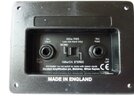
Does the cab in question have one of those switchable jack plates?It is very possible there could be some break down internally at the cabinet, i certainly wouldnt rule that out considering its at least 25 years old
I had one fail on me a few years back...it was a weird and spooky kinda thing. I replaced it with something different, and no problems since...
OP
Clockworkmike
Ambassador of STACKS in WV SHACKS
Yes sir it unfortunately does. Ive heard lots of conflicting things over them, like the switch internally screws up and sticks to one impedance ( stereo when you want mono) even when you switch to another. That is certainly something im gonna check with my meter and the amp's impedance switch too. Highly possible either one could be stickingDoes the cab in question have one of those switchable jack plates?
View attachment 58291
I had one fail on me a few years back...it was a weird and spooky kinda thing. I replaced it with something different, and no problems since...
Mine would randomly change impedance under load...if it were me....I’d get it out of there immediately. But I am biased by my personal experience with only one. It was difficult to test because it only did its weirdness under load at first...but I caught it by testing the lead immediately after shutting down during what I was hearing as symptomatic behavior. Sure enough it was switching itself internally(shorting or whatever). I replaced it with one of these:Yes sir it unfortunately does. Ive heard lots of conflicting things over them, like the switch internally screws up and sticks to one impedance ( stereo when you want mono) even when you switch to another. That is certainly something im gonna check with my meter and the amp's impedance switch too. Highly possible either one could be sticking
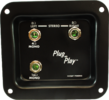
...it required enlarging the mounting hole vertically....and I haven’t looked back.


steveb63
Ambassador of the Capacitor
No bueno por cacaMine would randomly change impedance under load...if it were me....I’d get it out of there immediately. But I am biased by my personal experience with only one. It was difficult to test because it only did its weirdness under load at first...but I caught it by testing the lead immediately after shutting down during what I was hearing as symptomatic behavior. Sure enough it was switching itself internally(shorting or whatever). I replaced it with one of these:
View attachment 58306
...it required enlarging the mounting hole vertically....and I haven’t looked back.

Amp Mad Scientist
Ambassador of Heresy
Yes sir it unfortunately does. Ive heard lots of conflicting things over them, like the switch internally screws up and sticks to one impedance ( stereo when you want mono) even when you switch to another. That is certainly something im gonna check with my meter and the amp's impedance switch too. Highly possible either one could be sticking
A. You plug a good speaker cable into the cabinet.
B. You connect the ohm meter to the end of the speaker cable.
C. For a 16 ohm cabinet, the meter should read 12.6 ohms approximately.
FLEX test DO THIS
with the meter connected as above, move the cable plug up and down, left and right.
Wiggle the plug around where it is connected into the cabinet. Flex the cable around in different directions.
The ohm reading should stay steady. Very little variations.
If the ohm reading jumps around wildly when the cable or plug is flexed:
Replace the cabinet jack, or whatever you need to do to obtain a steady solid reading.
The ohm reading MUST remain solid steady - no matter how much the cable or plug is flexed.
This is called a "flex test."
This is an industry standard test to verify reliability of a connector or cable.
Every cable or connector that is manufactured - is subjected to this test.
And, this is an extremely important test.
OP
Clockworkmike
Ambassador of STACKS in WV SHACKS
Will do!A. You plug a good speaker cable into the cabinet.
B. You connect the ohm meter to the end of the speaker cable.
C. For a 16 ohm cabinet, the meter should read 12.6 ohms approximately.
FLEX test DO THIS
with the meter connected as above, move the cable plug up and down, left and right.
Wiggle the plug around where it is connected into the cabinet. Flex the cable around in different directions.
The ohm reading should stay steady. Very little variations.
If the ohm reading jumps around wildly when the cable or plug is flexed:
Replace the cabinet jack, or whatever you need to do to obtain a steady solid reading.
The ohm reading MUST remain solid steady - no matter how much the cable or plug is flexed.
This is called a "flex test."
This is an industry standard test to verify reliability of a connector or cable.
Every cable or connector that is manufactured - is subjected to this test.
And, this is an extremely important test.
Mine failed the flex test without flexing. Readings fluctuated between 2-36 Ohms with no movement. Dead switch.A. You plug a good speaker cable into the cabinet.
B. You connect the ohm meter to the end of the speaker cable.
C. For a 16 ohm cabinet, the meter should read 12.6 ohms approximately.
FLEX test DO THIS
with the meter connected as above, move the cable plug up and down, left and right.
Wiggle the plug around where it is connected into the cabinet. Flex the cable around in different directions.
The ohm reading should stay steady. Very little variations.
If the ohm reading jumps around wildly when the cable or plug is flexed:
Replace the cabinet jack, or whatever you need to do to obtain a steady solid reading.
The ohm reading MUST remain solid steady - no matter how much the cable or plug is flexed.
This is called a "flex test."
This is an industry standard test to verify reliability of a connector or cable.
Every cable or connector that is manufactured - is subjected to this test.
And, this is an extremely important test.
Removed & replaced....problem solved.
I am not saying that it is the problem, but warning that it can be a hidden contributor.
Mine had passed the test(flex or non-flex) twice before the above noted failure, while exhibiting symptoms(changes in volume and/or tone briefly). Everything metered out as expected the first two checks I ran...I swapped amp heads(and speaker cable), and when it happened a third time I got the flux readings I mentioned. @Clockworkmike - That is what I meant by “weird and spooky”
Amp Mad Scientist
Ambassador of Heresy
Will do!
Speaker / cable / jack is the most important link in the chain....
steveb63
Ambassador of the Capacitor
A lot of great info being posted here.
Thanks @Amp Mad Scientist , and all the others sharing their knowledge, I'm most definitely filing all this, for future issues with my gear.
Thanks @Amp Mad Scientist , and all the others sharing their knowledge, I'm most definitely filing all this, for future issues with my gear.
I couldn’t agree more!Speaker / cable / jack is the most important link in the chain....
A stable and proper output load will help keep the happiness going...for many moons.

AMS, I'm hoping that attenuator isn't the culprit?
Was working fine the night before I shipped it out.
@Clockworkmike is a sharp guy, I'm sure he had the connections and ohmage correct.
Man, I'm sorry Mike.
I have a Weber Mass Lite 100 that will attenuate my 50 watt Marshall to zero volume. I've used it on my DSL40C's for years with no issues.
I seriously doubt the attenuating is to blame...IMHO
I couldn’t agree more!
A stable and proper output load will help keep the happiness going...for many moons.
Beware...I've had a number of speaker cables lately with high resistance. One was as high as 8k (a Mogami) and we never found out why. I make all of mine from 10AWG twin-conductor speaker cable with Neutrik ends.
Zero resistance.
Indeed! Proper cabling IS a component of “proper output load”, for sure!Beware...I've had a number of speaker cables lately with high resistance. One was as high as 8k (a Mogami) and we never found out why. I make all of mine from 10AWG twin-conductor speaker cable with Neutrik ends.
Zero resistance.
OP
Clockworkmike
Ambassador of STACKS in WV SHACKS
Yeah the attenuator is scott free in this incident lol this is something stemming from an impedance issue its looking likeI have a Weber Mass Lite 100 that will attenuate my 50 watt Marshall to zero volume. I've used it on my DSL40C's for years with no issues.
I seriously doubt the attenuating is to blame...IMHO

Astral Traveler
Ambassador of Both Time and Space

Compliments of the awesome and cool as hell , Mr. @steveb63 . You are the man sir, first class!
View attachment 58191
That looks like something you should be able to put to good use

OP
Clockworkmike
Ambassador of STACKS in WV SHACKS
Its very wicked. Sounded exactly as i imagined it would! @steveb63 is the man!That looks like something you should be able to put to good use