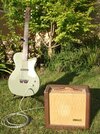
Looking For More Punch In YelloStrat:

It has more to do with the wood....and the shape

Conventional wisdom is constantly trying to tell us that the sound comes from the electronics.
It doesn't.

Conventional wisdom tells us that we make huge changes by changing pickups.
It won't.

The basic sound of the guitar from the wood is there to stay no matter what pickup.
No matter what electronics ---no matter what tone cap, etc...you can't change the sound of the guitar.

But what will make the big difference is:
A mahogany body, or a ironwood body, or a koa body...etc....
compared to a poplar or other light weight less dense wood.
Then you will get the change you keep looking for. It's not in the pickups.

Indecently maple is a poor choice unless it's combined with other woods.
Maple by itself kills the sustain and makes the guitar dead as hell.


Poplar has a great balanced tone which makes them more resonant than other tonewoods. Moreover, it is a great tonewood that can be used for a variety of styles.
 
Interesting observation. I would have said the same about pickups/electronics. Guess at the end of the day we all believe what our own ears are telling us and really no amount other people's anecdotal experience is going to sway what we hear and feel with our own hands. And that's good, really.

That's the kind of thing I was referring to. I will never accept that the material a baseplate is made of could make a bigger different than the kind of wood a guitar is built out of. What I know is this: a dog is a dog, and no matter how many pickup changes I have made to a dog it remained a dog. On the other hand, when I have had a good piece of wood its virtually impossible to make it sound bad no matter what is in it. Again, my own experience and no one else's.

I used to think the same about baseplates...until I started making pickups here at home from parts. To take that further, I even switched baseplates and did before and after recordings. Here's what I found out.

Brass seems to give a particular pickup a warmer sound and nickel-silver a brighter sound. Admittedly, the difference is pretty small, but on back-to-back recordings, you can hear it. It was enough of a difference that I wanted that added 'sparkle,' so I went nickel-silver on my latest build.

Now, about wood and construction...

I have owned few guitars - to include 5 brand new Gibson's - but I have installed pickups in far more guitars than I have ever owned. My experience is probably average, but I will share what I have learned.

One of the worst sounding guitars I ever experienced was a Wildwood Spec Gibson Les Paul. No matter what pickups we put in it, it never sounded good to me, or the owner. We even put in a cloth Gravitt harness, CTS pots and vintage spec Bumblebee tone caps, Thro-Bak PAF's, Virgil Arlo 1959's and David Allen Tru-59 PAF Replicas. We also changed tailpieces and bridge and never got what anyone who played it would call a "memorable" tone. The owner ended up selling it at a tremendous loss and went with a USA Jackson.

One of the best sounding guitars I ever heard was an Indonesian Squire Strat with a Vinatge 6-Screw Trem and a Duncan JB-SH4 in the bridge with the stock, import harness and pots.

Why??? I have no idea and I cannot even begin to explain why these two guitars behaved so differently, but the Wildwood Spec Les Paul cost $5,000, the Thro-Bak's cost $750.00/set, the Virgil Arlo PAF's were $2,000/pair and the David Allen's were $400.0/set and nothing sounded good. It was just a dark, dull sounding guitar. Even 1Mk pots were tried to no avail.

I feel like this was a very good experiment because we were able to run the full gamut of modifications with no expense spared.

What did this teach me???

Two things actually...

1. Brand Loyalty Means Nothing.


2. If result disagree with theory, believe results.

Now, I am not a rich man, but a brand new Gibson in the $5,000 range is "do-able" for me. My issue is, I have just not seen/heard the benefit from these more expensive guitars. Even my Mom's 1979 Norlin-Era Les Paul is just 'OK' sounding. It is not at all memorable, despite it's 'Holy Grail' status.

I just cannot see spending $5k on a guitar when I have been continuously employed in the music industry full-time since 2015 on a much, much cheaper guitar.

Another thing...

Sitting around listening for subtle nuances at home or in the studio is the WORST possible thing you could ever do to yourself. I have spent so much time listening for subtleties that I have missed out on a lot of playing enjoyment. and delayed the completion of a lot of my musical projects.

Every time I need to evaluate how a guitar sounds, I listen to it in a full band at stage volumes. At the very least, I will rent a rehearsal studio and demo my gear at stage volume levels, then go home that night and listen to the recordings.

Just my 2 cents on the subject....
 
Last edited:
Poplar has a great balanced tone which makes them more resonant than other tonewoods. Moreover, it is a great tonewood that can be used for a variety of styles.
Most of what i use is simple as far as wood and pickup types. Most of the pickups I use are Alnico based except for the Explorer and the bridge on the Tele which are Ceramics. All but one of my electrics are mahogany with Mahogany necks, the Tele is a poplar body and a maple neck. They all give their own sounds in their own ways i suppose
 
Most of what i use is simple as far as wood and pickup types. Most of the pickups I use are Alnico based except for the Explorer and the bridge on the Tele which are Ceramics. All but one of my electrics are mahogany with Mahogany necks, the Tele is a poplar body and a maple neck. They all give their own sounds in their own ways i suppose

If the wood indeed makes such a huge difference, I'll be damned if I have ever been able to hear it. I just ordered a $350.00 custom Warmoth neck out of quarter sawn, roasted maple, and I am certainly not expecting a tonal improvement from it, just a better playing interface, based on the 1.00" profile and 1-3/4" nut width.

Even my cheap Les Paul Copies are Mahogany/Maple Cap body and neck and long tenon, pretty much regular(traditional) Gibson construction methodology. The Schecter is Mahogany/Maple Cap with a 5 piece Mahogany neck. My custom double neck is a three-piece mahogany body with one-piece mahogany necks, custom made parts that I got from B.Hefner in Whittier, California.

All are decent sounding guitars.

The double neck has Gibson 490's at 7.5k/8.0k respectively. The bridge pickup magnet is reversed so it plays 180 degrees out-of-phase in the middle position.

The Les Paul Copies have the Epiphone version of the Gibson 498T/496R (H8BN/H6BN) 14k and 8.7k respectively. (Awesome pickups!)

The Schecter has EMG 81TW/89

The Jackson has a 20 year old 'Double-Slug' 14k Ceramic made by Artec.
 
Last edited:
If the wood indeed makes such a huge difference
I think it matters some but I don't believe that anyone can say how. I don't buy "maple sounds bright and mahogany sounds dark". Most guitars sound ok but sometimes all the right pieces come together. They aren't necessarily the best pieces but together they make magic. Sometimes all the wrong pieces come together and you have the pig.

It's much the same with bands. A group of individuals that by themselves are OK but not spectacular at what they do. You put all the right pieces together and there's magic.
 
I once had a cheap, sub $200 semi hollow PRS style guitar. I bought it new on the interwebz. I unpacked it, tuned it and strummed it without plugging in. It sounded like absolute garbage, thin, weak and nasal. At least it was cheap.

I plugged it in and it had a really sweet, full sound. I couldn't believe the difference. Ever since that day I don't believe that you can say anything about how an electric guitar will sound amplified based on its acoustic sound. Except perhaps when it comes to sustain...
 
If the wood indeed makes such a huge difference, I'll be damned if I have ever been able to hear it. I just ordered a $350.00 custom Warmoth neck out of quarter sawn, roasted maple, and I am certainly not expecting a tonal improvement from it, just a better playing interface, based on the 1.00" profile and 1-3/4" nut width.

Even my cheap Les Paul Copies are Mahogany/Maple Cap body and neck and long tenon, pretty much regular(traditional) Gibson construction methodology. The Schecter is Mahogany/Maple Cap with a 5 piece Mahogany neck. My custom double neck is a three-piece mahogany body with one-piece mahogany necks, custom made parts that I got from B.Hefner in Whittier, California.

All are decent sounding guitars.

The double neck has Gibson 490's at 7.5k/8.0k respectively. The bridge pickup magnet is reversed so it plays 180 degrees out-of-phase in the middle position.

The Les Paul Copies have the Epiphone version of the Gibson 498T/496R (H8BN/H6BN) 14k and 8.7k respectively. (Awesome pickups!)

The Schecter has EMG 81TW/89

The Jackson has a 20 year old 'Double-Slug' 14k Ceramic made by Artec.
I think the Dan Armstrongs and other Acrylic guitars kinda shot some holes into the wood argument. While i prefer certain woods personally, i believe my biasness is more for the weight and the look of the finishes. Again, solid paint jobs kinda destroy the look argument but in stains, bursts and natural finishes? Absolutely wood matters just like it does in furniture i guess lol the only time wood does play a major role to me more than anything, is fretboards and necks and thats all about the feel and access.
 
I think it matters some but I don't believe that anyone can say how. I don't buy "maple sounds bright and mahogany sounds dark". Most guitars sound ok but sometimes all the right pieces come together. They aren't necessarily the best pieces but together they make magic. Sometimes all the wrong pieces come together and you have the pig.

It's much the same with bands. A group of individuals that by themselves are OK but not spectacular at what they do. You put all the right pieces together and there's magic.

You got that right!!!!
 
I think the Dan Armstrongs and other Acrylic guitars kinda shot some holes into the wood argument. While i prefer certain woods personally, i believe my biasness is more for the weight and the look of the finishes. Again, solid paint jobs kinda destroy the look argument but in stains, bursts and natural finishes? Absolutely wood matters just like it does in furniture i guess lol the only time wood does play a major role to me more than anything, is fretboards and necks and thats all about the feel and access.
Or the Danelectros. The one I had sounded great and they're made from masonite with tape around the edges.
 
So, in my conversations with DiMarzio, the tech really feels like the pickup I made from parts is better than I realize and he is hesitant to recommend changing it out at present. To recap it's a Nickel-Silver Base, 42AWG 5700/5725 Turns Scatter-Wound, 8.1k AlNico 4 magnet, 4.8 Henries.

He did make the following suggestions if and when I decide to swap it out:

1. DP155 Tone Zone 17.3k/375Mv AlNico 5

2. DP224 AT-1 16.5k/320Mv AlNico 5
 
Last edited:
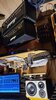
For those that want to hear YelloStrat from Saturday's recording session, here are my feeds from that event:

Origin 50 Head with Genelex Gold Lion B759 Tubes

My Live Pedalboard with my usual settings

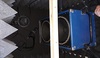
Into studio-owned 2x12 Celestion 75watt Creambacks, suspended in a 600 pound isolation box with two microphones.

Origin 50H Shot.jpg

Isolation Box Rat's Nest Studio - Inside View Small.jpg

Isolation Box Rat's Nest Studio Small.jpg

Here's the recording from Saturday afternoon/evening. This is an original arrangement that I wrote for a local band based upon their "scratch tracks."

 
I think it matters some but I don't believe that anyone can say how. I don't buy "maple sounds bright and mahogany sounds dark". Most guitars sound ok but sometimes all the right pieces come together. They aren't necessarily the best pieces but together they make magic. Sometimes all the wrong pieces come together and you have the pig.

It's much the same with bands. A group of individuals that by themselves are OK but not spectacular at what they do. You put all the right pieces together and there's magic.


Magic...............Don't be saying that around Ramo, now he will be checkin out his horoscope..
 
For those that want to hear YelloStrat from Saturday's recording session, here are my feeds from that event:

Origin 50 Head with Genelex Gold Lion B759 Tubes

My Live Pedalboard with my usual settings

Into studio-owned 2x12 Celestion 75watt Creambacks, suspended in a 600 pound isolation box with two microphones.

View attachment 57954

View attachment 57952

View attachment 57953

Here's the recording from Saturday afternoon/evening. This is an original arrangement that I wrote for a local band based upon their "scratch tracks."

Ok, I'm not the one with my fingers on the fretboard here, but I'm really not understanding what you're disliking about the sound. To me it sounds punchy, tight, has great sustain and clarity, and more gain than I ever use.

I think you are are being too analytical, instead of just enjoying a great sound and flowing with it.
 
Ok, I'm not the one with my fingers on the fretboard here, but I'm really not understanding what you're disliking about the sound. To me it sounds punchy, tight, has great sustain and clarity, and more gain than I ever use.

I think you are are being too analytical, instead of just enjoying a great sound and flowing with it.

My only issue is when I switch guitars I notice a difference with this one guitar, but when I switch between my (4) other guitars, there are no sonic differences and no nee to change amp/EQ settings. I'm going to run the next two live shows before making any changes...
 
Back
Top