Power Attenuators: cheap passive vs Reactive?

Clockworkmike

Ambassador of STACKS in WV SHACKS
Country flag
Alright so this thread is almost doomed from the start but its a decent question for those who have used them: when buying an attenuator, are the cheaper passives worth the time and effort vs the higher end reactive load models?

I was looking at possibly using an attenuator with my 2500 SLX to get that more natural power valve overdrive. The SLX needs no additional boosting from an overdrive loaded into the front honestly, as its got that for days with the additional 12AX7 preamp gain tube. But at lower volumes, its definitely choked back. It sounds absolutely incredible at a higher volume but is deafening obviously.

Reactive attenuators give the best, clear sound possible but are ridiculous in price ( basically the cost of an amplifier head for a good model), passives are reasonably priced but seem to cut off different levels of your signal and sound. So there has to be a middle ground and compromise right?
 
Alright so this thread is almost doomed from the start but its a decent question for those who have used them: when buying an attenuator, are the cheaper passives worth the time and effort vs the higher end reactive load models?

I was looking at possibly using an attenuator with my 2500 SLX to get that more natural power valve overdrive. The SLX needs no additional boosting from an overdrive loaded into the front honestly, as its got that for days with the additional 12AX7 preamp gain tube. But at lower volumes, its definitely choked back. It sounds absolutely incredible at a higher volume but is deafening obviously.

Reactive attenuators give the best, clear sound possible but are ridiculous in price ( basically the cost of an amplifier head for a good model), passives are reasonably priced but seem to cut off different levels of your signal and sound. So there has to be a middle ground and compromise right?
How low are you expecting to go?

If it's bedroom whisper, I haven't found one yet that's "great"

I own the Weber Mini Mass, and the a couple of Marshall Power Brakes. Between the two I actuallly like the Marshall best.

Lately, for whisper quiet, I've been using the power soak functions and running it thru a cab sim into my audio interface and then my studio monitors.

Sounds more "genuine" to me.
 
How low are you expecting to go?

If it's bedroom whisper, I haven't found one yet that's "great"

I own the Weber Mini Mass, and the a couple of Marshall Power Brakes. Between the two I actuallly like the Marshall best.

Lately, for whisper quiet, I've been using the power soak functions and running it thru a cab sim into my audio interface and then my studio monitors.

Sounds more "genuine" to me.
I normally dont play real low anyways because im probably half deaf as it is lol but i usually play at around 3-5 on volume. The SLX doesnt start getting those good juices really flowing until around 6-7. So something just to roll back the output volume a bit would work honestly.

The Marshall Powerbrake to me, is one of the best sounding out there. Had at least 3 chances to get one very affordably years ago, but now that market has risen quite a bit
 
I normally dont play real low anyways because im probably half deaf as it is lol but i usually play at around 3-5 on volume. The SLX doesnt start getting those good juices really flowing until around 6-7. So something just to roll back the output volume a bit would work honestly.

The Marshall Powerbrake to me, is one of the best sounding out there. Had at least 3 chances to get one very affordably years ago, but now that market has risen quite a bit
Lol
I had three of the power brakes, sold off one last month fo r $300, laughable.

It's one of those "hot" items right now, if you're looking for another p.m. me, we probably could work something out. Definitely not $300!
 
Lol
I had three of the power brakes, sold off one last month fo r $300, laughable.

It's one of those "hot" items right now, if you're looking for another p.m. me, we probably could work something out. Definitely not $300!
Thats awesome my friend! I wouldnt ever ask you though to come off of the price its worth though man
 
IMO, the cheaper passives might be decent enough for small reductions of volume, like up to 6dB's of attenuation. As more reduction is needed, the more an amps EQ needs to be compensated. Anything more than 15dB's of squashing with these types of attenuators, then the amp's core tone and response becomes uninspiring.

Many of the pricier reactive types are going to have circuitry that will allow for more heavier attenuation with less compromise to the amp's performance. Though I rarely use it, I do like how my Rivera Rock Crusher performs.
 
IMO, the cheaper passives might be decent enough for small reductions of volume, like up to 6dB's of attenuation. As more reduction is needed, the more an amps EQ needs to be compensated. Anything more than 15dB's of squashing with these types of attenuators, then the amp's core tone and response becomes uninspiring.

Many of the pricier reactive types are going to have circuitry that will allow for more heavier attenuation with less compromise to the amp's performance. Though I rarely use it, I do like how my Rivera Rock Crusher performs.
The rock crusher is an awesome attenuator! I heard some demos on Youtube, really keeps the sound intact
 
Alright so this thread is almost doomed from the start but its a decent question for those who have used them: when buying an attenuator, are the cheaper passives worth the time and effort vs the higher end reactive load models?

I was looking at possibly using an attenuator with my 2500 SLX to get that more natural power valve overdrive. The SLX needs no additional boosting from an overdrive loaded into the front honestly, as its got that for days with the additional 12AX7 preamp gain tube. But at lower volumes, its definitely choked back. It sounds absolutely incredible at a higher volume but is deafening obviously.

Reactive attenuators give the best, clear sound possible but are ridiculous in price ( basically the cost of an amplifier head for a good model), passives are reasonably priced but seem to cut off different levels of your signal and sound. So there has to be a middle ground and compromise right?

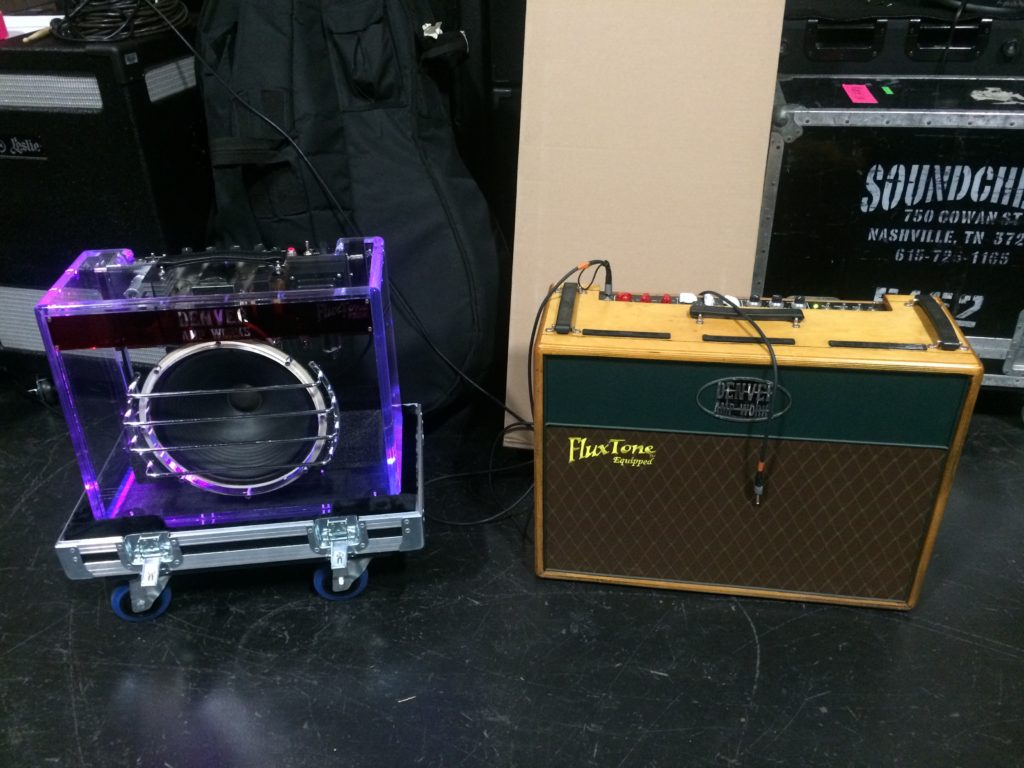
The winner of attenuators is the fluxtone speaker.
In which a celestion speaker (or cab full of speakers) is controlled by electromagnets.
Literally, a powered magnet adjustable efficiency speaker.
It is the most accurate method but also the most expensive.
This is called a "field coil speaker..." which was used since the late 1930s to save the weight of iron speaker magnets.

Another adjustable magnet speaker is the eminence reignmaker.

3. Another useful method is to use an isocabinet and a PA system.
1611334287636.png

IMHO all three of the methods above are better than a power attenuator considering sound quality.

No matter what master volume used, or attenuator, there will always be "tone suck" at low volumes.
 
Last edited:
"No matter what master volume used, or attenuator, there will always be "tone suck" at low volumes. "

AMS speaks the truth, I have tried them all and no matter which method, it's a compromise.

Have never tried the FluxTone, too scared of liking it. Due to $$$$

You never hear anything bad about them.
 
"No matter what master volume used, or attenuator, there will always be "tone suck" at low volumes. "

AMS speaks the truth, I have tried them all and no matter which method, it's a compromise.

Have never tried the FluxTone, too scared of liking it. Due to $$$$

You never hear anything bad about them.
I think the fluxtone is the closest to perfect that it's going to get...however $$$$ for sure.

Considering $1000 or more for a guitar...
Considering average $2000 for a decent professional amp...
Another $1000 you guys spend on effects pedals...
I don't think $2000 for a speaker (which completes the package) is much of a stretch.

I mean think about how much a speaker like that can accomplish......bedroom level, studio level, bar room level.
It makes the speaker a higher priority / more important part of the overall rig.
 
Last edited:
The rock crusher is an awesome attenuator! I heard some demos on Youtube, really keeps the sound intact
I had a Rock Crusher and I didn't absolutely love it. Personally, I thought it sucked enough tone from my amps that I instead could just turn the volume down and use them without it. That being said, I was using it with the DSL and the TSL and not a 2203 or something like that. On the upside, you can use it to reheat leftovers if you want, it get pretty damn hot lol
 
Your title includes the word cheap; I felt obligated to chime in.

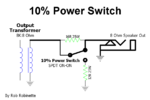
I built this and use it on everything up to the 18w TMB, for 8Ω speaker impedance.
It was cheap and a fun DIY.

You can do it with different configurations and switches for other impedances, but my main is 8Ω.
It may color the tone a little but does cut the volume quite a bit.

I suppose you could up the resistor wattages as needed, they would likely be larger.

another Robrobinette.com gem.


1611337325972.png


I built mine in a pedal box and use it inline on the speaker cable.
I only have pics of the first one - a 1/4 power switch that does help some but not nearly as much.
It is a hardwired speaker cable.
I eventually pulled he 1/4" ply mounting and bolted them to the case for heat build up concerns.

1611338010883.png
 
Lol thats a good attenuator: just shut the door and play louder!
Actually today..had to re aim the JCM 800 & HP8 cab rig..wife is very cool & tolerant..but it coupled on the floor ..it just cuts through the house..even at reasonable levels..we noticed the the ones that record well can be very annoying in the house.even she noticed that about certain amps..she now texts back to me..turn the 800 down please
 
The winner of attenuators is the fluxtone speaker.
In which a celestion speaker (or cab full of speakers) is controlled by electromagnets.
Literally, a powered magnet adjustable efficiency speaker.
It is the most accurate method but also the most expensive.
This is called a "field coil speaker..." which was used since the late 1930s to save the weight of iron speaker magnets.
Wow. Very cool. You do have to mod your amp though

 
Back
Top