
You are using an out of date browser. It may not display this or other websites correctly.
You should upgrade or use an alternative browser.
You should upgrade or use an alternative browser.
JCM 800 Micro 1W build
- Thread starter jtcnj
- Start date


syscokid
Ambassador of War & Peace

I look forward to see finish product. I'm sure it will roar like hell.
OP

jtcnj
Ambassador of the Crossroad
Progress. Most of power supply wiring done.
Stupid mistakes: board ground upper left was supposed to go to heater artificial center tap terminal strip ground lug instead of cap can.
No real difference.
Leaving power indicator lamp out until faceplate is completed.
Ran heater wire to 3-4 instead of 4-5 on 1 socket not paying close enough attention, Grrr.
OT wired up but output jack not soldered until I verify NFB polarity.
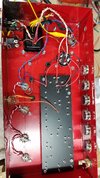
Stupid mistakes: board ground upper left was supposed to go to heater artificial center tap terminal strip ground lug instead of cap can.
No real difference.
Leaving power indicator lamp out until faceplate is completed.
Ran heater wire to 3-4 instead of 4-5 on 1 socket not paying close enough attention, Grrr.
OT wired up but output jack not soldered until I verify NFB polarity.
syscokid
Ambassador of War & Peace
That'll surely make a difference...Ran heater wire to 3-4 instead of 4-5 on 1 socket not paying close enough attention, Grrr




ivan H
Ambassador of Tubes & Grooves

Good to see you're making progress. I've been using one based on the Robrobinette JCM micro for a few weeks, they're a great amp. I used a general purpose aluminium project chassis that I got cheap. It's a little larger than needs be, but suits the purpose. The PT & choke are Classictone items that I already had, the OT is an old US made Musical Power Supplies OT5PP (before they started sourcing from China). 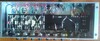
Modifications to the original circuit include using an 18k grid stopper on V1a (instead of 68k), just to hit V1 a little harder, also a 4k7 cathode resistor on V1b for a tad more pre-amp overdrive. I also used a pre phase inverter master volume as well as the type 3 post phase inverter master, which was a worthwhile addition. Coupling caps are Sozo, treble & treble peaking caps are 1kV Y5P ceramic disk. The pre-amp filter cap is grounded at V1. I added a 10k balance adjustment trimpot between the PI plate resistors. For the 12AU7 power tube I used a NOS 1% matched RCA (1.2mA/1.2mA, gm 2200/2200), though I also have a 60's Blackburn Mullard & Super Radiotron 12AU7. Radiotron was the first valve manufacturing plant in Australia, set up by RCA.
Pre-amp tubes are all Sylvania. V1 is a 7025, V2 & V3 are 12AX7's.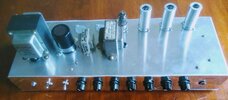
I've been running it through a greenback loaded 4x12 or a V30 loaded 4x12. Can use it to jam along with a CD at reasonably low volume, though it will also go louder that you'd expect for 1 watt. I need to put it into a cab of some sort. Cheers
Modifications to the original circuit include using an 18k grid stopper on V1a (instead of 68k), just to hit V1 a little harder, also a 4k7 cathode resistor on V1b for a tad more pre-amp overdrive. I also used a pre phase inverter master volume as well as the type 3 post phase inverter master, which was a worthwhile addition. Coupling caps are Sozo, treble & treble peaking caps are 1kV Y5P ceramic disk. The pre-amp filter cap is grounded at V1. I added a 10k balance adjustment trimpot between the PI plate resistors. For the 12AU7 power tube I used a NOS 1% matched RCA (1.2mA/1.2mA, gm 2200/2200), though I also have a 60's Blackburn Mullard & Super Radiotron 12AU7. Radiotron was the first valve manufacturing plant in Australia, set up by RCA.
Pre-amp tubes are all Sylvania. V1 is a 7025, V2 & V3 are 12AX7's.
I've been running it through a greenback loaded 4x12 or a V30 loaded 4x12. Can use it to jam along with a CD at reasonably low volume, though it will also go louder that you'd expect for 1 watt. I need to put it into a cab of some sort. Cheers
Last edited:

chilipeppermaniac
Ambassador of Decibels
And.......
Necro Thread Bump!
JT, May your amp sound as good as Alex's when you get it finished, bro.
OP
jtcnj
Ambassador of the Crossroad
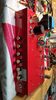
Got chassis running on the 24th. Only had a few minor wiring blunders during build, but nothing found at start up.
At first I did not wire in the 65v (artificial) center tap heater elevation, and when I did I didnt separate the ground at first.
The power lamp is just tacked to the heater circuit for now, until I get the faceplate finished. (which could be years judging by my body of work).
B+1 voltage power tube plate voltage a little higher than the diagram at 384v vs 370v.
Heaters a little high at 6.6v ac; not sure if I should be concerned with it.
I didnt check the power tube dissipation at first and played it an hour or so twice.
When I did check it:
Cathode resistor - 14.4 v / 470Ω = 31.6ma x 384 plate volts = 11.8w / 2 triodes = 5.9w!!!
YIKES! - the 12au7 triodes are 3w max ( I think).
The updated layout at robrobinette.com shows the cathode resistor at 820Ω; 1 have 1k on hand I will try.
I am still fiddling with the knobs but so far it sounds really good.
ZERO hum, but quite a bit of hiss at full volumes and treble maxed.
The presence does very little; I checked the components and the ground path and all is in order.
I have never played a real Marshall or anything with a presence pot to compare.
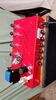
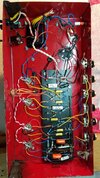
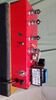
At first I did not wire in the 65v (artificial) center tap heater elevation, and when I did I didnt separate the ground at first.
The power lamp is just tacked to the heater circuit for now, until I get the faceplate finished. (which could be years judging by my body of work).
B+1 voltage power tube plate voltage a little higher than the diagram at 384v vs 370v.
Heaters a little high at 6.6v ac; not sure if I should be concerned with it.
I didnt check the power tube dissipation at first and played it an hour or so twice.
When I did check it:
Cathode resistor - 14.4 v / 470Ω = 31.6ma x 384 plate volts = 11.8w / 2 triodes = 5.9w!!!
YIKES! - the 12au7 triodes are 3w max ( I think).
The updated layout at robrobinette.com shows the cathode resistor at 820Ω; 1 have 1k on hand I will try.
I am still fiddling with the knobs but so far it sounds really good.
ZERO hum, but quite a bit of hiss at full volumes and treble maxed.
The presence does very little; I checked the components and the ground path and all is in order.
I have never played a real Marshall or anything with a presence pot to compare.


syscokid
Ambassador of War & Peace
What was the AC wall voltage when you recorded these voltages?B+1 voltage power tube plate voltage a little higher than the diagram at 384v vs 370v.
Heaters a little high at 6.6v ac; not sure if I should be concerned with it.
ivan H
Ambassador of Tubes & Grooves
Great that you've got it up & running JTCNJ. Mine has the B+1 sitting pretty much bang on 370V & a 510 ohm cathode resistor for the 12AU7, as shown in this schematic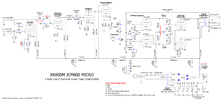
I haven't calculated plate dissipation, just looked for any signs of red plating from quiescent through to full tilt (there's no sign of). I did have to use two 3 watt resistors in series to get the 510 ohm value. Mine is also the same as yours in that it has no hum, but does start to hiss as it's pushed harder. I added a pre phase inverter master volume (as well as the type 3 post PI master volume) & have found lowering the pre-PI master alleviates the hiss, so I might add a 47pf or 100pf fizz cap between the PI plates. Also, I've used Y5P ceramics as the treble peaking & treble caps, & they can generate hiss.
The presence control does very little, whereas in a typical Marshall it does function properly. I'll give you reasons why this micro's is so inactive. If we look to the schematic or layout, following the signal chains from PI to power tubes we see a 470k (shown as a "grid stopper" on the layout) & an 82k "grid leak" to ground for each half of the output stage. The signal for each power tube is taken from the junction of these two resistors. Firstly, the 470k resistors are not acting as grid stoppers. Grid stopper resistors should also be coming off the junction of these two resistors & would ideally be positioned right at the valve socket. What is happening is the 470k/82k to ground is forming a voltage divider that attenuates the signal to less than 1/5th its original amplitude (otherwise the signals from the PI would slam the crap out of the poor little 12AU7). This affects the NFB in the same way as a PPIMV does. Also, a 12AU7 doesn't output what an EL34 does, so the voltage on each OT secondary tap is greatly less than what it would be in a 2 EL34 output stage (NFB taken is "voltage" type feedback & the OT's AC ouput voltage squared/speaker impedance = output power in watts).
Add that that the design does encorporate a PPIMV & it's understandable that the presence control is so ineffective. Cheers
Edit:
If you want the presence control to be more effective, take the NFB off the 16 ohm output tap, &/or reduced the value of the (22k) NFB series resistor a little. Cheers
I haven't calculated plate dissipation, just looked for any signs of red plating from quiescent through to full tilt (there's no sign of). I did have to use two 3 watt resistors in series to get the 510 ohm value. Mine is also the same as yours in that it has no hum, but does start to hiss as it's pushed harder. I added a pre phase inverter master volume (as well as the type 3 post PI master volume) & have found lowering the pre-PI master alleviates the hiss, so I might add a 47pf or 100pf fizz cap between the PI plates. Also, I've used Y5P ceramics as the treble peaking & treble caps, & they can generate hiss.
The presence control does very little, whereas in a typical Marshall it does function properly. I'll give you reasons why this micro's is so inactive. If we look to the schematic or layout, following the signal chains from PI to power tubes we see a 470k (shown as a "grid stopper" on the layout) & an 82k "grid leak" to ground for each half of the output stage. The signal for each power tube is taken from the junction of these two resistors. Firstly, the 470k resistors are not acting as grid stoppers. Grid stopper resistors should also be coming off the junction of these two resistors & would ideally be positioned right at the valve socket. What is happening is the 470k/82k to ground is forming a voltage divider that attenuates the signal to less than 1/5th its original amplitude (otherwise the signals from the PI would slam the crap out of the poor little 12AU7). This affects the NFB in the same way as a PPIMV does. Also, a 12AU7 doesn't output what an EL34 does, so the voltage on each OT secondary tap is greatly less than what it would be in a 2 EL34 output stage (NFB taken is "voltage" type feedback & the OT's AC ouput voltage squared/speaker impedance = output power in watts).
Add that that the design does encorporate a PPIMV & it's understandable that the presence control is so ineffective. Cheers
Edit:
If you want the presence control to be more effective, take the NFB off the 16 ohm output tap, &/or reduced the value of the (22k) NFB series resistor a little. Cheers
Last edited:

eSGEe
Ferengi Ambassador of Trade
Did you see the transformers made in Canada!?!?!?!Very nice work Jtcnj!!
Come on Norm your slipping ....................
ivan H
Ambassador of Tubes & Grooves
Yes, Hammond transformers are Canadian made, & good quality. CheersDid you see the transformers made in Canada!?!?!?!
Come on Norm your slipping ....................
OP
jtcnj
Ambassador of the Crossroad
Great that you've got it up & running JTCNJ. Mine has the B+1 sitting pretty much bang on 370V & a 510 ohm cathode resistor for the 12AU7, as shown in this schematicView attachment 55323
I haven't calculated plate dissipation, just looked for any signs of red plating from quiescent through to full tilt (there's no sign of). I did have to use two 3 watt resistors in series to get the 510 ohm value. Mine is also the same as yours in that it has no hum, but does start to hiss as it's pushed harder. I added a pre phase inverter master volume (as well as the type 3 post PI master volume) & have found lowering the pre-PI master alleviates the hiss, so I might add a 47pf or 100pf fizz cap between the PI plates. Also, I've used Y5P ceramics as the treble peaking & treble caps, & they can generate hiss.
The presence control does very little, whereas in a typical Marshall it does function properly. I'll give you a reason why this micro's is so inactive. If we look to the schematic or layout, following the signal chains from PI to power tubes we see a 470k (shown as a "grid stopper" on the layout) & an 82k "grid leak" to ground for each half of the output stage. The signal for each power tube is taken from the junction of these two resistors. Firstly, the 470k resistors are not acting as grid stoppers. Grid stopper resistors should also be coming off the junction of these two resistors & would ideally be positioned right at the valve socket. What is happening is the 470k/82k to ground is forming a voltage divider that attenuates the signal to less than 1/5th its original amplitude (otherwise the signals from the PI would slam the crap out of the poor little 12AU7). This affects the NFB in the same way as a PPIMV does. Also, a 12AU7 doesn't output what an EL34 does, 50w output vs 1w output, so the voltage on each OT secondary tap is greatly less than what it would be in a 2 EL34 output stage (NFB taken is "voltage" type feedback & the OT's AC ouput voltage squared/speaker impedance = output power in watts).
Add that that the design does encorporate a PPIMV & it's understandable that the presence control is so ineffective. Cheers
Edit:
If you want the presence control to be more effective, take the NFB off the 16 ohm output tap, &/or reduced the value of the (22k) NFB series resistor a little. Cheers
Thanks for the info!
I had not been watching for red plating but think I would have noticed it (I know better but forgot).
The updated layout / schematic uses a 10k for the NFB resistor which is what I used. I wont sweat the presence for now.
I just swapped the 470Ω I used for the 12au7 cathode resistor (what i have on hand instead of the listed 510Ω) to 1k.
This brought my plate voltage up to 391v and 16.6v at the cathode.
That brings me to 16.6/1k x 391 = 6.49w total / 2 = 3.25w per triode which is more in range.
I went with the updated circuit MV; I think it is pre PI.
I only played it briefly and didnt get a chance to dial it in. If anything it did not sound as good, but it could be my day to day perception of what I hear.
@syscokid - my plate voltages were always the same when I put a meter to them; so I figure the wall voltage was what I just measured at 121.9v ac.

Clockworkmike
Ambassador of STACKS in WV SHACKS
Thats awesome you built this, very cool! Would love to hear it sometime!
syscokid
Ambassador of War & Peace
That's a lot of NFB! Do you plan to try with less NFB? 22K? 47K? I vote for: Let the one watter run wild... :dood:The updated layout / schematic uses a 10k for the NFB resistor which is what I used.
OP
jtcnj
Ambassador of the Crossroad
the design has evolved a bit over the last year or so.
The schematic / layout I used is the same as IvanH from earlier 2019; I incorporated some of the updated circuit.
This is from robrobinette.com :
"The NFB resistor has been reduced to 10k to compensate for the very low output voltage of the power amp. "
The schematic / layout I used is the same as IvanH from earlier 2019; I incorporated some of the updated circuit.
This is from robrobinette.com :
"The NFB resistor has been reduced to 10k to compensate for the very low output voltage of the power amp. "
syscokid
Ambassador of War & Peace
I wish I understood this..."The NFB resistor has been reduced to 10k to compensate for the very low output voltage of the power amp. "
