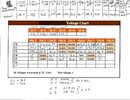
The voltages at each pre amp tube pin vary a little depending on the particular 12AX7's installed, plate & cathode resistor tolerances etc, & the HT voltage overall will vary a bit depending on the PT spec. For example a "Metroamp" spec 1202-55 PT will give a B+ of about 400V, wheras a "Marstran" or "Merren" 1202-55 will give a B+ of 450V (which is about correct for an original). A "Classictone" PT (apparently) gives a bit higher B+. Not sure about a Mojotone spec (Heyboer) PT, but you get the idea.
You can expect voltages to drop about 10% with the power tubes installed & biased. So long as your voltages are ballpark it's all good. We must remember that the original Marshall spec called for a -/+ 10% tolerance in regard to voltages.
Regarding the 7.2V ~ 7.3V difference between PI plates, when you have the power tubes installed & biased, plug a few different 12AX7's in the V3 position to find one that gets you closest to this (they can vary a LOT). We have to remember, Marshall (or really any amp manufactures) never worried about this type thing, they plugged a 12AX7 in & you got what you got. Even now, very few give a means of adjustment here (or for pre amp tubes). It's only really high end stuff like Dumble where you'll see adjustment features, or the high end tuners who bother with it.
We'll get to maybe adjusting things like this to "spot on" once you have it all up & running.
When you get to biasing the power tubes, please, no 'scope method.
I recommend using this method
50 Watt biasing technique (from Marstran technical info) & I hope I linked it properly (digitally challenged). Remember, the figures given are examples, you'll have to take readings from your amp & apply to this method. If you aren't sure of anything at all regarding the procedure, just ask. Make sure you are totally clear on how to accomplish the bias setting before attempting. Cheers
Edit:
Practically all biasing tutorials will tell us to bias to 70% of maximum plate dissipation & this is ok, but we can do better. The 70% figure for class AB1 gives good power output along with reasonable tube service life. We can bias hotter than 70% & still be in class AB1 operation, but at the expense of tube life. Alternately, we can bias cooler than 70% (down towards 50%) & still be in class AB1 operation.
What I like to do is to bias to where the power tubes sound & respond the best, which can only be done by actually playing through the amp at volume.
To do this, I first bias to 70%, then take a reading of the negative bias voltage & write it down as my "maximum" bias parameter (I take the reading at the junction of the bias splitter resistors).
Next I bias to about 60% (or a little lower) & again, take a reading of the negative bias voltage & write it down as my "minimum" bias parameter.
By playing through the amp while experimenting with the bias setting, keeping the negative bias voltage within those minimum & maximum parameters, I find where I like it best.
It takes some time, but in the interest of tone, I find it worthwhile. Cheers


 Ivan, you da MAN!!