Marshall jvm210h issue, not making sounds anymore.

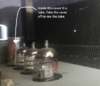
The far left on the back row is a spring. I thought it was a tube as well until I opened the back up and saw what it was. And also with the cable. I'm not sure anymore. I got it off the wall where all the speaker cables were in the music store and I know it's a mono cable. But now I'm starting to rethink everything

"The far left on the back row is a spring."

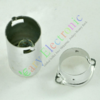
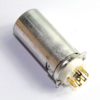
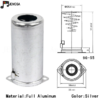
The spring holds the tube in the socket. Push down and turn the spring to take the cover off the tube.

Do the measurements above and report the readings.

Plug the speaker cable into another amplifier. Connect the guitar with this cable.
Does the cable make a bunch of hum?
It should, because it's not supposed to be shielded.

If the cable does NOT make hum when you use it to connect the guitar:
It's a shielded cable.
And should not be used to connect the speakers.

The wrong type cable, used for speakers:
will blow the tubes.
Will blow the fuses.
Will fry the output transformer.

DO THE TESTS.
 
MAY THE FARCE BE WITH YOU SCRUFFY!!!!!


those covers come on a lot of production tubes -- usually the first thing I do is take em off -- matter of fact I have like 6 of the things in my "parts" pile --
 
those covers come on a lot of production tubes -- usually the first thing I do is take em off -- matter of fact I have like 6 of the things in my "parts" pile --
I think those are called heat shields for tubes. Since the the first tube in the preamp chain is the most sensitive to microphonics, vibration, and strange alien noises, those shields with those springs inside calms down the tube a bit. Like a comfort blanket or straight jacket for those little tuby's... :hmmm:
 
I think those are called heat shields for tubes. Since the the first tube in the preamp chain is the most sensitive to microphonics, vibration, and strange alien noises, those shields with those springs inside calms down the tube a bit. Like a comfort blanket or straight jacket for those little tuby's... :hmmm:

I think those are called heat shields for tubes. Since the the first tube in the preamp chain is the most sensitive to microphonics, vibration, and strange alien noises, those shields with those springs inside calms down the tube a bit. Like a comfort blanket or straight jacket for those little tuby's... :hmmm:

I think maybe they put that shield on to block RF emissions.
We don't normally think about this but, 12AX7 can generate or amplify high frequency above the range of human hearing.
Into megahertz range.
True, the V1 tube does have the most tendency to be microphonic. Everything after the V1 tube amplifies the slightest noise from the V1 tube.
 
The far left on the back row is a spring. I thought it was a tube as well until I opened the back up and saw what it was. And also with the cable. I'm not sure anymore. I got it off the wall where all the speaker cables were in the music store and I know it's a mono cable. But now I'm starting to rethink everything

OK
if you can't do the tests, take it to a technician.
If you need help finding a tech let me know your location.

But I do not recommend you play the amp until you go through and check all the stuff I mentioned.
This will take about 20 minutes.
 
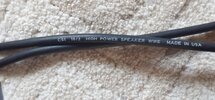
Maybe this will help identifying the cable:
View attachment 47361
He would need to cut the strain relief / shrink tubing off of the plug to open it.
An audio test (listen for hum with a guitar plugged into the cable) would identify a shielded cable.
The shielded cable will not hum when used as a guitar lead.
The speaker cable would hum when used as a guitar lead.

So it's a simple test that does not require cutting the strain relief off of the cable.

But I begin to suspect that the cable is shielded / should not have been used to hook up speakers. (maybe)
The cable should have been labeled by the manufacturer.

It's a common cause of failure; using shielded wire to hook up speakers.
Common mistake-It can melt the output transformer.
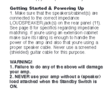
Yes, the instruction manual warns users not to do this.

Screenshot_2020-08-15 M3310 083_JVM2 pdf.png
 
He would need to cut the strain relief / shrink tubing off of the plug to open it.
An audio test (listen for hum with a guitar plugged into the cable) would identify a shielded cable.
The shielded cable will not hum when used as a guitar lead.
The speaker cable would hum when used as a guitar lead.

So it's a simple test that does not require cutting the strain relief off of the cable.
Good points. Lot of my cables don't have those heat shrink strain reliefs.

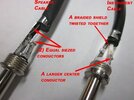
Also, lots of speaker cables don't have the fancy jackets that a lot of guitar cables do. On a plane jacketed speaker cable there should be a description of the wire gauge and number of conducting wires. Besides the words: "speaker wire", two equal sized wires indicates a speaker cable:
20200815_170429.jpg
 
Last edited:
I'm late to this (apologies), but just a couple of thoughts.
First thing that I haven't seen mentioned (I may have missed it though), have you checked the HT fuse? (If it is blown, replacing won't solve the issue that caused it to blow). We know the main fuse is ok because the filaments light up.
Question, do "all" filaments light up? There are two filaments in each pre-amp tube.
You saw light flashes coinciding with audible popping sound through speakers. That you saw the flashing would (most likely) seem to indicate that the light source was external to the amp's chassis. Possibly a tube arcing internally. Tubes, both pre-amp & power tubes can arc (in different ways) & still "look" ok. It should result in a blown HT, or main fuse though. This would mean "no sound" at all.
Check the HT fuse & get back to us, we'll go from there. Cheers
 
I'm late to this (apologies), but just a couple of thoughts.
First thing that I haven't seen mentioned (I may have missed it though), have you checked the HT fuse? (If it is blown, replacing won't solve the issue that caused it to blow). We know the main fuse is ok because the filaments light up.
Question, do "all" filaments light up? There are two filaments in each pre-amp tube.
You saw light flashes coinciding with audible popping sound through speakers. That you saw the flashing would (most likely) seem to indicate that the light source was external to the amp's chassis. Possibly a tube arcing internally. Tubes, both pre-amp & power tubes can arc (in different ways) & still "look" ok. It should result in a blown HT, or main fuse though. This would mean "no sound" at all.
Check the HT fuse & get back to us, we'll go from there. Cheers

I would expect the fuse to be blown but:
I also want to know "why" the fuse is blowing.
That's why I ask people to do the tests.

Too often we recognize the symptom : blown fuse.
But not very often
do we ask what the cause of the symptom is.

I see lots of people repair amps, but almost nobody looking for "why" the amp needs to be repaired to start with.

And very often when a fuse blows, or a tube blows etc
It's speaker related. That is: the speaker cable, the speaker impedance, the speaker connections are intermittent faulty in some way.
 
So I was playing through my head today and my volume cut almost all the way out. Then it started making a hum then had a popping sound. Along with the popping sound, there was a bright flash of light. I thought it might be one of my tubes that blew so I took the back grill cover off and couldn't tell if a tube blew or not. None of them were black and looked ok. So I plugged the head back in and turned it on. The tubes glow but when I plug my guitar in and try to play no sound comes through. Also I know its not my cab because I plugged another head into it and it's fine. I just need some help at figuring out what happened to the jvm210h head.

Where are you OP?
Did you make any progress? Did you do any of the tests?

Reporting back
can help a lot of other people diagnose and solve the same problem that you are experiencing.
 
I would expect the fuse to be blown but:
I also want to know "why" the fuse is blowing.
That's why I ask people to do the tests.

Too often we recognize the symptom : blown fuse.
But not very often
do we ask what the cause of the symptom is.

I see lots of people repair amps, but almost nobody looking for "why" the amp needs to be repaired to start with.

And very often when a fuse blows, or a tube blows etc
It's speaker related. That is: the speaker cable, the speaker impedance, the speaker connections are intermittent faulty in some way.
I don't assume that the fuse is blown as I have seen many faults, including a failed pre-amp tube or failed power tube that have not resulted in the HT fuse blowing. I also know that a fuse blows for a reason & that that "reason" must be sought out & rectified. Reading the bracketed text after the enquiry about the HT fuse should have made that obvious.
While checking for the presence of the negative bias voltage at power tube sockets isn't a bad idea & a run away power tube due to no negative bias voltage may be a possibility, if we think of the "symptom" described by the OP (amp playing ok, then popping sounds, flashes of light etc), a run away power tube is not at the top of my list of possible causes.
As to most (or very often) blown fuses, tubes etc being speaker related, I beg to differ. Fuses blow due to excessive current draw & the possible causes of this are too numerous to list.
Power tubes most commonly fail in guitar amplifiers due to excessive screen grid current (screen grid melts down & arcs out, giving the "light show" symptom), usually caused by how they are run in most guitar amps (screen grids only a few volts lower positive potential than the anodes at quiescent condition, & quite often the screen grids are being run at above the design maximum rating). When anode voltage falls due to signal conduction, the screens become the "most positive" element within the tube. Screen grid failure does not always blow the HT fuse.
Cheers
 
Last edited:
I don't assume that the fuse is blown...
I'm still obsessing whether Scruffy is using a proper speaker wire cable! This is just another bit of info that needs to be known before the amp is turned on again.

Also...: Is that HT fuse blown? Or not?
 
Back
Top