Marshall jvm210h issue, not making sounds anymore.

ScruffyHeadedNerfHerder

Well-Known Member
Country flag
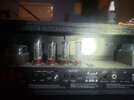
So I was playing through my head today and my volume cut almost all the way out. Then it started making a hum then had a popping sound. Along with the popping sound, there was a bright flash of light. I thought it might be one of my tubes that blew so I took the back grill cover off and couldn't tell if a tube blew or not. None of them were black and looked ok. So I plugged the head back in and turned it on. The tubes glow but when I plug my guitar in and try to play no sound comes through. Also I know its not my cab because I plugged another head into it and it's fine. I just need some help at figuring out what happened to the jvm210h head.
 
So I was playing through my head today and my volume cut almost all the way out. Then it started making a hum then had a popping sound. Along with the popping sound, there was a bright flash of light. I thought it might be one of my tubes that blew so I took the back grill cover off and couldn't tell if a tube blew or not. None of them were black and looked ok. So I plugged the head back in and turned it on. The tubes glow but when I plug my guitar in and try to play no sound comes through. Also I know its not my cab because I plugged another head into it and it's fine. I just need some help at figuring out what happened to the jvm210h head.
UN-plug power from amp.
Take the power tubes out.

Set meter for ohms.
Connect red probe to pin 4 of output socket.
Connect black probe to pin 5 of output tube socket.
What is the ohm reading?
Write that down.
Now test the other 3 output tube sockets the same way and write down all the readings.

Plug power back in to the amp.
Output tubes are still removed for your own safety. :LOL:
Turn the power on, but leave the standby switch set to "warm up." {the high voltage is turned OFF}
Do not turn the standby to "operate."
Set meter for DC volts.
Connect the black probe to the metal chassis.
Connect red probe to pin 5 of the output tube socket.
What is the DC volt reading? Should be a negative DC voltage on pin 5 of each output tube socket.
Now test the other 3 output tube sockets the same way and write down the DC volt reading for each output tube socket pin 5.

Now tell us what all those wonderful readings are. (we can't wait!) Inquiring minds want to know...

Don't put the output tubes in.
Don't turn the standby to "operate."
Don't play the amp until we finish troubleshooting.
It can get worse, so don't do that.


Well heck yes it can be a bad output tube.
But we test everything first to make sure the same thing won't happen again.
Like for example
If you put new tubes in, you don't want the new tubes to blow up.

So we test all the stuff first, and put the tubes in LAST. This is an insurance policy that we don't fry the new tubes....

These amps "can" have issues. So lets make sure before the money goes up in smoke.

Today's fun amp Tips:
There is a DC negative voltage on pin 5 of the output tube socket.
This is called: "the bias voltage."
This voltage controls the current of each output tube.
If this voltage is missing, the current will run wild.
The tube will overheat and blow chunks. There will be red plating.
And so, this is the most important voltage in the entire amplifier.
 
Last edited:
UN-plug power from amp.
Take the power tubes out.

Set meter for ohms.
Connect red probe to pin 4 of output socket.
Connect black probe to pin 5 of output tube socket.
What is the ohm reading?
Write that down.
Now test the other 3 output tube sockets the same way and write down all the readings.

Plug power back in to the amp.
Output tubes are still removed for your own safety. :LOL:
Turn the power on, but leave the standby switch set to "warm up." {the high voltage is turned OFF}
Do not turn the standby to "operate."
Set meter for DC volts.
Connect the black probe to the metal chassis.
Connect red probe to pin 5 of the output tube socket.
What is the DC volt reading? Should be a negative DC voltage on pin 5 of each output tube socket.
Now test the other 3 output tube sockets the same way and write down the DC volt reading for each output tube socket pin 5.

Now tell us what all those wonderful readings are. (we can't wait!) Inquiring minds want to know...

Don't put the output tubes in.
Don't turn the standby to "operate."
Don't play the amp until we finish troubleshooting.
It can get worse, so don't do that.


Well heck yes it can be a bad output tube.
But we test everything first to make sure the same thing won't happen again.
Like for example
If you put new tubes in, you don't want the new tubes to blow up.

So we test all the stuff first, and put the tubes in LAST. This is an insurance policy that we don't fry the new tubes....

These amps "can" have issues. So lets make sure before the money goes up in smoke.

Today's fun amp Tips:
There is a DC negative voltage on pin 5 of the output tube socket.
This is called: "the bias voltage."
This voltage controls the current of each output tube.
If this voltage is missing, the current will run wild.
The tube will overheat and blow chunks. There will be red plating.
And so, this is the most important voltage in the entire amplifier.
I will have to do all this when I get back home from work this afternoon.
 
is there soldering involved!!!!!!!!!???????????? :eek: :hide:
Not yet, so don't panic... :victoire:

UN-plug power from amp.
Take the power tubes out.

Set meter for ohms.
Connect red probe to pin 4 of output socket.
Connect black probe to pin 5 of output tube socket.
What is the ohm reading?
Write that down.
Now test the other 3 output tube sockets the same way and write down all the readings.

Plug power back in to the amp.
Output tubes are still removed for your own safety. :LOL:
Turn the power on, but leave the standby switch set to "warm up." {the high voltage is turned OFF}
Do not turn the standby to "operate."
Set meter for DC volts.
Connect the black probe to the metal chassis.
Connect red probe to pin 5 of the output tube socket.
What is the DC volt reading? Should be a negative DC voltage on pin 5 of each output tube socket.
Now test the other 3 output tube sockets the same way and write down the DC volt reading for each output tube socket pin 5.

Now tell us what all those wonderful readings are. (we can't wait!) Inquiring minds want to know...

Don't put the output tubes in.
Don't turn the standby to "operate."
Don't play the amp until we finish troubleshooting.
It can get worse, so don't do that.


Well heck yes it can be a bad output tube.
But we test everything first to make sure the same thing won't happen again.
Like for example
If you put new tubes in, you don't want the new tubes to blow up.

So we test all the stuff first, and put the tubes in LAST. This is an insurance policy that we don't fry the new tubes....

These amps "can" have issues. So lets make sure before the money goes up in smoke.

Today's fun amp Tips:
There is a DC negative voltage on pin 5 of the output tube socket.
This is called: "the bias voltage."
This voltage controls the current of each output tube.
If this voltage is missing, the current will run wild.
The tube will overheat and blow chunks. There will be red plating.
And so, this is the most important voltage in the entire amplifier.
Excellent info... (y)
 
Would a bad circuit board cause the flash of light?
Do all those tests above and tell us the readings.

Then you can do these next tests:

1. Are you using a real speaker cable?
Or are you using a guitar lead to hook up the speaker?
What kind (brand) of speaker cable are you using?
Note: you must use a real speaker cable, or damage can occur.

2. What output jack are you using to hook up the speaker?
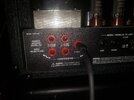
2 x 1/4" (4/8 ohms) OR 2 x 1/4" (8/16 ohms) OR 1 x 1/4" (16 ohms) ?

3. Plug a good speaker cable into the speaker cabinet.
Set meter for ohms.
Measure the free end of the speaker cable with the ohm meter.
What is the ohm reading ?

4. Are you using an attenuator?

Today's fun amp fixing tip:
Using a mismatched speaker will cause all kinds of problems.
If you are using the 16 ohm out of the amp:
Then you must connect to a 16 ohm speaker.
Don't ever guess, always measure the speaker cabinet as above. Make sure that the ohms (speaker impedance) is correct first.
 
Also one other thing. I look the specs up online for my head it says its suppose to have 9 tubes. I'm looking in the back of mine and only see 8 with spring reverb
 
Also one other thing. I look the specs up online for my head it says its suppose to have 9 tubes. I'm looking in the back of mine and only see 8 with spring reverb

High Voltage Test

Output tubes removed.
Set meter for DC volts
Connect black probe to metal chassis.
Turn power ON.
Turn standby to "operate." [High Voltage is now turned ON]
Connect red probe to Pin 3 of output tube socket. (don't shock yourself)
Write down the voltage reading.
Connect red probe to pin 4 of output tube socket.
Write down the voltage reading.
Now do the same for the remaining 3 output tube sockets.
Write down the DC voltage readings as above.
Turn off the power.

Now tell us what the DC voltage readings are for pins 3 and 4 of each output tube socket.

Don't put the output tubes in.
Don't turn the standby to "operate."
(except for the test above)
Don't play the amp until we finish troubleshooting.
It can get worse, so don't do that.


Today's fun amp fixing tip:
Bad speaker cable (test as above)
Wrong speaker impedance (does not match amp as above)
Can cause fuse, tubes, or other parts to blow.
That's why we do these tests.
To see if any of these parts have blown. What is the cause of blowing the fuse or the tubes?

But we do these tests FIRST.
We put the tubes in LAST.
This is a cautious approach, to make sure we don't damage the tubes or anything else. We don't want to make the problem worse than it already is.

The foolish person:
will put the tubes in first, then "see what happens." (the Charvel Dan Method.)"
And sometimes, this will just fry the new tubes, cause fuses to blow over and over, or make the problem worse.
Don't use the Carvel Dan Method.
Instead be cautious and test all that stuff above, take it one step at a time. Consider the voltage readings, consider the speaker readings.
Let experienced people look at all the facts first ----and they can help you learn ---and they can help you prevent the same problem from happening again.
 
BE CAREFUL SCRUFF--- there are LOADS of VOLTS in them Marshalls dont want no VOLT JOLTS
If he can't use the volt meter he can take it to a technician.
A lot of players these days are capable of measuring the plate volts and setting bias on their own...and this is not too far above that.

Except for those 2 measurements pins 3 and 4, it's low voltage.
 
Do all those tests above and tell us the readings.

Then you can do these next tests:

1. Are you using a real speaker cable?
Or are you using a guitar lead to hook up the speaker?
What kind (brand) of speaker cable are you using?
Note: you must use a real speaker cable, or damage can occur.

2. What output jack are you using to hook up the speaker?
2 x 1/4" (4/8 ohms) OR 2 x 1/4" (8/16 ohms) OR 1 x 1/4" (16 ohms) ?

3. Plug a good speaker cable into the speaker cabinet.
Set meter for ohms.
Measure the free end of the speaker cable with the ohm meter.
What is the ohm reading ?

4. Are you using an attenuator?

Today's fun amp fixing tip:
Using a mismatched speaker will cause all kinds of problems.
If you are using the 16 ohm out of the amp:
Then you must connect to a 16 ohm speaker.
Don't ever guess, always measure the speaker cabinet as above. Make sure that the ohms (speaker impedance) is correct first.
20200811_192014.jpg20200811_191953.jpg
 
The far left on the back row is a spring. I thought it was a tube as well until I opened the back up and saw what it was. And also with the cable. I'm not sure anymore. I got it off the wall where all the speaker cables were in the music store and I know it's a mono cable. But now I'm starting to rethink everything
 
Back
Top