
You are using an out of date browser. It may not display this or other websites correctly.
You should upgrade or use an alternative browser.
You should upgrade or use an alternative browser.
NAKD...: V2 Amplification 'Caldera"
- Thread starter syscokid
- Start date


Jay
Well-Known Member

Does this apply to any and all resistors? I already elevate all the major voltage dropping resistors.
Just those two Rs (R7 and R10) on the main PCB and your shielded jumper (in lieu of R6) on the power supply board. Good catch by AMS...


Amp Mad Scientist
Ambassador of Heresy

Does this apply to any and all resistors? I already elevate all the major voltage dropping resistors.
Even Mil spec dale resistors will arc right through the coating. But it happens over time not immediately.
Any time a grid or cathode resistor is on top of a high voltage track lift it up to make a space.
Any time a plate resistor is on top of a grid, ground, or cathode track lift it up.
When there is high voltage and low voltage crossing over each other, leave a space.
Because what happens is, the insulation coating on the board or the insulation coating on a resistor can break down, and it starts to arc between the high and low voltage.
This happens especially when the humidity is high.
So if you live in Arizona where the humidity is zero it happens a lot less or never at all.
If you live near the ocean, it happens a lot more when the air is humid. In Hawaii, New Orleans, etc. it happens a lot.
This has happened on countless Mesa Boogie amps. They do the same thing. Lay a resistor on top of a track. It happens on Dynaco amps with PC boards, it happens on B52 amps also.
They use high quality resistors, and they coat the board but the insulation still breaks down in humidity.
It will start out as a tiny little faint crackle, and get worse over time till it eventually shorts out the board.
Years ago, they used little ceramic spacers on the resistor legs to lift the resistor up and support it. But they stopped doing that, and that's when the problems started.
The auto insert wave solder machine could not put the spacers on the resistor legs. (the boards are entirely machine made) there is no hand assembly it's all machine insertion and soldering.
 Used as spacer to lift resistor from track. Richco and other hardware suppliers sell these little ceramic spacers. They come in all sizes.
Power resistors
Use the longer spacers to lift the hot resistor away from the fiberglass board. Over time the hot resistor burns a black spot onto the fiberglass.
Hardware, Fasteners, Accessories | Component Insulators, Mounts, Spacers | DigiKey
Hardware, Fasteners, Accessories - Component Insulators, Mounts, Spacers are in stock at Digikey. Order Now! Hardware, Fasteners, Accessories ship same day
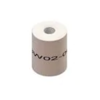
So anyhow:
If you guys are assembling PC boards, always use spacers if possible when a resistor lays on top of a track or pad.
Don't depend of the coating of the board or the coating of the resistor.
The KIT: should include the spacers.
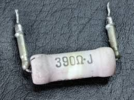 Another method is to use metal standoffs. But, replacing the resistor is more difficult.
Last edited:
OP

syscokid
Ambassador of War & Peace
Very cool, or should I say hot, info!!!! You truly are Amp Mad...Even Mil spec dale resistors will arc right through the coating. But it happens over time not immediately.
Any time a grid or cathode resistor is on top of a high voltage track lift it up to make a space.
Any time a plate resistor is on top of a grid, ground, or cathode track lift it up.
When there is high voltage and low voltage crossing over each other, leave a space.
Because what happens is, the insulation coating on the board or the insulation coating on a resistor can break down, and it starts to arc between the high and low voltage.
This happens especially when the humidity is high.
So if you live in Arizona where the humidity is zero it happens a lot less or never at all.
If you live near the ocean, it happens a lot more when the air is humid. In Hawaii, New Orleans, etc. it happens a lot.
This has happened on countless Mesa Boogie amps. They do the same thing. Lay a resistor on top of a track. It happens on Dynaco amps with PC boards, it happens on B52 amps also.
They use high quality resistors, and they coat the board but the insulation still breaks down in humidity.
It will start out as a tiny little faint crackle, and get worse over time till it eventually shorts out the board.
Years ago, they used little ceramic spacers on the resistor legs to lift the resistor up and support it. But they stopped doing that, and that's when the problems started.
The auto insert wave solder machine could not put the spacers on the resistor legs. (the boards are entirely machine made) there is no hand assembly it's all machine insertion and soldering.
View attachment 46100 Used as spacer to lift resistor from track. Richco and other hardware suppliers sell these little ceramic spacers. They come in all sizes.
Power resistors
Use the longer spacers to lift the hot resistor away from the fiberglass board. Over time the hot resistor burns a black spot onto the fiberglass.
Hardware, Fasteners, Accessories | Component Insulators, Mounts, Spacers | DigiKey
Hardware, Fasteners, Accessories - Component Insulators, Mounts, Spacers are in stock at Digikey. Order Now! Hardware, Fasteners, Accessories ship same daywww.digikey.com
View attachment 46101
So anyhow:
If you guys are assembling PC boards, always use spacers if possible when a resistor lays on top of a track or pad.
Don't depend of the coating of the board or the coating of the resistor.
The KIT: should include the spacers.
View attachment 46102 Another method is to use metal standoffs. But, replacing the resistor is more difficult.
 .
.Paying attention to resistors crossing over substantial voltage tracks on a pcb is definitely something new to me. I shall heed your advise. Thanks, AMS...


Amp Mad Scientist
Ambassador of Heresy
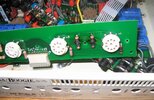
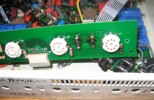
Another one bites the dust...you don't even know how many of those amps went south like this one. I mean, a lot.
Amp Mad Scientist
Ambassador of Heresy
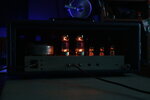
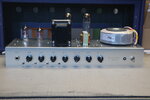
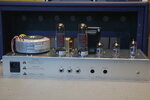
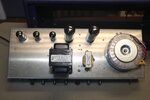
Here's one for your Nomad collection:
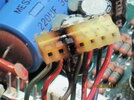
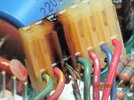
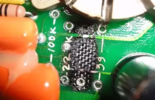
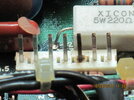
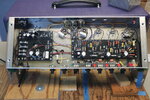
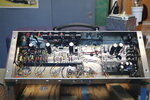
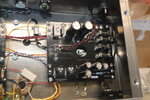
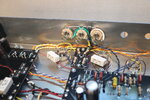
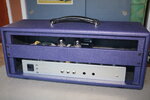
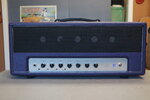
Amp Mad Scientist
Ambassador of Heresy
Something Wicked This Way Comes...
View attachment 46311
Done!!!!!!
View attachment 46302
I'll wait till the amp is burned in for a few hours before I eventually install the effects loop.
View attachment 46303
View attachment 46304
View attachment 46305
View attachment 46306
View attachment 46307
View attachment 46308
View attachment 46310
Tadaaaaaaaaaa...:
View attachment 46309
So
Between pin 4 and 5 of the preamp tube, what is the AC voltage?


OP
syscokid
Ambassador of War & Peace
Each heater pin of the preamp tubes is measuring about 6.25vac. Heater pin 9 is not being used.So
Between pin 4 and 5 of the preamp tube, what is the AC voltage?
EL34 power tubes: Heater pin 2 is 6.25vac. Heater pin 7 is less than 1vac... around .3vac!
OP
syscokid
Ambassador of War & Peace
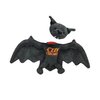
I got the Ozzy Plush Bat last year... $25 or $30 I think. There's a used one on Ebay for $60.Looks very cool!
Love your Ozzy bat watching over your bench.

Ozzy Bat Plush
The Ozzy Osbourne Plush Bat is a web exclusive. Bring the legendary moment in rock history to life with this soft toy Plush Bat, featuring the Ozzy Osbourne logo and a velcro detachable head. 12" tall Plush bat Detachable head
 store-uk.ozzy.com

OP
syscokid
Ambassador of War & Peace
I really wish y'all at TTR can experience this amp's performance. I bet all of you would be pleasantly surprised on the richness of all the tones available coming out from the V2 Caldera.It looks good, but how does she sound?
Using my old '71 SG Standard with Fralin hummers, I started off as usual, with the lowest gain settings first. Bass, Mid, & Treble set at noon. All circuit enhancing switches set to off or neutral. (Preamp) Gain about 9:00 and (Master) volume maxed at 5:00. It's already pretty loud at these settings, but the sound was so beautiful I just couldn't turn the MV down. Yet backing off my pick attack, or reducing the guitar's volume controls still produced even more bold sounding clean tones but with a little bit less volume. No bassy-woofy manure here folks. Can't believe the extra sustain this amp is adding at even low gain settings... Phenomenal!!!!
Move the Gain control to noon or 1:00 (... got to back down the MV quite a bit, otherwise it's insanely too loud), and now there's some serious crunch going on, but I can still get awesome and very loud clean tones by the use of the guitar's volume and tone controls. Very violin-type of tones are happening at this gain level with a more fluid approach of a picking technique.
Gain up to the max, and it's still very highly useable and super inspiring. Reduce the bass a bit with the higher gain and the amp just becomes vicious. And believe it or not... You can still get very decent clean tones by backing off. Articulation reigns supreme on this amp at all gain levels.
The Era, the Bite, the Punch, the Clip, and the rear mounted Fat switch are like five different icings that add more indulgence to a perfectly baked cake.
Someone really did their homework here to produce an amazing sounding and responsive amp for us rockers! Sure makes me wonder about V2 Amp's other two designs: the Vibe, and the Denogginzer...

So very happy with this beast. Once again, a very big thank you to Kerry Brown for introducing me to V2 Amps and Mr John McDonald...
Last edited:

Dude!!!!!! Well said!!!! Thanks for sharing!

Kerry Brown
Ambassador of the Great Northern Bar Jams
John makes some incredible amps, exactly as you describe. I only had an hour or so to try a couple but I was very impressed. They are some of the most responsive amps I’ve ever played. You play the amp as much as the guitar. Now, if I could only afford one.So very happy with this beast. Once again, a very big thank you to Kerry Brown for introducing me to V2 Amps and Mr John McDonald...