
You are using an out of date browser. It may not display this or other websites correctly.
You should upgrade or use an alternative browser.
You should upgrade or use an alternative browser.
Too much time on my hands
- Thread starter Hackmaster
- Start date


OP


Thanks Ivan. Had a lot of practice with this one.Great job Mr Hackmaster, really well done. Cheers


OP
That is so much better! You should have made it left handed while you were at it.
You have no idea how much better now Cador.
The neck falling off was a blessing in disguise.
After playing with it, and playing it for a day the changes are obvious.
A couple more degrees back tilt on that neck made a huge difference in a couple of ways.
With higher action at the bridge the strings can now lay on the fretboard.
Meaning the action can now be adjusted to where you want it, not just as low as the bridge would go.
Before the reset I was stuck with higher than desired action, with the bridge slammed down tight.
I'm also able to get more adjustment from the pickups now as well.
This will be of benefit when I spend another day finding the optimum pickup height and sound.
Happy camper here...:dood:


syscokid
Ambassador of War & Peace
How did you know how much tilt you needed? Where you able to do an accurate mockup before gluing the neck back in?A couple more degrees back tilt on that neck made a huge difference...
Excellent work as usual, Hack...



OP
Thanks Sysco, It was a crapshoot. My thinking was any more tilt is better than none, to get the bridge up a bit.How did you know how much tilt you needed? Where you able to do an accurate mockup before gluing the neck back in?
Excellent work as usual, Hack...
I did several mockups while I determined my shim thickness / angle.
I'd clamp things, then use a straight edge to see where it would be over the bridge, while resting on the frets.
When things looked right, I was there.
Stock claimed to be 1.1 degree back tilt, according to Gibson spec.
I'm guessing it to be closer to 3 degree back tilt now.
syscokid
Ambassador of War & Peace
Cool, thanks!Thanks Sysco, It was a crapshoot. My thinking was any more tilt is better than none, to get the bridge up a bit.
I did several mockups while I determined my shim thickness / angle.
I'd clamp things, then use a straight edge to see where it would be over the bridge, while resting on the frets.
When things looked right, I was there.
Stock claimed to be 1.1 degree back tilt, according to Gibson spec.
I'm guessing it to be closer to 3 degree back tilt now.

Nice about face in that baby Hack
The new finish, and getting the neck where you need it is priceless..
Cheers
The new finish, and getting the neck where you need it is priceless..
Cheers
OP
Thanks Mitch. It's a whole new guitar now.Nice about face in that baby Hack
The new finish, and getting the neck where you need it is priceless..
Cheers
We've been getting reacquainted.


Thanks Mitch. It's a whole new guitar now.
We've been getting reacquainted.
I see so many flaws on brand new guitars. I saw a brand new Gibson Les Paul this week with a visibly open gap between body and neck. Honestly, i was not at all surprised.
Kinda funny that what you are doing in your garage is far superior to what people are paying a manufacturer to produce.
My garage-built guitars may not be classics, but they are done right...unique serilizations too...

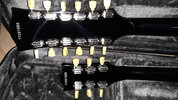
Every guitar sold to the musician should have fretwork like this:
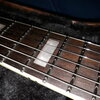
Ask Mitch how well that black Faux Paul plays and sounds...
Rumor has it the Red Von Herndon Stagecrafter i built for Marty Stuart is making its way from Philadelphia, Mississippi up to Kenny's place in Nashville...
Peace, Health and Prosperity to you all...
syscokid
Ambassador of War & Peace
In a perfect world... Yes! But in the real world... Fretwork like that is very time consuming. Time and proper skills is costly.Every guitar sold to the musician should have fretwork like this

Rumor has it the Red Von Herndon Stagecrafter i built for Marty Stuart is making its way from Philadelphia, Mississippi up to Kenny's place in Nashville...
And its sibling relocated to Lake Arrowhead

In a perfect world... Yes! But in the real world... Fretwork like that is very time consuming. Time and proper skills is costly.
Yes, you are correct, but why is it, the builders don't mind charging a high price for an instrument without it???
syscokid
Ambassador of War & Peace
This is a loaded question. Some builders, whether major manufacturers or boutique luthiers, go the extra mile with their fretwork. It's hard for me to figure out which builder is charging more for their work by presenting a guitar with immaculate fretwork. Maybe a company like Gibson doesn't go this extreme with most of their guitars, but I'm assuming that on their very high end builds they do. But at this point, the high end Gibson's are already ridiculously expensive, and I have no clue how much an immaculate fret job is adding to these prices.Yes, you are correct, but why is it, the builders don't mind charging a high price for an instrument without it???
On the other hand, I've seen $1500 to $2000 Ibanez's with some of the most beautiful fretwork I have ever seen.