Amp Mods for Better Reliability & Protection

syscokid

Ambassador of War & Peace
Country flag
The mod I want to try is called and Soft Start Inrush Current Limiter. Seems to be an easy and inexpensive mod. What does it do? It gives "the rectifier and power supply components a "soft start". It limits the cold start inrush current as the rectifier charges the filter (reservoir) caps. It is placed between the power cord's neutral line and power transformer primary." The idea for this mod is inspired by following Rob Robinette's enthusiast website: Rob Robinette's Car and Tube Amp Website. The specific article can be found here: Amp Mods.

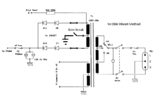
Here's a layout from a Fender '57 Deluxe that I cleaned up so it will be easier to follow the circuit with the thermistor, and also a safety cap for line noise reduction:
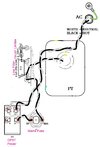
57_Deluxe_Chassis_Layout with Protection Mods - Copy.jpg

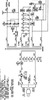
The guinea pig amp will be my homebuilt Spiffy 16. Here's the cartoonish-added thermistor and safety cap on where I'm planning to add to the amp's circuit:
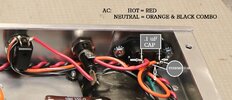
In-Rush Current Limiting Mod.JPG
The safety cap will be soldered at the AC receptacle's lugs at points A and B. The thermistor will be soldered at point B and to the PT's primary "neutral" wires (black and orange combo) after those wires have been disconnected from the AC receptacle, which will be point C

The main difference between the two layouts is that on my amp I'm planning to add those two components before the power switch. The Fender amp has it after the power switch. I'm guessing and hoping it wont make a difference between the two. Any comments or advise?

And... YES, @eSGEe, THERE IS SOLDERING INVOLVED!
 
You know sys, I think my Boogies has one across where the power supply enters the amp. Big green thing that looks like an old giant cap. Never had to bother with it and as old as they are only had to service the MKIII one time. Bought em new. Now I'm getting so long in the tooth I can't buy anything new and have it become " Vintage " anymore! 046.gif
 
You know sys, I think my Boogies has one across where the power supply enters the amp. Big green thing that looks like an old giant cap. Never had to bother with it and as old as they are only had to service the MKIII one time. Bought em new. Now I'm getting so long in the tooth I can't buy anything new and have it become " Vintage " anymore! View attachment 41236
That may be a "varistor" by the description of it & how it's wired (wired "across" where the power enters the amp). They are a good addition to any amp as they take care of any spikes etc that may come down the power line. Pretty sure Boogies were one of the first commercially built amps to feature them.
A soft start up inrush current limiter is also a good addition to any amp that features a solid state rectifier. Tube rectified amps do not need this as the tube rectifier provides the soft start up & inrush current limiting, though the filter capacitors inrush current demands is what most often cause a rectifier tube to fail.
If calculated, inrush current can be surprisingly high.
Kevin O'Connor, author of the TUT (the ultimate tone) series of books & designer of the London Power amplifiers once calculated the inrush current of a JTM45/JTM50 type power supply for me. It is over 40A, for a micro-second of course. The inrush current demands is why slow blow fuses are used. At start up (switch on), the filter caps appear almost as a dead short to the rectifier/power transformer. Cheers
 
Last edited:
The mod I want to try is called and Soft Start Inrush Current Limiter. Seems to be an easy and inexpensive mod. What does it do? It gives "the rectifier and power supply components a "soft start". It limits the cold start inrush current as the rectifier charges the filter (reservoir) caps. It is placed between the power cord's neutral line and power transformer primary." The idea for this mod is inspired by following Rob Robinette's enthusiast website: Rob Robinette's Car and Tube Amp Website. The specific article can be found here: Amp Mods.

Here's a layout from a Fender '57 Deluxe that I cleaned up so it will be easier to follow the circuit with the thermistor, and also a safety cap for line noise reduction:
View attachment 41227

The guinea pig amp will be my homebuilt Spiffy 16. Here's the cartoonish-added thermistor and safety cap on where I'm planning to add to the amp's circuit:
View attachment 41228
The safety cap will be soldered at the AC receptacle's lugs at points A and B. The thermistor will be soldered at point B and to the PT's primary "neutral" wires (black and orange combo) after those wires have been disconnected from the AC receptacle, which will be point C

The main difference between the two layouts is that on my amp I'm planning to add those two components before the power switch. The Fender amp has it after the power switch. I'm guessing and hoping it wont make a difference between the two. Any comments or advise?

And... YES, @eSGEe, THERE IS SOLDERING INVOLVED!

There's another way to do it that was used by old Hiwatt of yore.
But in order to do this one, you need a center tap on the HT winding secondary.
If you don't have a CT on the HT secondary, you really can't do this one.

Hiwatt standby sw.png

Technically what happens is:
when the power switch is turned on, there is voltage in the HT but no AC current, referenced to the amplifier ground because the HT center tap is disconnected.
This charges the power supply filter capacitors slowly but there is no surge current as far as the transformer is concerned..
When the capacitors are charged up, the beer break switch is engaged. Because the caps are already charged up, there is very little surge current.
The switch turns the current on, but not the voltage.

This can be combined with the mains soft start and should reduce wear and tear on the filter caps and HT winding.

I am not afraid to use the beer break switch. I use it frequently / fearlessly / and often because beers are on the house ! :celebrate2:
 
Last edited:
There's another way to do it that was used by old Hiwatt of yore.
But in order to do this one, you need a center tap on the HT winding secondary.
If you don't have a CT on the HT secondary, you really can't do this one.

View attachment 41250

Technically what happens is:
when the power switch is turned on, there is voltage in the HT but no AC current, referenced to the amplifier ground because the HT center tap is disconnected.
This charges the power supply filter capacitors slowly but there is no surge current as far as the transformer is concerned..
When the capacitors are charged up, the beer break switch is engaged. Because the caps are already charged up, there is very little surge current.
The switch turns the current on, but not the voltage.

This can be combined with the mains soft start and should reduce wear and tear on the filter caps and HT winding.

I am not afraid to use the beer break switch. I use it frequently / fearlessly / and often because beers are on the house ! :celebrate2:
Oh Lord... I don't know whether to laugh at this, or cry... :rolf::cry::hmmm:

But yeah, the Spiffy 16 has no stinking HT centertap
 
There's another way to do it that was used by old Hiwatt of yore.
But in order to do this one, you need a center tap on the HT winding secondary.
If you don't have a CT on the HT secondary, you really can't do this one.

View attachment 41250

Technically what happens is:
when the power switch is turned on, there is voltage in the HT but no AC current, referenced to the amplifier ground because the HT center tap is disconnected.
This charges the power supply filter capacitors slowly but there is no surge current as far as the transformer is concerned..
When the capacitors are charged up, the beer break switch is engaged. Because the caps are already charged up, there is very little surge current.
The switch turns the current on, but not the voltage.

This can be combined with the mains soft start and should reduce wear and tear on the filter caps and HT winding.

I am not afraid to use the beer break switch. I use it frequently / fearlessly / and often because beers are on the house ! :celebrate2:
It was quite common practice in valve equipment to place the HT fuse between the power transformer secondary's center tap & ground, in the same manner as the "beer break" (standby) switch in your diagram. Hiwatts had the HT fused in this way on many of the old designs (as did Marshall JTM45's etc).

Technically what happens is:
when the power switch is turned on, there is voltage in the HT but no AC current, referenced to the amplifier ground because the HT center tap is disconnected.

Thee above statement is not quite correct.
When the power is switched on there "IS" AC current flowing in the secondary, the secondary is acting just like a secondary that has no center tap. The AC voltage is induced across the whole winding.
With the secondary's center tap not grounded the negative halves of the full wave rectified waveform have no path to ground, so no "DC current" flows in the HT. It is because of this that the HT could be fused between the secondary center tap & ground.
All that said, the "beer break" switch is a good idea & will work well to reduce filter inrush current. Cheers
 
Last edited:
Oh man a pedal is cool to build and a hell of a lotta fun. Socket as much as you can .. IC's ,Trannys etc so you can swap parts out easily and listen to how the different parts change the sound! Each one you do you get better at it and learn a lot more than you knew the pedal before. Right now on ebay I noticed Klon kits with the gold w/ the long tail horsey tail and the same knobs. You'll get real good at it after a while !
 
Oh Lord... I don't know whether to laugh at this, or cry... :rolf::cry::hmmm:

But yeah, the Spiffy 16 has no stinking HT centertap

Try that Hiwatt method.
You will be surprised how much less surge you get.
I measured those methods and compared them, now I'm convinced that the Hiwatt way was better.

The inrush limiter on the primary is also great...oh yeah.
 
It was quite common practice in valve equipment to place the HT fuse between the power transformer secondary's center tap & ground, in the same manner as the "beer break" (standby) switch in your diagram. Hiwatts had the HT fused in this way on many of the old designs (as did Marshall JTM45's etc).

Thee above statement is not quite correct.
When the power is switched on there "IS" AC current flowing in the secondary, the secondary is acting just like a secondary that has no center tap. The AC voltage is induced across the whole winding.
With the secondary's center tap not grounded the negative halves of the full wave rectified waveform have no path to ground, so no "DC current" flows in the HT. It is because of this that the HT could be fused between the secondary center tap & ground.
All that said, the "beer break" switch is a good idea & will work well to reduce filter inrush current. Cheers

I started calling it the "beer break" switch because of all the geniuses who are telling us not to use the standby on our amplifiers.
"Don't use this as a beer break switch ! " cries the geniuses. " It destroys yer tubes!"
"Don't leave the amp on standby, it's really bad for your amp..." :run::run::run:

Like I used the standby switch for 50 years, and it destroyed the amp, every time....not.

I don't believe that. And from now on, it's: "beer break switch."
In fact I'm going to label the front panel switch "beer break," instead of "standby." :pound-hand:

Oh I hope the geniuses who told us how bad the standby switch is, are reading this right now.
I have a message for them: stuff it.
 
Try that Hiwatt method.
But but but, the Spiffy does not have an HT centertap!

The inrush limiter on the primary is also great...oh yeah.
Cool. So, installing the in-rush limiter (thermistor) between the ac receptacle's neutral lug and the PT's secondary neutral wires is acceptable?

Oh I hope the geniuses who told us how bad the standby switch is, are reading this right now.
I have a message for them: stuff it.
I find it very interesting that you have said this. I have much respect for your knowledge, specifically on amps. For my own piece of mind, I need to pump myself with more research on this subject.
 
But but but, the Spiffy does not have an HT centertap!


Cool. So, installing the in-rush limiter (thermistor) between the ac receptacle's neutral lug and the PT's secondary neutral wires is acceptable?


I find it very interesting that you have said this. I have much respect for your knowledge, specifically on amps. For my own piece of mind, I need to pump myself with more research on this subject.

Of course dude, Fender does the same thing. Hot or Neutral doesn't care.

Where is the schematic to the Spiffy?
Maybe we can conjure some diabolical modifications.
 
You know sys, I think my Boogies has one across where the power supply enters the amp. Big green thing that looks like an old giant cap. Never had to bother with it and as old as they are only had to service the MKIII one time. Bought em new. Now I'm getting so long in the tooth I can't buy anything new and have it become " Vintage " anymore!

Well there is 2 types.
One is the MOV "across" the voltage.
If the voltage surges above a certain level limit, the MOV starts to draw current to load the voltage down.
(like for example, the MOV might be 145 VAC for a 120 volt line mains input)
And if the current goes really too high when voltage is above 145 VAC it will blow the mains fuse pretty fast.
This is a voltage surge protector.

The second one is the inrush current protector. (soft start)
TH1 on the schematic of a Fender HRD.
When cold, It drops voltage until it heats. When it's hot, the resistance shorts out closer to 0 ohms based on temperature.

FenderHRDmains.png
 
Of course dude, Fender does the same thing. Hot or Neutral doesn't care.
Nice. More options on the location of the thermistor.

Where is the schematic to the Spiffy?
Maybe we can conjure some diabolical modifications.
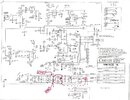
The amp started its life as a Carvin Vintage 16:
Carvin vintage 16 Schematic.jpg

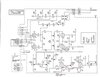
Mods were done based on the Hasse mods. NFB was eliminated. Master volume was moved from before the tonestack to after the phase inverter. Phase inverter component values were adjusted to Vox AC specs. RAW control added. Other more minor voicing changes also:
Hasse V16 mods (1).jpg

A few months ago, I completely rebuilt the amp with a new cab, new chassis, new circuit board, new components with the exception of the stock Carvin OT and the Mercury Magnetics PT. Newer mods include all tube heater filaments are AC energized. Originally, V1 was DC energized. Eliminated the separate RAW control and increased the stock mid control pot from 25K to 250K. Added a Vox-styled CUT control. And a few other voicing changes, too.
 
Nice. More options on the location of the thermistor.


The amp started its life as a Carvin Vintage 16:
View attachment 41288

Mods were done based on the Hasse mods. NFB was eliminated. Master volume was moved from before the tonestack to after the phase inverter. Phase inverter component values were adjusted to Vox AC specs. RAW control added. Other more minor voicing changes also:
View attachment 41289

A few months ago, I completely rebuilt the amp with a new cab, new chassis, new circuit board, new components with the exception of the stock Carvin OT and the Mercury Magnetics PT. Newer mods include all tube heater filaments are AC energized. Originally, V1 was DC energized. Eliminated the separate RAW control and increased the stock mid control pot from 25K to 250K. Added a Vox-styled CUT control. And a few other voicing changes, too.

Oh OK you made your own, I can relate to that.

carvinPS.png

If the beer break switch is not engaged turn the power on, and see if the filter caps start charging up slowly.
If the filter caps charge up then I think this will work.
Well I never tried it before but theoretically it should.
But I'm not sure if it will cause premature wear on the switch contacts. That is a possibility but I'm willing to try it.
 
Nice. More options on the location of the thermistor.


The amp started its life as a Carvin Vintage 16:
View attachment 41288

Mods were done based on the Hasse mods. NFB was eliminated. Master volume was moved from before the tonestack to after the phase inverter. Phase inverter component values were adjusted to Vox AC specs. RAW control added. Other more minor voicing changes also:
View attachment 41289

A few months ago, I completely rebuilt the amp with a new cab, new chassis, new circuit board, new components with the exception of the stock Carvin OT and the Mercury Magnetics PT. Newer mods include all tube heater filaments are AC energized. Originally, V1 was DC energized. Eliminated the separate RAW control and increased the stock mid control pot from 25K to 250K. Added a Vox-styled CUT control. And a few other voicing changes, too.

Maybe like that is better for the switch contacts.

Hiwattps2.png
 
Well there is 2 types.
One is the MOV "across" the voltage.
If the voltage surges above a certain level limit, the MOV starts to draw current to load the voltage down.
(like for example, the MOV might be 145 VAC for a 120 volt line mains input)
And if the current goes really too high when voltage is above 145 VAC it will blow the mains fuse pretty fast.
This is a voltage surge protector.

The second one is the inrush current protector. (soft start)
TH1 on the schematic of a Fender HRD.
When cold, It drops voltage until it heats. When it's hot, the resistance shorts out closer to 0 ohms based on temperature.

View attachment 41287
The MOV (metal oxide varistor) was what I was thinking because @Vox AC30 said it was wired "across" where the AC power enters the amp. Boogies were one of the first amps to feature a MOV across the PT primary.
Rather than put them in my amps, I have an AC filter/surge/spike arrestor featuring among other components, MOV's. Everything is powered via it. Cheers
 
Back
Top