Amp Mods for Better Reliability & Protection

Oh OK you made your own, I can relate to that.

View attachment 41292

If the beer break switch is not engaged turn the power on, and see if the filter caps start charging up slowly.
If the filter caps charge up then I think this will work.
Well I never tried it before but theoretically it should.
But I'm not sure if it will cause premature wear on the switch contacts. That is a possibility but I'm willing to try it.
I would use this variant, where the SPST switch is switching the bridge rectifier's faux center tap in & out.
Switching DC can shorten switch life (arcing between contacts as it "makes or breaks", but here it's at low potential.
In the second version, the DPDT switch isn't switching AC, rather pulses of half wave rectified DC, but it is at much higher potential.
Show me, please...
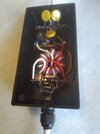
Here's a couple of quick gutshot picsIMG_20200402_080220.jpg
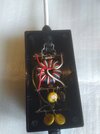
IMG_20200402_080301.jpg
Sorry about the poor quality, low light 'phone pics, the sun wassn't fully up yet when I snapped these. I can maybe dig out a schematic & BOM with part numbers for you a bit later. This was designed by our ex (no longer here at TTR) resident electronics genius. Cheers
 
Here's a couple of quick gutshot pics
IMG_20200402_080220.jpg

IMG_20200402_080301.jpg

Sorry about the poor quality, low light 'phone pics, the sun wassn't fully up yet when I snapped these. I can maybe dig out a schematic & BOM with part numbers for you a bit later. This was designed by our ex (no longer here at TTR) resident electronics genius. Cheers
I think you're talking about (Mr.) Don P. Didn't RVA build something like this with Don P's help?
 
I'm super jealous of all these amp builds, but the night that I made ambassador I shocked the absolute ever-living s*** out of myself. So bad in fact I felt like I had a sunburn afterward and I still have no feeling on top of my right thigh. That was like a week ago or something and it still hasn't come back yet. I'm thinking I might have nerve damage.
Holy feces, how did you do that?
 
I think you're talking about (Mr.) Don P. Didn't RVA build something like this with Don P's help?
You got it. I was previously using a unit incorporating a MOV & gas discharge tube surge arrester, 'til Don kindly gave me the schematic, BOM etc for this. Not sure if RVA built one, but Don helped me with the building of this (I had a question regarding the wire type used to wind the inductor). This is the same type unit Don powers anything audio through. As you know, he is extremely knowledgeable about anything electrical. IIRC, it was a multi-person private conversation where he gave me the specs etc (but I could be mistaken on that).
This would be another very cool project. Very useful, too!
Haha, I'll see if I can find the schematic, BOM etc for you (give me something to do during this COVID-19 lockdown :poo: thing), though I have no idea where I put them. Maybe check back through Don's posts & PM posts, I "think" it was while we were attempting to diagnose someone's amp (Chili's??? RVA's???) that he posted it. Cheers
 
Last edited:
You got it. I was previously using a unit incorporating a MOV & gas discharge tube surge arrester, 'til Don kindly gave me the schematic, BOM etc for this. Not sure if RVA built one, but Don helped me with the building of this (I had a question regarding the wire type used to wind the transformer). This is the same type unit Don powers anything audio through. As you know, he is extremely knowledgeable about anything electrical. IIRC, it was a multi-person private conversation where he gave me the specs etc (but I could be mistaken on that).

Haha, I'll see if I can find the schematic, BOM etc for you (give me something to do during this COVID-19 lockdown :poo: thing), though I have no idea where I put them. Maybe check back through Don's posts & PM posts, I "think" it was while we were attempting to diagnose someone's amp (Chili's??? RVS's???) that he posted it. Cheers
Ok, I found it. How quick was that. I'll PM it to you, seeing as it's not my design to put into the public domain. Seeing as you (along with other TTR members) were part of the original conversation "Possible Amp diagnosis tip" (page 7) where Don posted it I don't think he would mind me passing it onto you. Cheers
 
Last edited:
I would use this variant, where the SPST switch is switching the bridge rectifier's faux center tap in & out.
Switching DC can shorten switch life (arcing between contacts as it "makes or breaks", but here it's at low potential.
In the second version, the DPDT switch isn't switching AC, rather pulses of half wave rectified DC, but it is at much higher potential.

Here's a couple of quick gutshot picsView attachment 41295
View attachment 41296
Sorry about the poor quality, low light 'phone pics, the sun wassn't fully up yet when I snapped these. I can maybe dig out a schematic & BOM with part numbers for you a bit later. This was designed by our ex (no longer here at TTR) resident electronics genius. Cheers

I really like the red, white and blue in that circuit.
In some ways British, in other ways American.
It kinda looks like a British Flag.
(y)
 
Last edited by a moderator:
The mod I want to try is called and Soft Start Inrush Current Limiter. Seems to be an easy and inexpensive mod. What does it do? It gives "the rectifier and power supply components a "soft start". It limits the cold start inrush current as the rectifier charges the filter (reservoir) caps. It is placed between the power cord's neutral line and power transformer primary." The idea for this mod is inspired by following Rob Robinette's enthusiast website: Rob Robinette's Car and Tube Amp Website. The specific article can be found here: Amp Mods.

Here's a layout from a Fender '57 Deluxe that I cleaned up so it will be easier to follow the circuit with the thermistor, and also a safety cap for line noise reduction:
View attachment 41227

The guinea pig amp will be my homebuilt Spiffy 16. Here's the cartoonish-added thermistor and safety cap on where I'm planning to add to the amp's circuit:
View attachment 41228
The safety cap will be soldered at the AC receptacle's lugs at points A and B. The thermistor will be soldered at point B and to the PT's primary "neutral" wires (black and orange combo) after those wires have been disconnected from the AC receptacle, which will be point C

The main difference between the two layouts is that on my amp I'm planning to add those two components before the power switch. The Fender amp has it after the power switch. I'm guessing and hoping it wont make a difference between the two. Any comments or advise?

And... YES, @eSGEe, THERE IS SOLDERING INVOLVED!

OK dude I forgot about this but prepare yourself for the ultimate (ultimato) microprocessor controlled programmable soft start for audio equipment:
Everything you wanted, but were afraid to ask for.
1586514951154.png

  • Unlike any other product on the market, Mercury’s Amp-Saver incorporates ‘smart’ circuitry to actively monitor the voltage and current at start-up. If something doesn’t look right, the Amp-Saver will go into ‘protect’ mode and save your amp from anything destructive. If no issues are detected, the power to your amp is slowly raised to diminish inrush currents in the mains transformer, filter caps, and tube filaments. The Amp-Saver also offers user-programmable ramp speed (how slow or fast the power is applied), and current sensitivity (offering the ability to fine-tune for your particular amp — more info below).
  • Other circuits use passive devices (resistors/thermistors) to blindly slow the inrush current at turn-on. Unfortunately this method adds heat and robs audio amplifiers of the power they need to work their best. Even more sophisticated relay/solid state switchers do not offer active protection if too much current is being pulled.
What is Ramp Time?
This controls how quickly or slowly the Amp-Saver ramps up the voltage and current to your amp. The Amp-Saver is designed to minimize the inrush current at any setting. From the factory, the ‘RAMP ADJ.’ is set to maximum (fully clockwise) which goes from zero to full power in about 5 seconds. This control can be adjusted to your application using a small flathead screwdriver- the minimum setting is 1 second (fully counter-clockwise).

As it ramps, the Amp-Saver status LED will flash a few times and then stay lit green, indicating your amp has been safely started without any detected issues.
When you switch your tube amp on, the Amp-Saver monitors the power flowing from the outlet into your amp. If the tube amp is in trouble and is drawing more power than it should, Mercury’s Amp-Saver will go into protect mode and shut off the power (indicated by a flashing red status LED).
 
OK dude I forgot about this but prepare yourself for the ultimate (ultimato) microprocessor controlled programmable soft start for audio equipment:
Everything you wanted, but were afraid to ask for.
View attachment 41727

  • Unlike any other product on the market, Mercury’s Amp-Saver incorporates ‘smart’ circuitry to actively monitor the voltage and current at start-up. If something doesn’t look right, the Amp-Saver will go into ‘protect’ mode and save your amp from anything destructive. If no issues are detected, the power to your amp is slowly raised to diminish inrush currents in the mains transformer, filter caps, and tube filaments. The Amp-Saver also offers user-programmable ramp speed (how slow or fast the power is applied), and current sensitivity (offering the ability to fine-tune for your particular amp — more info below).
  • Other circuits use passive devices (resistors/thermistors) to blindly slow the inrush current at turn-on. Unfortunately this method adds heat and robs audio amplifiers of the power they need to work their best. Even more sophisticated relay/solid state switchers do not offer active protection if too much current is being pulled.
What is Ramp Time?
This controls how quickly or slowly the Amp-Saver ramps up the voltage and current to your amp. The Amp-Saver is designed to minimize the inrush current at any setting. From the factory, the ‘RAMP ADJ.’ is set to maximum (fully clockwise) which goes from zero to full power in about 5 seconds. This control can be adjusted to your application using a small flathead screwdriver- the minimum setting is 1 second (fully counter-clockwise).

As it ramps, the Amp-Saver status LED will flash a few times and then stay lit green, indicating your amp has been safely started without any detected issues.
When you switch your tube amp on, the Amp-Saver monitors the power flowing from the outlet into your amp. If the tube amp is in trouble and is drawing more power than it should, Mercury’s Amp-Saver will go into protect mode and shut off the power (indicated by a flashing red status LED).
You're frickin killing me... :BH:

And now, for some obnoxious GAS-induced research... off I go... :drive:
 
When you think of it, tube equipment has been getting along just fine without inrush current limiting since, well, the very beginnings of tubes. If used regularly, the filter caps can still be in good shape long past their stated service life hours have past. How often do you see a tube filament burn up on power up? I haven't seen one yet in 40(ish) yrs of messing with tubes. I do love the bright "flash" of my old Mullard pre amp tube filaments on power up. So are devices like these advantageous, of course they are. Do we really need them, obviously not. Cheers
 
Last edited:
When you think of it, tube equipment has been getting along just fine without inrush current limiting since, well, the very beginnings of tubes. If used regularly, the filter caps can still be in good shape long past their stated service life hours have past. How often do you see a tube filament burn up on power up? I haven't seen one yet in 40(ish) yrs of messing with tubes. I do love the bright "flash" of my old Mullard pre amp tube filaments on power up. So are devices like these advantageous, of course they are. Do we really need them, obviously not. Cheers

Yes tubes worked without that stuff since before I was born.
 
When you think of it, tube equipment has been getting along just fine without inrush current limiting since, well, the very beginnings of tubes. If used regularly, the filter caps can still be in good shape long past their stated service life hours have past. How often do you see a tube filament burn up on power up? I haven't seen one yet in 40(ish) yrs of messing with tubes. I do love the bright "flash" of my old Mullard pre amp tube filaments on power up. So are devices like these advantageous, of course they are. Do we really need them, obviously not. Cheers
What about amps without a Standby switch?
 
No problem at all. I've seen plenty & owned a few old amps with no standby switches. Aside from guitar amps, no other valve equipment used a standby switch that I know of. Cheers

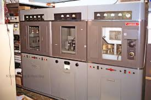
The idea for standby switch comes from tube radio transmitters. All of which pretty much have standby switches.
The tube life is extended.

1586601388032.png
Far right cabinet is the power amp. Plate volts is 5300 VDC, plate current 10 amps, bias voltage is about 975 VDC.
 
Last edited:
What about amps without a Standby switch?

Amps without a standby are class A amps. No bias voltage to control the current.
In a Class A amp the output runs at 100% full time.
In Class A amps, the tube life is shorter.

In Class AB, the bias voltage and filament are turned on before the B+ voltage is.
This changeover to class AB was probably to increase reliability and tube life span.
In Class AB, the bias voltage causes the output to idle when there is no audio going through. This reduces the heat overall.
 
Back
Top