If the guitar goes out of tune when you put your fingers on it, you are definitely
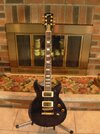
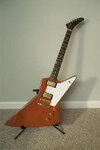
pressing too hard. My Gibson SG was the first electric guitar that I owned since
I was in my twenties, a long time ago. I spent my whole career playing acoustic and
bass.
When I brought the Gibson home, I thought there was something wrong with it.
I couldn't play in tune. But my long experience with badly set up acoustic guitars
had given me the "acoustic player's grip of death..." and I was simply squeezing the Gibson too hard.
I swapped out the tuners because somebody told me Gibson tunes were crap.
This was bull

, but I didn't know. So I bought "better"ones, and installed them.
I spent some more money trying to make the guitar play better, got an exper
setup job and a new nut. I was still throwing the guitar out of tune with my own
powerful grip, but I didn't know it yet.
Finally in desperation, I saw a couple friends of mine playing at an outdoor
restaurant. I stopped by, and listened to them. My friend Rod Capps is an
excellent guitarist, and he goes from acoustic to electric seamlessly in the
same set, and makes it look easy. I told him I had a new Gibson, and asked
him if he wanted to see it. Of course he did. He plugged it in and played it
and sounded great.
At that point, I knew it was me. There was nothing wrong with my guitar.
I had to teach myself to play all over again, this time properly with my thumb
behind the neck (as much as I could, overcoming bad habits)... Once I began
to keep my thumb behind the neck, I was able to play with a much more relaxed
hand.
Playing with a much more relaxed hand allowed my playing and my style to take
off, and soon I was playing parts I never thought I could. If you keep your thumb behind the neck, the neck shape and the scale length become irrelevant, because
your thumb acts like a pivot instead of a clamp. That was the difference, and you
don't throw your guitar out of tune when your hand is relaxed. You play with a light touch, and you have all the reach you need.
I have taught young women with small hands to play Fender bass this way,
and it works. If you don't believe me, watch some videos of Tal Wilkenfeld.
She was NOT my student, but she demonstrates the irrelevance of neck shape and scale length in a very definitive way. Very small woman with very small hands, playing beautifully on a 34 inch scale. .