

Which is better - or, is there really any difference - in using a dedicated XLR x 1/4" Male cable (for an amplifier's line out for recording) or an XLR Cable with a XLR x 1/4" male adapter plug???


The benefit of using the cable vs. the adapter is that you have one less connection point and potential source of loss.
In practice, it may make no perceivable difference in your application. But, the general best practice is to minimize the number of connections.
As Smitty stated the less connections the better. Less chance of failure points, less chance of loss or interference...skip the adapter if at all possible!

Your Helix XLR direct out is configurable to mic, or line level.Line level out of your amplifier into a microphone input correct? If so should be fine. I go out of my Helix XLR direct into my Audio Interface with XLR.
@Robert Herndon, would you be so kind as to remind us what amp is involved?
You mentioned that it is a bass amp. If so, and it is a “direct out”, and not a “line out” you should be fine with a standard XLR connection. If it’s a “line out” with an XLR jack on the amp in question, that would be unusual.(this is why I ask the identity of the amp in question)
Posts 4&5 in this thread address the differences.
Difference between Line-Out and Direct-Out
Sending line level signals in to a mic preamp is not good practice from the perspective of the receiving preamp.
@Robert Herndon, would you be so kind as to remind us what amp is involved?
You mentioned that it is a bass amp. If so, and it is a “direct out”, and not a “line out” you should be fine with a standard XLR connection. If it’s a “line out” with an XLR jack on the amp in question, that would be unusual.(this is why I ask the identity of the amp in question)
Posts 4&5 in this thread address the differences.
Difference between Line-Out and Direct-Out
Sending line level signals in to a mic preamp is not good practice from the perspective of the receiving preamp.
If you’re running out of the Rumble 40, in to your Scarlett 2i2, this: https://www.amazon.com/Monoprice-104771-15-Feet-Premier-Female/dp/B009GUST44
With the trs in to the scarlet, toggle set to line, would be safest.
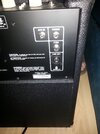
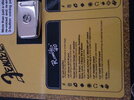
The manual is more clear. The Rumble output is line level. The Scarlett 2i2 only recognizes line level signal through the 1/4 inch inputs(via the toggles for each input on the Scarlett). The XLR jacks on the Scarlett are “mic level” signal only. The Rumble will overpower the Scarlett eventually if it’s connected via standard XLR. However the line out on the Rumble is fairly anemic, and likely wouldn’t damage anything for a while...but do you really want to knowingly feed your mic pre a mismatch that could eventually damage it? Or would it be better practice to match the input properly?(with a $7 cable)From Fender web site on the Rumble XLR
"For easy compatibility with external stage and studio performance and recording systems, this bass rig features a rear-panel XLR line output with ground lift switch" Not too clear...

 :dood:
The manual is more clear. The Rumble output is line level. The Scarlett 2i2 only recognizes line level signal through the 1/4 inch inputs(via the toggles for each input on the Scarlett). The XLR jacks on the Scarlett are “mic level” signal only. The Rumble will overpower the Scarlett eventually if it’s connected via standard XLR. However the line out on the Rumble is fairly anemic, and likely wouldn’t damage anything for a while...but do you really want to knowingly feed your mic pre a mismatch that could eventually damage it? Or would it be better practice to match the input properly?(with a $7 cable)
Agreed. A dose of “RTFM” comes in to play here. The amp is clearly marked “line out”, but it has a non-traditional XLR for the connection.(that’s annoying and misleading) It’s supposed to be a balanced out at least...hence the recommendation of the XLR to TRS. Fortunately, the Scarlett accepts TRS balanced line inputs readily, via 1/4 inch.Yea, I agree, just commenting on the lack of info I was able to find. I'm always one for buying the right gear to do the job correctly!

Agreed. A dose of “RTFM” comes in to play here. The amp is clearly marked “line out”, but it has a non-traditional XLR for the connection.(that’s annoying and misleading) It’s supposed to be a balanced out at least...hence the recommendation of the XLR to TRS. Fortunately, the Scarlett accepts TRS balanced line inputs readily, via 1/4 inch.
The kicker is that the actual line level out spec is buried in the spec section of the Rumble manual, and it turns out that it’s NOT an overly strong line signal.
In the end, it *probably* wouldn’t harm the Scarlett, at least not right away...but he’ll probably get a more stable, quiet(low noise), signal if he hooks it up properly....and we all know that’s what he wants.