Why do we pay so much $$$ for gear ...

In all seriousness, this goes with a couple of previous posts. For several years, this was one of two guitars I owned. I paid $200 for it in 1978, which was a lot of money for me at the time. My first guitar was a Japanese Epiphone Coronet type that I bought with paper route money, and also cash from odd jobs.
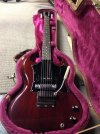
68_Junior_1.jpg


In 1983, I sold the Epiphone to finance this Les Paul. It was $585.00, which again was a ton of cash for me to dish out at the time.
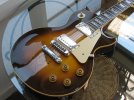

IMG_0824.JPG


Another five years later, and I lucked out getting this Firebird for $300.00. It wasn't a super Strat, so it was cheap. Guns and Roses hadn't quite sent to price of Gibsons to overdrive.
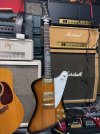

Boid number 3_resized.jpeg


I also bought this amp in '89, which was probably the best decision I made at the time.
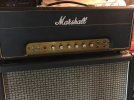

IMG_3939_Resized.jpg


It really wasn't until the late nineties that I could start to afford having more than a few guitars and two or three amps. I always stuck with never buying with a credit card. Had to have cash on hand, and it had to be something I didn't really have already. It would need to fit a certain sound or vibe I could use. Like my RIckenbackers, which are totally different than a Gibson, or my Dobro or lap steel.

Often I would end up with stuff because someone I knew would contact me to say they were selling something and thought that I should have it because it would go good with other stuff I have, and I would play it.
 
I was thinking inflation 1973 got my first new guitar Les Paul Custom $450.00 1972 1954 LE
what does a new Les Paul Custom cost now and the 1972 LPC LE blue book value $14,000.00 to $16,000.00 today
1973 at the music store used 1958-1960 Les Paul Standards were used guitars $800.00 to $1200.00 that was a ton of money back then
The Chinese are making 24,000,000 guitars a year now think about it they will never go up in value supply and demand.
2002 I ordered a new Gibson Custom Shop LPS my friend was a dealer cost was $3350.00 flitch matched top Brazilian rosewood finger board
that same guitar would cost $20,000.00 now new direct from Gibson. 2020 to now the USD has lost 25% to 30% buying power.
67 plexi , you have some priceless equipment but the difference is it was bought decades before the infernal intranet was hatched. The companies selling the stuff back then were more about making an honest buck than raking the un-suspecting consumer over the coals to burn in eternity forever. Lol
 
67 plexi , you have some priceless equipment but the difference is it was bought decades before the infernal intranet was hatched. The companies selling the stuff back then were more about making an honest buck than raking the un-suspecting consumer over the coals to burn in eternity forever. Lol
I was in my first band 1972 I played crap guitars a Kay to be exact my guitar teacher felt bad for me and gifted a 1961 LP SG
that summer I worked 16 hours seven day's a week real hard work for a brick layer got my Les Paul Custom and a Ampeg amp
 
aszFaun.jpeg
 
Last edited:
Well they may let the wood dry for a few years longer before construction. Less flame, thinner cap, etc.
Of course the majority of price is the labor.

Yeah, they may. And they may not, how would we know? Fender just uses kiln dried anyway.

Fender and Gibson use the same labor saving techniques (cnc routing, for instance) on usa guitars as Squier and Epiphone use.
 
In all seriousness, this goes with a couple of previous posts. For several years, this was one of two guitars I owned. I paid $200 for it in 1978, which was a lot of money for me at the time. My first guitar was a Japanese Epiphone Coronet type that I bought with paper route money, and also cash from odd jobs.

View attachment 100670


In 1983, I sold the Epiphone to finance this Les Paul. It was $585.00, which again was a ton of cash for me to dish out at the time.


View attachment 100671


Another five years later, and I lucked out getting this Firebird for $300.00. It wasn't a super Strat, so it was cheap. Guns and Roses hadn't quite sent to price of Gibsons to overdrive.


View attachment 100672


I also bought this amp in '89, which was probably the best decision I made at the time.


View attachment 100673


It really wasn't until the late nineties that I could start to afford having more than a few guitars and two or three amps. I always stuck with never buying with a credit card. Had to have cash on hand, and it had to be something I didn't really have already. It would need to fit a certain sound or vibe I could use. Like my RIckenbackers, which are totally different than a Gibson, or my Dobro or lap steel.

Often I would end up with stuff because someone I knew would contact me to say they were selling something and thought that I should have it because it would go good with other stuff I have, and I would play it.
Thank you for this glimpse into the past.

Well let’s compare.
$200 in 1978 is worth $987 in 2024
$585 in 1983 is worth $1838 in 2024
$300 in 1988 is worth $795 in 2024

lets look at incomes.
Average income in the US in 2024 is $54000-$65000 depending on what region you live according to Forbes.
Here are incomes during those times and today’s equivalent.
1978 - $15000 today = $74000
1983 - $24500 today = $77000
1988 - $32000 today = $84900

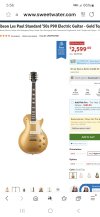
So according to this information. People could afford more compared to today. The price of a 50s LP gold top with P90s is $2600. The average LP standard runs about $2800-$3000.
Which means, incomes stagnated and went down and prices went up. Which also means people working at the factories are being paid less and with CNC machines, time to manufacture has gone down.
As long as @SG John ‘s memory serves him correctly on what he paid at the time, my statements above are true.
 
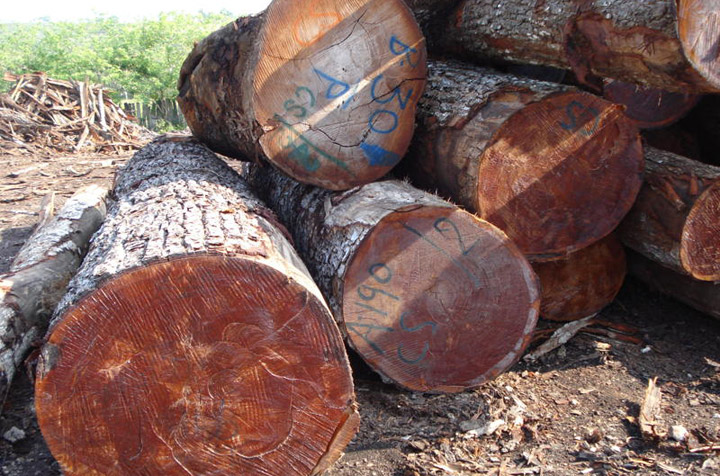
How do you figure one mahogany tree is "higher quality" than another? It's some guy with a chainsaw cutting down a tree, either way. Some guy with a logging truck hauling it to the sawmill, and then some guys cutting it into boards & stacking it to dry. All those guys either do their job right, or they don't. If you think they really use a higher grade of lumber at Gibson than they do at Epiphone, I've got a bridge for sale...

And how much do you suppose a gallon of nitro paint costs, compared to a gallon of polyurethane?

I'm sure there really is a difference in hardware quality and the Gibson hardware costs a little more. By $40 or $50.

One real difference is, when Gibson USA buys supplies (lumber, paint, tuners, bridge hardware....) each one of those suppliers is a for-profit company trying to get the maximum price for their shareholders--or to pay back their creditors. All those CEOs involved in the process are expensive! When this happens in China, the suppliers are all (also) owned by the government; the investors are the government, the shareholders are the government. Each step along the way can provide their goods "at cost" because it's all effectively the same company--the whole country is one big vertically integrated monopoly. It's a totally different system. I don't think I'd care to live in that society, but their society is not mine to change.

I don't really have the energy to explain, but:


And it's not the cost of the gallon of finish, it's the process of applying it and the expertise involved.
 
It’s funny—my first few electric guitars were mid/high level American-made instruments…I don’t regret those, and still have a couple of them.

However, when I’m looking at new guitars nowadays, I find myself not only attracted to imports (especially MIM Fenders), but preferring them in many cases.

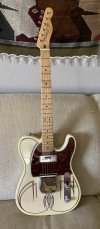
Out of all the great guitars I have, if the house is on fire, I’ll grab my pinstriped MIM Fender Telecaster. It’s the best guitar I’ve ever owned.

1D1F6092-228B-4121-B025-BA7D87823475.jpeg
 
Out of all the great guitars I have, if the house is on fire, I’ll grab my pinstriped MIM Fender Telecaster. It’s the best guitar I’ve ever owned.
It’d be my Ovation I’ve had for 50 years. Monetarily, not worth anything special. Just worth the memories to me and my youngest considers it an “heirloom” since he’s getting it once I don’t need it any more.
 
Thank you for this glimpse into the past.

Well let’s compare.
$200 in 1978 is worth $987 in 2024
$585 in 1983 is worth $1838 in 2024
$300 in 1988 is worth $795 in 2024

lets look at incomes.
Average income in the US in 2024 is $54000-$65000 depending on what region you live according to Forbes.
Here are incomes during those times and today’s equivalent.
1978 - $15000 today = $74000
1983 - $24500 today = $77000
1988 - $32000 today = $84900

So according to this information. People could afford more compared to today. The price of a 50s LP gold top with P90s is $2600. The average LP standard runs about $2800-$3000.
Which means, incomes stagnated and went down and prices went up. Which also means people working at the factories are being paid less and with CNC machines, time to manufacture has gone down.
As long as @SG John ‘s memory serves him correctly on what he paid at the time, my statements above are true.
I remember in 1991, I was making $32,000/year
(That’s equal to $73,700/year today…I was 21 years old and didn’t have a college degree).

In 1991 I bought my house for $44,500
(That would be equal to $102,400 today…my house is worth between $220,000-250,000 on the open market).

In 1992, I bought my US-made Fender 63-reissue Vibroverb for $500 (brand new)…That would be $1118 today. I don’t think an equivalent amp could be had for that amount.

In 1993, I bought my US Vintage ‘62 Stratocaster for $700 (brand new, with a hardshell tweed case)…That would be $1500 today…a similar model (US Vintage II 1961 Stratocaster) lists for $2300.

So MIA guitars have gotten more expensive, but cheap guitars have gotten better, so while I can’t afford a new high-end U.S.-made guitar or amp, I can get a nice high-end Squier or Epiphone for $300-600 and a great MIM Fender for $800-1100…

But housing has gotten completely out of hand. We’ve thought about selling our home and relocating to a different area we want to live, but we can’t afford a house that would be equal to our current home in those areas, so…we’re staying for now.
 
Last edited:
So the gear executives have a conversation....

"We aren't selling as much as we did 5 years ago. We are on a downward trend.

How much money did we forecast this year?

2,000,000.

How many guitars do you think we will sell this year?

600.

2,000,000 / 600 = 3,334. There is the new price! We will hit our revenue target!"

Maybe over simplified but sometimes that is how I think they do it. :)
 
Last edited:
This is really not a bad deal for a nice new Gibson Goldtop. This really isnt crazy money for this guitar. Love it.View attachment 100683
You must be under 40... because in some circles, that's crazy money.

I'm of the world where an LP ~$500, a strat ~$350, an L5 ~$700...
and that new gold top is a little less than what I popped for my 175...which I thought of as crazy. At the time.
so there's that
 
How do you figure one mahogany tree is "higher quality" than another? It's some guy with a chainsaw cutting down a tree, either way. Some guy with a logging truck hauling it to the sawmill, and then some guys cutting it into boards & stacking it to dry. All those guys either do their job right, or they don't. If you think they really use a higher grade of lumber at Gibson than they do at Epiphone, I've got a bridge for sale...

And how much do you suppose a gallon of nitro paint costs, compared to a gallon of polyurethane?

I'm sure there really is a difference in hardware quality and the Gibson hardware costs a little more. By $40 or $50.

One real difference is, when Gibson USA buys supplies (lumber, paint, tuners, bridge hardware....) each one of those suppliers is a for-profit company trying to get the maximum price for their shareholders--or to pay back their creditors. All those CEOs involved in the process are expensive! When this happens in China, the suppliers are all (also) owned by the government; the investors are the government, the shareholders are the government. Each step along the way can provide their goods "at cost" because it's all effectively the same company--the whole country is one big vertically integrated monopoly. It's a totally different system. I don't think I'd care to live in that society, but their society is not mine to change.
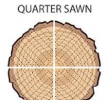
It depends on how it's cut, quarter sawn, half sawn, eighth sawn...
1718414103739.png
a(1)
: the durable yellowish-brown to reddish-brown usually moderately hard and heavy wood of a West Indian tree (Swietenia mahagoni) that is widely used for cabinetwork and fine finish work

(2)
: a wood similar to mahogany from a congeneric tropical American tree (especially S. macrophylla)

b(1)
: the rather hard heavy usually odorless wood of any of several African trees (genus Khaya)

(2)
: the rather lightweight cedar-scented wood of any of several African trees (genus Entandrophragma) that varies in color from pinkish to deep reddish brown
 
Mahogany is listed on the Convention on Trade in Endangered Species (CITES) because of a need for strict regulation to prevent its extinction. For that reason, under the U.S. Endangered Species Act, it's illegal to possess or trade mahogany.


Oh crap, I just found out we're all mahogany criminals.
 
All my guitars use faux mahogany. faux rosewood, Sharpie faux ebony fret boards for the record. :)

Also faux curly maple, faux spalted maple, faux ziricote, faux lacewood, faux sapele. Come to think of my house and garage are all made of faux douglas fir. I don't think I have any real wood. :rolleyes:
 
Back
Top