
You are using an out of date browser. It may not display this or other websites correctly.
You should upgrade or use an alternative browser.
You should upgrade or use an alternative browser.
Who Owns Fender
- Thread starter Session 5
- Start date


Gibson guitars are way over priced, and what you get for the money, nah not worth it to me. I have and can buy better quality of guitars that are more affordable and Canadian Made, not having to pay wages to the fat cat shareholders like Gibson does.
Godin guitars a private family owned and family run business, they care about your business, and it shows..
I use Gibson.
I've been very pleased.
USA Made.
And I would not hesitate to buy a Fender today. They still make better guitars than Gibson for the price..
Wow. Nothing could be a greater departure from the truth.
90% of Fender's guitars are Chinese made and the quality control issues are astounding, to put it lightly.
Last edited:
And I would not hesitate to buy a Fender today. They still make better guitars than Gibson for the price..
I can confirm to you that this guy is giving you a 100% accurate assessment of Fender CS.
Last edited:

gball
Ambassador of Boogie
Gibson guitars are way over priced, and what you get for the money, nah not worth it to me. I have and can buy better quality of guitars that are more affordable and Canadian Made, not having to pay wages to the fat cat shareholders like Gibson does.
Godin guitars a private family owned and family run business, they care about your business, and it shows..
I respect your opinion but I challenge this statement unequivocally. You can't show me any guitar anywhere with the features, playibilty and tone that a Gibson USA has for anything close to the price and quality. I consider them to be a bargain for what they cost and consistently wonder how they do what they do so economically.
gball
Ambassador of Boogie
And I would not hesitate to buy a Fender today. They still make better guitars than Gibson for the price..
They have never made better guitars than Gibson in their history. Its never even been a legitimate contest.
They have never made better guitars than Gibson in their history. Its never even been a legitimate contest.
100% correct.
Fender, by design, was a cost-cutting method of construction.
Last edited:
When did we start insulting people for their choices? Based on this conversation my take is that I should toss both my MIM Strat and G400 into the fireplace because in someone else’s eyes, they’re junk and not worth owning.
No Sir. Not at all my intention. Quite honestly, i just want to open people's eyes to the "shell game" in hopes they can make more informed decisions/purchases.
Last edited:

I think you’ve made your point. As have others. In multiple threads. Time to move on.No Sir. Not at all my intention. Quite honestly, i just want to open people's eyes to the "shell game" in hooes they can make more informed purchases.
My point being. At the end of the day. If someone loves their Fender/Gibson/PRS/etc, it doesn’t mean squat what anyone else thinks. Shell games don’t matter. QC doesn’t matter. They like their guitar. Stop insulting their choices regardless the brand.
I think you’ve made your point. As have others. In multiple threads. Time to move on.
My point being. At the end of the day. If someone loves their Fender/Gibson/PRS/etc, it doesn’t mean squat what anyone else thinks. Shell games don’t matter. QC doesn’t matter. They like their guitar. Stop insulting their choices regardless the brand.
No one is insulting anyone. That's a perception.
I still get tons of emails from people unhappy with their guitars because they believe they were mislead by Fender marketing.
I think these honest threads provide a valuable informational resource.
I get the informational resource. And I don’t disagree. That was good info. And I mean that sincerely.No one is insulting anyone. That's a perception.
I still get tons of emails from people unhappy with their guitars because they believe they were mislead by Fender marketing.
I think these honest threads provide a valuable informational resource.
But that point was made a long time ago. Fender is building junk. Their QC is junk. Their marketing is borderline illegal. We get that. Which would be why it’s time to move on. At some point the horse is dead and we can’t make it any deader by continuing to beat it. My whole point.
OP

Session 5
Ambassador of Strings & Wings

I respect your opinion but I challenge this statement unequivocally. You can't show me any guitar anywhere with the features, playibilty and tone that a Gibson USA has for anything close to the price and quality. I consider them to be a bargain for what they cost and consistently wonder how they do what they do so economically.
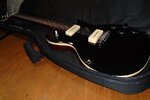
We will have to agree to disagree.. I have one.. This Canadian Made Godin Core CT will match any U.S.A Gibson and I Paid a fraction of the price of a Gibson.
Attachments

chilipeppermaniac
Ambassador of Decibels
Well,
I will do my best to not throw any gas on the fire. But, like I read things and interpret the best I can, we all know of faulty guitars and basses from almost every source they have been made by. I am sure Godin, PRS, G and L, etc have made some duds that either go in the reject bin, or escape and wind up owned by Joe Public.
I think the intent of Robert's messages has unfolded and we all can name our preferred weapons of musical assault.
Some of us are loyal LP fans, and others, love Tele's. Some like modern instruments and others like the vintage stuff. Then, there are those who mix and match and have no qualms playing a variety of Models within one maker, or various models from various makers.
No need to have anyone get any chafed feelings for what axes each of us loves or not. Heck, some guys seek the Unicorn and never stop till they find it. Others, find a keeper and make it into the MAIN NUMBER 1 that they would take to their grave. Col Mustard has his Luna, Robert has his Gold Top ( which I think he finally found his keeper) Gball has a selection of LP's after culling through various other models of Gib, Fender or possibly even PRS's that he just didn't bond with as well as LP's.
Session loves his Godin's. I am sure if an equal to Godin was as accessible or as cheap or cheaper for the same quality and sounds his Godin's make, he might give them a fair shake too.
Ramo likes his pointy guitars and finds certain OLDER guitar shapes or finishes , dated or not his thing.
BUT, he still has a LP "style" guitar in his stable. An LTD LP copy. and of course his V shaped Jacksons, and his anything but Tele choices.
Like I say about my particular guitars. YUP, I have Pre Henry J, Gibsons, but I also have Henry J era ones too. My Norlin SG and LP are 2 of my favorite guitars. BOTH have features I adjusted to. My other guitars like I have said, go from Japanese P Basses to Squiers, PRS SE models and late 80's Fender Strats. I still strive to play them all as well as the quality level standards they were made to by those who made them for what would turn out to be me in the end.
Everything from my $30 Yamaha acoustic to a $300 Jackson V, my practicing has a long way to go before I am as skilled as even that guitar is capable of sounding like. God knows that my Sub $400 Les Paul Std is fully capable of playing all the songs I could ever dream of learning, just the same as my $1000 on up ES135, Gibson LP, Norlin SG are capable of producing as well.
My thoughts keep leaving my brain faster than I can type stuff, but I will do my best to wrap things up like this. If I had to part with all but 1 or 2 guitars that I have and someone said, "OK you can keep either 1 or 2 of your favorite players, or 1 or 2 of your favorite beauty queen guitars, but you can't mix the 2 choices. It has to either be the "best tool, or the best Barbie Doll, now choose."
I am pretty sure my choices would be tough but right about now , I would be no less able to make music if I kept my cheapest $239 Squier Jazz and P basses and sold all my other guitars and basses.
However, if I had to pick only 2 6 strings for real, I would likely keep my most expensive and most recent guitar. My Avatar LP with the Mini Toggle coil split and out of phase options, and either my Washburn HB30, or my 2005 Faded Walnut SG.
I will do my best to not throw any gas on the fire. But, like I read things and interpret the best I can, we all know of faulty guitars and basses from almost every source they have been made by. I am sure Godin, PRS, G and L, etc have made some duds that either go in the reject bin, or escape and wind up owned by Joe Public.
I think the intent of Robert's messages has unfolded and we all can name our preferred weapons of musical assault.
Some of us are loyal LP fans, and others, love Tele's. Some like modern instruments and others like the vintage stuff. Then, there are those who mix and match and have no qualms playing a variety of Models within one maker, or various models from various makers.
No need to have anyone get any chafed feelings for what axes each of us loves or not. Heck, some guys seek the Unicorn and never stop till they find it. Others, find a keeper and make it into the MAIN NUMBER 1 that they would take to their grave. Col Mustard has his Luna, Robert has his Gold Top ( which I think he finally found his keeper) Gball has a selection of LP's after culling through various other models of Gib, Fender or possibly even PRS's that he just didn't bond with as well as LP's.
Session loves his Godin's. I am sure if an equal to Godin was as accessible or as cheap or cheaper for the same quality and sounds his Godin's make, he might give them a fair shake too.
Ramo likes his pointy guitars and finds certain OLDER guitar shapes or finishes , dated or not his thing.
BUT, he still has a LP "style" guitar in his stable. An LTD LP copy. and of course his V shaped Jacksons, and his anything but Tele choices.
Like I say about my particular guitars. YUP, I have Pre Henry J, Gibsons, but I also have Henry J era ones too. My Norlin SG and LP are 2 of my favorite guitars. BOTH have features I adjusted to. My other guitars like I have said, go from Japanese P Basses to Squiers, PRS SE models and late 80's Fender Strats. I still strive to play them all as well as the quality level standards they were made to by those who made them for what would turn out to be me in the end.
Everything from my $30 Yamaha acoustic to a $300 Jackson V, my practicing has a long way to go before I am as skilled as even that guitar is capable of sounding like. God knows that my Sub $400 Les Paul Std is fully capable of playing all the songs I could ever dream of learning, just the same as my $1000 on up ES135, Gibson LP, Norlin SG are capable of producing as well.
My thoughts keep leaving my brain faster than I can type stuff, but I will do my best to wrap things up like this. If I had to part with all but 1 or 2 guitars that I have and someone said, "OK you can keep either 1 or 2 of your favorite players, or 1 or 2 of your favorite beauty queen guitars, but you can't mix the 2 choices. It has to either be the "best tool, or the best Barbie Doll, now choose."
I am pretty sure my choices would be tough but right about now , I would be no less able to make music if I kept my cheapest $239 Squier Jazz and P basses and sold all my other guitars and basses.
However, if I had to pick only 2 6 strings for real, I would likely keep my most expensive and most recent guitar. My Avatar LP with the Mini Toggle coil split and out of phase options, and either my Washburn HB30, or my 2005 Faded Walnut SG.
chilipeppermaniac
Ambassador of Decibels
IBLIVE,When did we start insulting people for their choices? Based on this conversation my take is that I should toss both my MIM Strat and G400 into the fireplace because in someone else’s eyes, they’re junk and not worth owning.
I definitely have not intended or directed any comments to any of us in an insulting manner or intent.
I am pretty sure you haven't either.
OP
Session 5
Ambassador of Strings & Wings
I respect your opinion but I challenge this statement unequivocally. You can't show me any guitar anywhere with the features, playibilty and tone that a Gibson USA has for anything close to the price and quality. I consider them to be a bargain for what they cost and consistently wonder how they do what they do so economically.

SG John
Ambassador of Cool Guitars and Amps.
I've been wondering if I should post, or not. All the bases seem to be getting covered. There is also the Fender amp thread going on. So, a few observations as a player. Sometimes semi-pro, sometimes a cellar hack that still loves to play, here's a few things I've noticed about the big two brands.
Over the years, I mostly bought "used gear" because it was affordable, and filled gaps I needed to fill for projects. At the time there wasn't a vintage market except for some 50s models. I was trying to sell my '59 Harley in '88 to buy a '58 or '59 Les Paul, but never made it happen. I bought a few good guitars that were players grade, and they were fantastic. They were just used guitars, and I still own them.
In '88, I bought the first of four new Fenders that I ever bought. I got a white Korean made Squire with a Floyd Rose. I wanted a white Strat because Lowell George and Jimi Hendrix played them. It was a nice guitar, but a major hassle to own with the Floyd. It was something I didn't need, and was too much work for regular maintenance, so off it went. In '96, I bought an American Standard. Again, a nice guitar. I actually recorded and gigged with it. Other than a pickup dying, it never had issues. The intonation was spot-on, and it never needed adjustments. Needed to sell it with a couple others when I needed to come up with a lot of money fast. That and my Rudolph Schenker V were two of my biggest regrets for guitars I sold. In 2015, after my cancer surgury, I was looking for a beater Tele to play while I was radiated. Couldn't find anything used, so I got a '15 MIM 50s thin skin nitro classic model. Fun guitar, but I still don't get Teles. Then, I bought an Eric Johnson Strat last year. That was a surprisingly awesome guitar, despite everything I've heard of Fender since then, I'm glad I got lucky. I really like this guitar.
My other big two purchases have been sketchy. I bought two guitars in 2013, one as an investment of sorts. I got a '61 Les Paul Tribute model with the upgraded sideways vibrola. I've always wanted the real thing, no matter how awful those tailpieces were. This one was a nice one piece body, but they put some biscuits in the body to fill worm holes. Years later they have shrunk/expanded at different rates that the body, and you know they are there. The other thing about the guitar, it was Plek'd. But they never finished it. The frets were square, and the ends were blunt. You could limbo under the strings, they were so high. I eventually knocked .020" off of the height of the frets, crowned and dressed the frets, and then recut the nut. It's an awesome player and sounds fabulous. I've gigged with it, and it puts up with the task. My '13 Thunderbird was quite nice out of the box. Maybe a couple of minor finish flaws, but nothing out of the ordinary or worthy of complaints. The third was a '19 SG Special in Sparkling Burgundy. The intonation sucked. I had to do a Buzz Feiten type thing to the nut, where I had to file the side of the nut with riffler file to change the length of different strings between the nut and first fret for the guitar to play in tune. It's nice now, but was a hassle, and has soured me on the guitar a bit. But then, the '16 Memphis made ES-335 has to still be my favorite guitar. It is nothing less than awesome, and everything I have always wanted in an electric guitar.
After the ES-335 and EJ Strat, I would have to say I play my home made guitars more than anything. Except the acoustics, but those are also nice "used" guitars.
Looking at current resources, and manufacturing processes, I would have to say I'm done with anything new. Especially production line products. I honestly can't understand why anyone would buy a modern PCB based amplifier, especially some of the so called higher end models. Electric components and production methods are a joke these days. If you think cheap guitar amps are bad, you should see what I have to deal with working on $1 mil. machining centers. It's no different. I understand why the cheap modeling amps would crap out after a year, but if you're dropping serious money on an amp, it shouldn't die after the warranty runs out. I only own two Fender amps, and they are all I would ever own. One is a '63 Bandmaster and the other is a '71 Deluxe Reverb. Two of Fenders most iconic amps, as they deserve to be. I got lucky with those also. Even vintage Fenders can swing both ways sounding like angels or garbage because Leo was a cheap bugger.
Don't know what the answer is, other than the industry taking a deep look inside, and not making everything so disposable with natural resources declining rapidly. A younger player would need help getting something good as to not turn them off of playing and getting better. Then, needing something that might put up with gigging as they develop. It's funny to look back at the guitars we thought were terrible when learning to play in the seventies such as the old Tiesco, Harmony, and Kay brands, are in such high regard and so expensive now. But then, you can get a Harmony archtop with a Brazilian rosewood fingerboard that has been straight for seventy years, and will do so for another seventy years. Fender is using Pao Ferro and Paduak lumber for finger boards that is harvested very young, and dried quickly for production numbers, and can't stay straight for a year. Then look at the tag board in my '63 Bandmaster or turret board in my '71 Hiwatt, and unless you commission a build from a small amp maker, you'll never get that quality or attention to detail. Even if the Fender was a cheaply built amp at the time. Hopefully the industry will be able to make an affordable quality product for people to continue to make sure that this machine will live to kill fascists.
Over the years, I mostly bought "used gear" because it was affordable, and filled gaps I needed to fill for projects. At the time there wasn't a vintage market except for some 50s models. I was trying to sell my '59 Harley in '88 to buy a '58 or '59 Les Paul, but never made it happen. I bought a few good guitars that were players grade, and they were fantastic. They were just used guitars, and I still own them.
In '88, I bought the first of four new Fenders that I ever bought. I got a white Korean made Squire with a Floyd Rose. I wanted a white Strat because Lowell George and Jimi Hendrix played them. It was a nice guitar, but a major hassle to own with the Floyd. It was something I didn't need, and was too much work for regular maintenance, so off it went. In '96, I bought an American Standard. Again, a nice guitar. I actually recorded and gigged with it. Other than a pickup dying, it never had issues. The intonation was spot-on, and it never needed adjustments. Needed to sell it with a couple others when I needed to come up with a lot of money fast. That and my Rudolph Schenker V were two of my biggest regrets for guitars I sold. In 2015, after my cancer surgury, I was looking for a beater Tele to play while I was radiated. Couldn't find anything used, so I got a '15 MIM 50s thin skin nitro classic model. Fun guitar, but I still don't get Teles. Then, I bought an Eric Johnson Strat last year. That was a surprisingly awesome guitar, despite everything I've heard of Fender since then, I'm glad I got lucky. I really like this guitar.
My other big two purchases have been sketchy. I bought two guitars in 2013, one as an investment of sorts. I got a '61 Les Paul Tribute model with the upgraded sideways vibrola. I've always wanted the real thing, no matter how awful those tailpieces were. This one was a nice one piece body, but they put some biscuits in the body to fill worm holes. Years later they have shrunk/expanded at different rates that the body, and you know they are there. The other thing about the guitar, it was Plek'd. But they never finished it. The frets were square, and the ends were blunt. You could limbo under the strings, they were so high. I eventually knocked .020" off of the height of the frets, crowned and dressed the frets, and then recut the nut. It's an awesome player and sounds fabulous. I've gigged with it, and it puts up with the task. My '13 Thunderbird was quite nice out of the box. Maybe a couple of minor finish flaws, but nothing out of the ordinary or worthy of complaints. The third was a '19 SG Special in Sparkling Burgundy. The intonation sucked. I had to do a Buzz Feiten type thing to the nut, where I had to file the side of the nut with riffler file to change the length of different strings between the nut and first fret for the guitar to play in tune. It's nice now, but was a hassle, and has soured me on the guitar a bit. But then, the '16 Memphis made ES-335 has to still be my favorite guitar. It is nothing less than awesome, and everything I have always wanted in an electric guitar.
After the ES-335 and EJ Strat, I would have to say I play my home made guitars more than anything. Except the acoustics, but those are also nice "used" guitars.
Looking at current resources, and manufacturing processes, I would have to say I'm done with anything new. Especially production line products. I honestly can't understand why anyone would buy a modern PCB based amplifier, especially some of the so called higher end models. Electric components and production methods are a joke these days. If you think cheap guitar amps are bad, you should see what I have to deal with working on $1 mil. machining centers. It's no different. I understand why the cheap modeling amps would crap out after a year, but if you're dropping serious money on an amp, it shouldn't die after the warranty runs out. I only own two Fender amps, and they are all I would ever own. One is a '63 Bandmaster and the other is a '71 Deluxe Reverb. Two of Fenders most iconic amps, as they deserve to be. I got lucky with those also. Even vintage Fenders can swing both ways sounding like angels or garbage because Leo was a cheap bugger.
Don't know what the answer is, other than the industry taking a deep look inside, and not making everything so disposable with natural resources declining rapidly. A younger player would need help getting something good as to not turn them off of playing and getting better. Then, needing something that might put up with gigging as they develop. It's funny to look back at the guitars we thought were terrible when learning to play in the seventies such as the old Tiesco, Harmony, and Kay brands, are in such high regard and so expensive now. But then, you can get a Harmony archtop with a Brazilian rosewood fingerboard that has been straight for seventy years, and will do so for another seventy years. Fender is using Pao Ferro and Paduak lumber for finger boards that is harvested very young, and dried quickly for production numbers, and can't stay straight for a year. Then look at the tag board in my '63 Bandmaster or turret board in my '71 Hiwatt, and unless you commission a build from a small amp maker, you'll never get that quality or attention to detail. Even if the Fender was a cheaply built amp at the time. Hopefully the industry will be able to make an affordable quality product for people to continue to make sure that this machine will live to kill fascists.
Last edited:
chilipeppermaniac
Ambassador of Decibels
SG JOHN I am so happy you took time to write all that.
To know we regular Joe's or John's in your case, can have or have had access to many quality and serviceable instruments produced across the decades from roughly the late 50's to 70 years later, speaks to what is POSSIBLE despite the shortcomings along the way.
Kind of reminds me of the car business too. The big auto companies could make awesome and reliable cars, or they could make stinkers. Some made both. Same has gone for amps and guitars as our stories have told.
I am still liking the chance to find a nicely reliable and great sounding Fender Bassman amp from the late 50's early 60's.
To know we regular Joe's or John's in your case, can have or have had access to many quality and serviceable instruments produced across the decades from roughly the late 50's to 70 years later, speaks to what is POSSIBLE despite the shortcomings along the way.
Kind of reminds me of the car business too. The big auto companies could make awesome and reliable cars, or they could make stinkers. Some made both. Same has gone for amps and guitars as our stories have told.
I am still liking the chance to find a nicely reliable and great sounding Fender Bassman amp from the late 50's early 60's.
chilipeppermaniac
Ambassador of Decibels
SG John, I am also beyond happy to know you are alive and kickin still after having Cancer.
In the end, all of this is meaningless if we don't have our health. Col Mustard lost his dear Cindy. BUT I am very honored to know such a man as he. He literally almost sold and likely would have sold almost everything of value he had to care for his lady. He moved from Michigan to Arizona, and took care of her till she passed. At his age into his 70's, he has played what we now call a Vintage Jazz bass, that was simply a USED Bass when he bought it decades ago. BUT, he proudly played it on many many gigs until he knew it was time for this different phase of his life.
Not to divulge much more of the world of our bro, Col. I will say, he managed to retain some of his various guitars and bass, which he can still make music with. He has returned to Michigan, and as he said to me, his perspective and thoughts on gear has changed now that he has lived through the past few years and rounded the 70+ years on the planet milestone.
Let's hope we all can live full lives into our 70's and beyond and can still make ourselves and others happy by playing our guitars, basses, drums etc.
In the end, all of this is meaningless if we don't have our health. Col Mustard lost his dear Cindy. BUT I am very honored to know such a man as he. He literally almost sold and likely would have sold almost everything of value he had to care for his lady. He moved from Michigan to Arizona, and took care of her till she passed. At his age into his 70's, he has played what we now call a Vintage Jazz bass, that was simply a USED Bass when he bought it decades ago. BUT, he proudly played it on many many gigs until he knew it was time for this different phase of his life.
Not to divulge much more of the world of our bro, Col. I will say, he managed to retain some of his various guitars and bass, which he can still make music with. He has returned to Michigan, and as he said to me, his perspective and thoughts on gear has changed now that he has lived through the past few years and rounded the 70+ years on the planet milestone.
Let's hope we all can live full lives into our 70's and beyond and can still make ourselves and others happy by playing our guitars, basses, drums etc.

dmatthews
Ambassador of Birds
Gotta say I gravitated to the Gibson tone wise.