OP


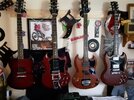
All these guitars are gone!!!!!


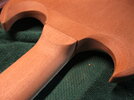
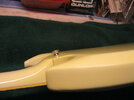

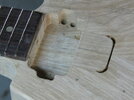

My 2021 is a 1.705" (binding to binding) wide beast of a neck!!!!
The reason I got it was my les paul was my music chum at the local Guitar Sinner called and said, "Hey, Bro, we got a Gibson les paul nobody can play cuz the neck is too big..."

Mark every guitar I own and play is a grandpa guitar !!! lol@67plexi , Ramo says that is a Grandpa guitar. So, to save you from yourself, my address is...

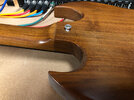
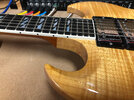
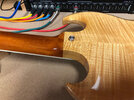
Here’s the 2012 61 RI joint.Saw a comparison up at @Don O's villa today.
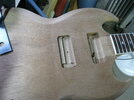
The '61 Reissue has a very minimal joint and two other SG's in Don's stable have huge, almost Les Paul-esque joints!!!!


Hey Robert, is it really 1.705 not 1.75? I get 1.6875 for 1 11/16, and 1.75 for 1 3/4. I suppose 1.705 somewhere in the middle is possible, it just seems like an unusual figure.
Even 1 23/32 is larger than 1 11/16 by a 32nd, and slightly larger than 1.705 at 1.71875.
Here’s the 2012 61 RI joint.
View attachment 82732
View attachment 82733
Here’s a 2013 Supra joint.
View attachment 82734
View attachment 82735
Here’s a 2008 Diablo joint.
View attachment 82736View attachment 82737
And here’s a 79 The SG joint.
View attachment 82738
View attachment 82739
Note that the Supra and Diablo are 24 fret guitars.Chunky!!!!
Here’s a 2008 Diablo joint.
View attachment 82736View attachment 82737
And here’s a 79 The SG joint.
View attachment 82738
View attachment 82739

That Supra is sweet!Here’s the 2012 61 RI joint.
View attachment 82732
View attachment 82733
Here’s a 2013 Supra joint.
View attachment 82734
View attachment 82735
Thats a CRAP TON of Gibsons........ on yer Fender workbench ...... Leo must be rolling in his grave

Send em my way for disposal, MitchMark every guitar I own and play is a grandpa guitar !!! lol
Cheers
Mitch