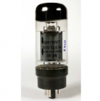
What's Up With the Price of Tubes?

I noticed a while back that Marshall had a $50 increase pretty much across the amp/cab lines right after I bought my DSL100HR. Looks like Orange had an increase as well. The price of NOS tubes is completely unrelated to anything being currently manufactured. They will simply follow the model of supply and demand unaffected by labor shortages, disease and the like. You can still get obscure NOS preamp tubes that hardly anyone uses for under $20 whereas a 12AX7 may run over $100.
 
I noticed a while back that Marshall had a $50 increase pretty much across the amp/cab lines right after I bought my DSL100HR. Looks like Orange had an increase as well. The price of NOS tubes is completely unrelated to anything being currently manufactured. They will simply follow the model of supply and demand unaffected by labor shortages, disease and the like. You can still get obscure NOS preamp tubes that hardly anyone uses for under $20 whereas a 12AX7 may run over $100.

Could it be based on certain tubes???

The price of ECC823 hasn't changed in 4 years from Amplified Parts. Neither has the Gold Lion B759's.

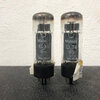
I paid $51.95 for a brand new matched pair of EHX 6CA7's last week.

Those prices haven't really changed much...
 
Whether or not the cost of NOS tube is justified or not is dependant on, among other things, ones perspective & exactly what type tubes one is buying for what application/amp. We'll come back to this later.

To answer the statements starting with "besides which most NOS tubes are fakes" & ending with "and most of these tubes are actually junk."
Mate, I buy NOS/NIB tubes. Many of the tube types I buy I have previously used (some quite extensively) when they were still in production, and I've LONG been able to tell a used tube from a new tube. I've not once, ever ever, bought NOS tubes that weren't "exactly" what they were supposed to be, "unused new old stock tubes." Nor have I ever bought NOS tubes that turned out to be "fakes" or "junk." Oh, & by the way, I have posted pics of some of my NOS/NIB tubes on this fine forum on several occasions.
While there are scammers out there, it comes down to either knowing your tubes, or knowing the supplier to be trustworthy, or better yet, both of these.

As to the statement "after having gone through a bunch of these "NOS" tubes, it's not worth it."
Mate, that's a pretty broad statement to make, especially as you've not even mentioned any "type" of NOS tubes that you've been through. Considering that you've trashed NOS tubes here a few times, surely you can show us all some pictorial evidence of these NOS tubes you've bought that proved to be "not worth it" (your actual NOS tubes, not pics pulled from the net)???? And the amps you tried them in???? Or are we simply meant to just blindly take your word for it??

Getting back to where I left off by saying "we'll come back to this later", I have previously asked you this same question after you had trashed NOS tubes here on TTR, you didn't reply,,, so I'll ask again.

Can you tell me of ANY current production EL34's that can give 10,000 plus hours service life in an amp like my 67/68 JMP50 (no screen grid resistors fitted)????
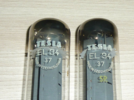
The double halo getter xf2 Blackburn Mullard EL34's have proven to do this, they've been known to last decades.

That alone, IMHO makes seeking out & purchasing these type NOS tubes very much "worth it" for such an amp.
Then there's the sonic benifits, which, "in the room" with the amp, you'd have to be deaf not to be able to discern.
Cheers
Most NOS tubes are old used tubes.
Most of them are junk.
There are a few real NOS tubes.
Final answer.

I am not fooled as easily as most people are.

But what players need to learn is:
how to tell on old used crap tube from a real NOS tube.

Get educated and protect yourself from being swindled.
 
Last edited:
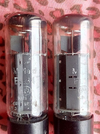
Real NOS.
See how the silver inside the tube is bright, like a mirror?
No black / brown spots or discoloration?
This is a real, UN-used, new tube. REAL NOS.


Fake NOS.
See how the silver inside the tube has turned black?
This is an old, used tube and is not a NOS tube.


Right from the start:
you can tell an old used tube just from looking at the discoloration of the silver inside the glass.
Is the silver turned black / brown / white? - Fake NOS.
Is the silver looking like a mirror with no discoloration? - real NOS.

Just by looking, you can instantly spot a fake.
 
Last edited by a moderator:
Real NOS.
See how the silver inside the tube is bright, like a mirror?
No black / brown spots or discoloration?
This is a real, UN-used, new tube. REAL NOS.

View attachment 71902

Fake NOS.
See how the silver inside the tube has turned black?
This is an old, used tube and is not a NOS tube.

View attachment 71901

Right from the start:
you can tell an old used tube just from looking at the discoloration of the silver inside the glass.
Is the silver turned black / brown / white? - Fake NOS.
Is the silver looking like a mirror with no discoloration? - real NOS.

Just by looking, you can instantly spot a fake.
Not knowing much of old vs new, i always abided by the silver coating rule myself. Changing tubes that i had in amps for years, you'd notice the blackening of the silver coat on top. When i saw NOS tubes online by just browsing, you could see price differences in the NOS that had a distinct silver coating vs the ones gone dark. Some ripoff sellers would try to charge top dollar on the burnt ones and pass them off as NOS, which really they would be defined as UOS ( Used Old Stock) lol
 
Real NOS.
See how the silver inside the tube is bright, like a mirror?
No black / brown spots or discoloration?
This is a real, UN-used, new tube. REAL NOS.

View attachment 71902

Fake NOS.
See how the silver inside the tube has turned black?
This is an old, used tube and is not a NOS tube.

View attachment 71901

Right from the start:
you can tell an old used tube just from looking at the discoloration of the silver inside the glass.
Is the silver turned black / brown / white? - Fake NOS.
Is the silver looking like a mirror with no discoloration? - real NOS.

Just by looking, you can instantly spot a fake.
This is good info but we need to separate the trustworthy tube vendors from the scammers. If we see someone and know for sure that they are doing shady business, then we should call them out. And, at the same time, at the vendors that we do trust, we need to let others know too.
 
Last Pointer:
New Recent Mercury-Free Tubes - do not have silver inside the glass.
(pay attention)

These tubes are a newer recent substitute for mercury filled bulbs.
The newer recent tubes are environmentally compliant ROHS.

1628441994133.png

So don't panic if your New Sensor tubes have no silver.
This is a mercury free tube !
Don't confuse this tube with the older type mercury filled tubes, which are silver inside.

It's important to know this difference.
 
Peavey Transtube Solid State is looking better and better after seeing whats being sold as "NOS" tubes :2Thumbs:

mercury filled tubes sound better than the non mercury filled ones --- really I can hear the difference ...... :io:
 
Peavey Transtube Solid State is looking better and better after seeing whats being sold as "NOS" tubes :2Thumbs:

mercury filled tubes sound better than the non mercury filled ones --- really I can hear the difference ...... :io:

Listen beginning at 0:40 - This is just an Origin 20 with no FX:

Jason is using Suhr Thornbuckers in this Les Paul

 
Last edited:
there live show should downright scare the poop out of you then ..................

I cant post on open forum but will PM anyone interested with a link ...................... but--- you have been warned

its "out there"
 
Last Pointer:
New Recent Mercury-Free Tubes - do not have silver inside the glass.
(pay attention)

These tubes are a newer recent substitute for mercury filled bulbs.
The newer recent tubes are environmentally compliant ROHS.

View attachment 71906

So don't panic if your New Sensor tubes have no silver.
This is a mercury free tube !
Don't confuse this tube with the older type mercury filled tubes, which are silver inside.

It's important to know this difference.
Damn, there's some miss-information creeping into this thread,,, and I do not like my TTR buddy's to be
miss-informed.

Ok, firstly folks, the type of valves we use in our guitar amp use Barium for gettering purposes. That deposit on the glass, known as "getter flash" is this barium metal that has been induction heated to vaporise it & deposit it on the glass.
While it most usually has a shiny silver appearance, the colour can actually vary from a grey colour through to black. The colour of the getter flashing is totally dependant on how quickly it is heated during the gettering process.
The Tube Store has an article on there site, entitled "blue glow in tubes, tube getters & other info" which also explains this, & also links a quite in depth article on valve gettering, that I will attempt to link for you all Blue Glow in Tubes, Tube Getters, and other Info - www.thetubestore.com If the link does work (I'm a digital dummy) the article should be easily found.

Barium is a "reactive" metal, hence its use for gettering in valves.
During manufacture of our valves, after the outgassing process & sealing of the glass envelope, there is still some residual air left inside the valve bottle. Also, during use, when the valve is heated, impurities & gasses continue to evolve from the metals of the elements etc.
The barium metal reacts with all of these & thus gets them out of the vaccum. So, the barium getter flashing is slowly used up. This can be seen by the barium getter flashing taking on an opaque, see-through appearance, starting at the very edge of the getter flashing where the barium deposit is thinnest, progressively making its way to the centre of the getter flashing where the barium deposit is thickest.
Easily seen here16284711834294433745620265168281.png
And here16284712292187612777691497523234.jpg
Note how in both these pics we can see the ring shaped "halo" getter clearly visible at the top inside the glass bottle.
When new, viewed from the side like this, the getter flashing would have had it's edge just very slightly above these "halo" getters. If you look carefully, you can make out that the opaque colouring extends down to just above the getters. So we can see that the barium getter flashing has been used up in this area.
To get an idea how slowly this getter flashing is used up, just take a look at some power tubes you've installed/had installed & know roughly how many (hundreds or thousands of) hours you have put on them. Cheers
Edit:
You may have heard about tubes that "go gassy." This is like where the bottle develops a leak or elements within the tube emit a heap of gass. This can be seen as the getter flash taking on a white appearance, seen here16284806741511994151769494119750.png
Cheers
 
Last edited:
Back
Top