
You are using an out of date browser. It may not display this or other websites correctly.
You should upgrade or use an alternative browser.
You should upgrade or use an alternative browser.
What Makes a Les Paul Sound So Unique???
- Thread starter Inspector #20
- Start date



eSGEe
Ferengi Ambassador of Trade

Well- I listened to Johans video-- I didnt WATCH it till I listened first (actually I was doing like 8 other things online a the same time while it was playing in the background) and I could HEAR 3 distinctively different tones-- from the 3 different woods with all other variables being identical -- -so -- as much as i think tonewood snobs just need to get laid and Stop living in their parents basement -- I have to say -- I HEARD a difference

eSGEe
Ferengi Ambassador of Trade
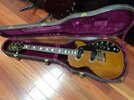
FYI the ABOVE LEs Paul is a "sandwich" design of "FINE" mahogany and a center band.......
for the "un-initiated"-- get a soda and a sammich -- its a LONG read with pcis!
for the "un-initiated"-- get a soda and a sammich -- its a LONG read with pcis!
 You know I'm just joshin with ya.

chilipeppermaniac
Ambassador of Decibels
I have three Les Paul's - a 2016 Gibson, a hand-built replica we did in 2016, and a Chinese copy. All have the same setup and electronics and all are indistinguishable from each other on a recording, but they sound so different from any other 24.75" guitar.
If wood try has no bearing on tone, then what is it????
View attachment 32331
View attachment 32332
Hummm looking at the pictures I see different pickup's for starts.
Different control knobs also. Tone plastic has a HUGE impact.
OH and one only has 5 strings, they all have different tuners.
Bridge and tailpieces are all different also.
I have only read the 1st page. Now Chas, Robert said his 3 LP's are indistingishable from one another but can sound different than say an SG or ES etc with 24.75.
I think Gball and others have mentioned, Wood, and the Mass of wood used and even neck joins, position of pups and of course the various metals etc can all affect the sound produced in the end.
That is about all I have to say except I even read where things like picks can also affect how guitars sound or are recorded. Thin vs Thick, Delrin vs Nylon vs Poly, vs Metal.
Bottom line is a Gib LP will sound different based on inherent properties of each guitar, inherent properties vs other similar or even different body shaped guitars whether they be Gib, PRS, ESP or the same or different shapes.
Then the electronics,, pup placement and choice, bridges, tuners, strings, picks, and finally player.
chilipeppermaniac
Ambassador of Decibels
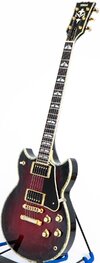
I thought that was Yamaha's answer to the LP DC? Smitty
chilipeppermaniac
Ambassador of Decibels
I think that the mahogany body guitars resonate really well, and have a warm mellow sound to them. They are very ballsy sounding, and even Fender did a short run of set neck mahogany Strats because of that warmth. Adding a maple cap, and using a much thicker slab of mahogany is what gives the Les Paul it's sound. If you get the right pieces of wood together, it has a very pronounced sound unplugged, and an over the top snarl when plugged in. I'm sure it was by accident that McCarty and his team hit on the combination of mahogany neck and body,, maple cap, and rosewood or ebony fingerboard, although many of those combinations were being used in acoustic or "Electric Spanish" guitars of that era.
It's a great sound. My SGs are the "old pair of jeans" guitars to me, but my Les Pauls have that "snottyness" I can't quite get out of my other guitars.
For the folks here who mention their LP's resonating nicely unplugged and their Strats seeming dead, I will chime in and even Mr Tuners will be allowed to reply to this. I once had 2 HIGH for me priced PRS guitars. One was a Santana 2, the other a S3. If I put my ear to the back of the neck and strummed either one, the resonating was heard a good 30+ seconds. I won't make any claims how my Epi LP, or GIB SG's resonate in comparison yet, but I will say I don't remember any other guitars ringing out nearly as long as my Santana PRS's did.

I thought that was Yamaha's answer to the LP DC? Smitty
Although the Yamaha is a double-cut guitar, it represents Yamaha’s answer to the LP, not so much by trying to copy the shape, but by equaling or exceeding the Les Paul in quality and sound.
Back in the day, it was commonly referred to as a “Les Paul Killer”.
I would like to have one of these!
chilipeppermaniac
Ambassador of Decibels
I hear that, Smitty,
But I also consider the LP DC as a LES PAUL, so in that regard I was agreeing the YAM was their answer albeit a different shaped one. Plus the Yam and LP Double Cut are just DC versions despite the SG once being given the moniker of LP which of course LP himself was opposed to.
But I also consider the LP DC as a LES PAUL, so in that regard I was agreeing the YAM was their answer albeit a different shaped one. Plus the Yam and LP Double Cut are just DC versions despite the SG once being given the moniker of LP which of course LP himself was opposed to.
chilipeppermaniac
Ambassador of Decibels
I have only read the 1st page. Now Chas, Robert said his 3 LP's are indistingishable from one another but can sound different than say an SG or ES etc with 24.75.
I think Gball and others have mentioned, Wood, and the Mass of wood used and even neck joins, position of pups and of course the various metals etc can all affect the sound produced in the end.
That is about all I have to say except I even read where things like picks can also affect how guitars sound or are recorded. Thin vs Thick, Delrin vs Nylon vs Poly, vs Metal.
Bottom line is a Gib LP will sound different based on inherent properties of each guitar, inherent properties vs other similar or even different body shaped guitars whether they be Gib, PRS, ESP or the same or different shapes.
Then the electronics,, pup placement and choice, bridges, tuners, strings, picks, and finally player.
As I was writing the above, I also thought of something Voxy mentioned once. He has 2 ES335/345 type Gibs. He will tell you, each one definitely sounds different than the other. I would posit that the factors I list above can attribute to these differences.
OP

It's funny, in a way, that my replica Les Paul's have such great tone and rival my colleague's prized collector Gibson's. While all 3 sound virtually identical on a recording, all 3 have different personalities.
The 'real' 2016 Gibson Les Paul is the least stable in terms of tuning. The 498T has the most treble response of all three Les Paul's. You cant hear it as much as you can see it when you compare the guitars on a frequency spectrograph.
The Black Les Paul Custom Replica, that a Luthier chum and
I built in Rancho Cucamonga, is the most stable. The Epiphone H8BN/HB6N pickups (clones of Gibson's 498T/496R) in this guitar have a slight midrange hump on a spectrograph.
The 'Chibson' is the one that gets the most attention from people. The Epiphone H8BN/HB6N's are very balanced and it has a slightly mid-scooped character on a spectrograph.
The necks of all three feel identical, even though they all three have different dimensions. Action is .070" @ 12th on all of them with .012"/.015" relief measured at the 6th. All three have aluminum tailpieces and .046" x .009" strings.
First fret string height is .015" on all three and this follows the 12" string radius. Bridge pickups are all 4/32" from the strings fretted at the 22nd and neck pickups are 10/32" respectively.
I believe that my measurement- specific setup gives me greater consistancy than the strum/listen/adjust method. Even when I have used the strum/listen/feel/adjust method, I end up with virtually identical measurements.
The average guitar player can't seem to hear the subtle differences in the three Les Paul's and at times, I can't discern them either.
All three have a very big sound on a recording, a sound that has made them very popular in the studio where I work.
The 'real' 2016 Gibson Les Paul is the least stable in terms of tuning. The 498T has the most treble response of all three Les Paul's. You cant hear it as much as you can see it when you compare the guitars on a frequency spectrograph.
The Black Les Paul Custom Replica, that a Luthier chum and
I built in Rancho Cucamonga, is the most stable. The Epiphone H8BN/HB6N pickups (clones of Gibson's 498T/496R) in this guitar have a slight midrange hump on a spectrograph.
The 'Chibson' is the one that gets the most attention from people. The Epiphone H8BN/HB6N's are very balanced and it has a slightly mid-scooped character on a spectrograph.
The necks of all three feel identical, even though they all three have different dimensions. Action is .070" @ 12th on all of them with .012"/.015" relief measured at the 6th. All three have aluminum tailpieces and .046" x .009" strings.
First fret string height is .015" on all three and this follows the 12" string radius. Bridge pickups are all 4/32" from the strings fretted at the 22nd and neck pickups are 10/32" respectively.
I believe that my measurement- specific setup gives me greater consistancy than the strum/listen/adjust method. Even when I have used the strum/listen/feel/adjust method, I end up with virtually identical measurements.
The average guitar player can't seem to hear the subtle differences in the three Les Paul's and at times, I can't discern them either.
All three have a very big sound on a recording, a sound that has made them very popular in the studio where I work.
chilipeppermaniac
Ambassador of Decibels
chilipeppermaniac
Ambassador of Decibels
Now here he a much better player than myself on his Epi LP like mine was before I installed T Tops and Bone Nut.