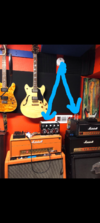
Well, this was a first…

Don O

Ambassador of Tri-Power
Moderator
Country flag
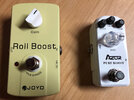
I bought 2 inexpensive Treble Boost pedals on an early Black Friday sale. So I decided to audition them today while the wife was out with girlfriends. Picked up a SG and went wireless to the pedal and straight into the JTM-45 into a 4x12. Classic Gibson into Marshall tone/ test. I plugged in the Azor first. That thing is built like a tank. Small size but weighs as much as a full size Boss. Having not played thru one before I was not quite sure what to expect. But damn, switching that thing in and out sure makes that 60s/70s sound standout. So I played through that for about 10 minutes and then switched to the Joyo. I was cranking so loud, that I was playing from the next room. After about 5 minutes I’m jamming on something when I hear this “beep-beep-beep…”. I’m like WTF is the amp freaking out?

So I stop, and it’s the smoke alarm system going off. 6 of them are wired together, so one triggers all. Holy Crap! Those that have been here since 2020 might remember I had an issue with fire before. Now my smoke alarms are tied into my home automation system. I programed it to respond the same as a burglar alarm/break in. Now, lights are flashing, an outside alarm is on and Alexa’s are all talking saying the police are on the way and get the f#ck out of the house. And my phoning is ringing as the system texts me. The alarm system knows it’s a smoke detector and it’s yelling “Fire, Fire, Fire..”

Whoa, quite the excitement. So I quickly put the SG on a chair, put the amp in standby and ran to the other rooms in the basement. No smoke any where. I quickly run upstairs, no smoke, then into the garage, no smoke, and then the top floor. Again no smoke. Whew! But then WTF just happened ?

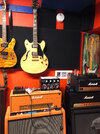
So back to the studio and I put my hand over the JTM-45. It’s was probably the hardest I’ve played it and there was a good amount of heat. Well, guess what I have right above the amp ? Duh, a smoke detector. Now, I can’t say for sure if heat from the amp triggered it, or the high volume acoustic waves f-ed with it.

Either way, that’s the FIRST time that ever happened to me.


IMG_0375.jpegIMG_2023-11-24-164049.jpeg
 
Last edited:
Glad there was no fire! Must've been a pretty hair-raising experience.

Just to be clear, neither of those pedals is a treble boost; they're straight clean boosts.
Nothing wrong with regular boosts, of course, they can do great things for tube amps.

But AFAIK a straight boost - even one with tone controls - doesn't work quite the same way as a classic treble booster.
 
I bought 2 inexpensive Treble Boost pedals on an early Black Friday sale. So I decided to audition them today while the wife was out with girlfriends. Picked up a SG and went wireless to the pedal and straight into the JTM-45 into a 4x12. Classic Gibson into Marshall tone/ test. I plugged in the Azor first. That thing is built like a tank. Small size but weighs as much as a full size Boss. Having not played thru one before I was not quite sure what to expect. But damn, switching that thing in and out sure makes that 60s/70s sound standout. So I played through that for about 10 minutes and then switched to the Joyo. I was cranking so loud, that I was playing from the next room. After about 5 minutes I’m jamming on something when I hear this “beep-beep-beep…”. I’m like WTF is the amp freaking out?

So I stop, and it’s the smoke alarm system going off. 6 of them are wired together, so one triggers all. Holy Crap! Those that have been here since 2020 might remember I had an issue with fire before. Now my smoke alarms are tied into my home automation system. I programed it to respond the same as a burglar alarm/break in. Now, lights are flashing, an outside alarm is on and Alexa’s are all talking saying the police are on the way and get the f#ck out of the house. And my phoning is ringing as the system texts me. The alarm system knows it’s a smoke detector and it’s yelling “Fire, Fire, Fire..”

Whoa, quite the excitement. So I quickly put the SG on a chair, put the amp in standby and ran to the other rooms in the basement. No smoke any where. I quickly run upstairs, no smoke, then into the garage, no smoke, and then the top floor. Again no smoke. Whew! But then WTF just happened ?

So back to the studio and I put my hand over the JTM-45. It’s was probably the hardest I’ve played it and there was a good amount of heat. Well, guess what I have right above the amp ? Duh, a smoke detector. Now, I can’t say for sure if heat from the amp triggered it, or the high volume acoustic waves f-ed with it.

Either way, that’s the FIRST time that ever happened to me.


View attachment 96131View attachment 96132

Don , That story is hilarious! I wish I had been there to witness that...:pound-hand:
 
Alright, I got long winded here but this was fun doing a little detective work because I work on fire alarm systems and find this sorta thing interesting lol

I believe what happened here was your detector didn't actually detect smoke, rather fire but not the way we're thinking. I'll explain!

Typically speaking, you have heat detectors and smoke detectors, which unless in rare cases you see in commercial design, are made separately and not built in a combination. Smoke detectors will either operate from a photoelectric sensor type or an ionization type.

The most common these days are Photoelectric and that works by the detector aiming a beam of light 360° from a reflective chamber within. If particulate ( smoke primarily, but also dust) passes that chamber and obstructs all light, it activates the alarm. They're mainly designed to detector smoldering fires, where smoke begins to bellow.

An ionization works by using Americium 241, which is radioactive and charges ions between two plates that create a current field beam that projects outward. If smoke ( or a growing flame) passes thru the current field, it activates the alarm. They're older designs that are more for detecting flames vs smoke. So KIND of a heat detector but not quite exactly.

A true heat detector on the other hand, has a thermal link that bends if enough heat reaches the the detector and activates. You either will have a rate-of-rise which works by detecting a quick shift in temperature ( usually 10-15 degrees per minute) and then a fixed temperature ( which activates at specific points such as 135° or higher in rarer settings). They actually now make these as a combination of rate-of-rise and fixed temp ( whichever active point triggers first)

What you have however, is a First Alert SA3210 First Alert SA3210 Dual Sensor 10 Year Photoelectric/Ionization Smoke Alarm

This particular model is a 120v hardwire ( not programmable) that is a combination photoelectric/ionization smoke detector. As mentioned earlier, ionization triggers by flame instead of smolder. Looking at where it's placed on your wall you can see a direct angle to the back of your amplifiers. Considering this is where the back panels are and thus the tubes, you have a situation here where the detector is actually aiming it's line of sight towards them.
Screenshot_20231125-110933.png


My suspicion? When you were pushing the amp with the boosts, you got the tubes glowing harder and hotter. The Photoelectric part wouldn't have caught this because there was no bellowing smoke. But the Ionization part could very well have picked up the tube glowing and heating, tricking into thinking it was a flame situation and thus, alarms away!

Anywho, I think it's pretty awesome you cranked it enough to cause a false alarm lol and sorry for the long scientific rant
 
Last edited:
Alright, I got long winded here but this was fun doing a little detective work because I work on fire alarm systems and find this sorta thing interesting lol

I believe what happened here was your detector didn't actually detect smoke, rather fire but not the way we're thinking. I'll explain!

Typically speaking, you have heat detectors and smoke detectors, which unless in rare cases you see in commercial design, are made separately and not built in a combination. Smoke detectors will either operate from a photoelectric sensor type or an ionization type.

The most common these days are Photoelectric and that works by the detector aiming a beam of light 360° from a reflective chamber within. If particulate ( smoke primarily, but also dust) passes that chamber and obstructs all light, it activates the alarm. They're mainly designed to detector smoldering fires, where smoke begins to bellow.

An ionization works by using Americium 241, which is radioactive and charges ions between two plates that create a current field beam that projects outward. If smoke ( or a growing flame) passes thru the current field, it activates the alarm. They're older designs that are more for detecting flames vs smoke. So KIND of a heat detector but not quite exactly.

A true heat detector on the other hand, has a thermal link that bends if enough heat reaches the the detector and activates. You either will have a rate-of-rise which works by detecting a quick shift in temperature ( usually 10-15 degrees per minute) and then a fixed temperature ( which activates at specific points such as 135° or higher in rarer settings). They actually now make these as a combination of rate-of-rise and fixed temp ( whichever active point triggers first)

What you have however, is a First Alert SA3210 First Alert SA3210 Dual Sensor 10 Year Photoelectric/Ionization Smoke Alarm

This particular model is a 120v hardwire ( not programmable) that is a combination photoelectric/ionization smoke detector. As mentioned earlier, ionization triggers by flame instead of smolder. Looking at where it's placed on your wall you can see a direct angle to the back of your amplifiers. Considering this is where the back panels are and thus the tubes, you have a situation here where the detector is actually aiming it's line of sight towards them.
View attachment 96137


My suspicion? When you were pushing the amp with the boosts, you got the tubes glowing harder and hotter. The Photoelectric part wouldn't have caught this because there was no bellowing smoke. But the Ionization part could very well have picked up the tube glowing and heating, tricking into thinking it was a flame situation and thus, alarms away!

Anywho, I think it's pretty awesome you cranked it enough to cause a false alarm lol and sorry for the long scientific rant
Mike, nice homework. I had just put the Mass attenuator on it to for this test. I had the head almost dimed and then backed off the ear splitting volume with the Mass. So the amp was just about maxed out along with the hot input.

I put a piece of cardboard under the smoke detector sticking out from the wall to hopefully prevent that in the future.
 
Last edited:
Glad there was no fire! Must've been a pretty hair-raising experience.

Just to be clear, neither of those pedals is a treble boost; they're straight clean boosts.
Nothing wrong with regular boosts, of course, they can do great things for tube amps.

But AFAIK a straight boost - even one with tone controls - doesn't work quite the same way as a classic treble booster.
Roger that. I looked at some Rangemaster clones, but wanted to try something cheap first. These were around $25 each. Since I liked the sound I’ll be looking for a nicer unit that is a real TB. Hello cyber Monday :dood:
 
Mike, nice homework. I had just put the Mass attenuator on it to for this test too. I had the head almost dimed and then backed off the ear splitting volume with the Mass. So the amp was just about maxed out along with the hot input.

I put a piece of cardboard under the smoke detector sticking out from the wall to hopefully prevent that in the future.
Hahah nice!!! I pushed my JCM900 to it's breaking point a while back but didn't realize it was already on the fritz with some other issues, so I killed it and still have yet to have it sent off for repairs lol

But those non-master volume Marshalls like you have? Man, you can put them thru hell and push them to death and they still keep on ticking.

Hearing issues aside ( you already got that worked out by going to another room lol), enjoy the sheer bombast!
 
Meanwhile, as a NPD, the little Azor kicked butt. It was only $20 on Amazon and really added a kick to the tone. The Joyo was far more noisy than the Azor when switched on.
 
And since you’re showing an interest in treble boosters, it’s my sworn duty to let loose some GAS… :run:

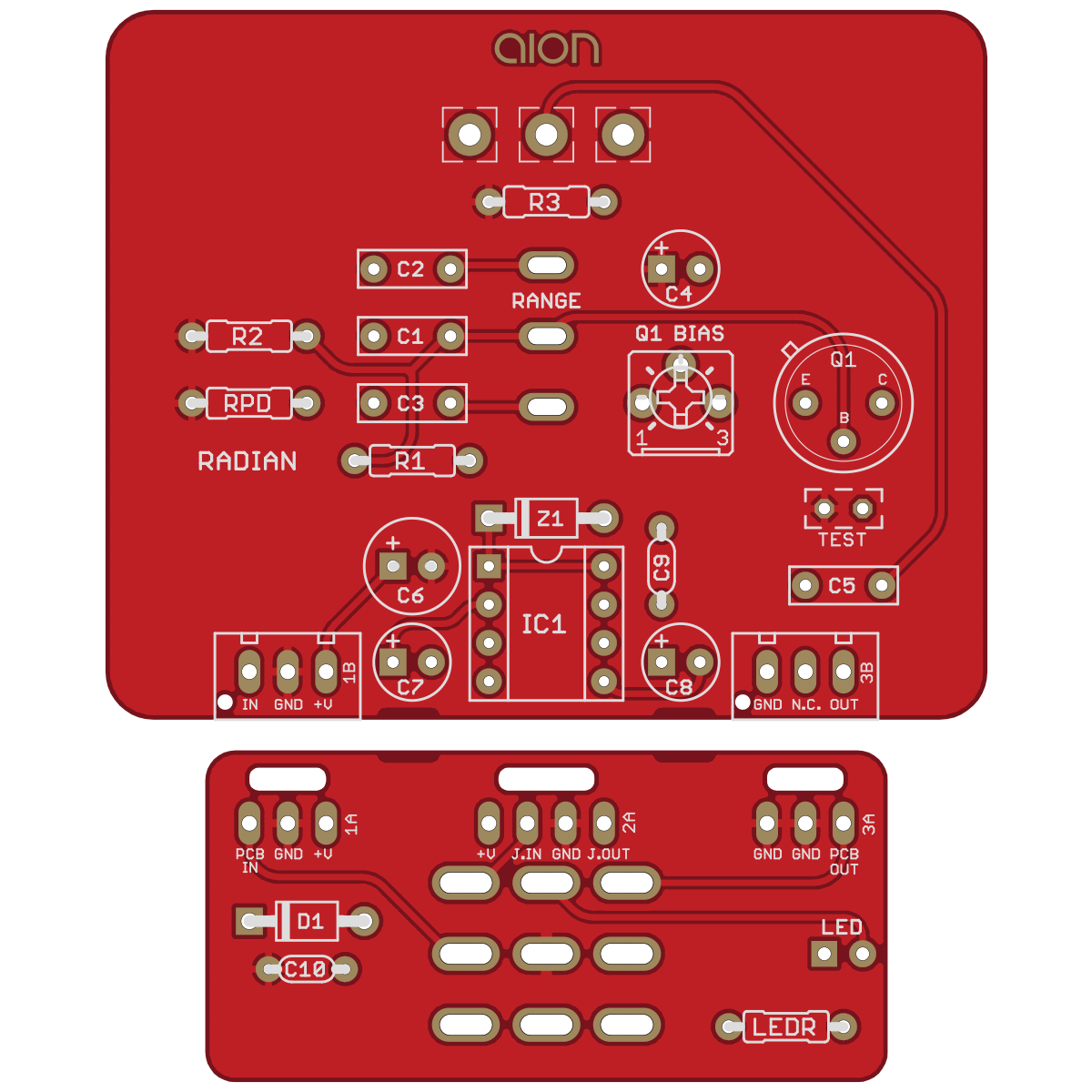
How about a high quality pedal kit by Aion FX featuring their Radian Germanium Boost, which is based on the Dallas Rangemaster treble boost:

Get your Jeff Beck on:
 
Hahah nice!!! I pushed my JCM900 to it's breaking point a while back but didn't realize it was already on the fritz with some other issues, so I killed it and still have yet to have it sent off for repairs lol

But those non-master volume Marshalls like you have? Man, you can put them thru hell and push them to death and they still keep on ticking.

Hearing issues aside ( you already got that worked out by going to another room lol), enjoy the sheer bombast!

Time to buy an Orange....
 
Back
Top