

You are using an out of date browser. It may not display this or other websites correctly.
You should upgrade or use an alternative browser.
You should upgrade or use an alternative browser.
Useful info on drills
- Thread starter RVA
- Start date
OP
RVA
Ambassador
Actually, I am! Please tell me why. A variable speed is only $ 80 more. Why tinker with belts with 5 speeds when you can have a dial adjustment for speeds between 560 and 3100 rpm? I would greatly appreciate your advice.It mystifies me that anybody would consider anything other than belt and pulleys for a workshop pedestal drill.
Here are the 2 options I am considering
Variable speed
https://www.amazon.com/dp/B00HQONFW...olid=2WXVMBD3ZS1LS&psc=0&ref_=lv_ov_lig_dp_it
Belted
https://www.amazon.com/dp/B005UKGLA...olid=2WXVMBD3ZS1LS&psc=0&ref_=lv_ov_lig_dp_it

OP
RVA
Ambassador
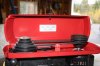
Yes. You must unplug the machine and physically relocate the belt to a new trackMust you physically ADJUST (I know how you love adjusting things Ray) the belts for the variable speedS?
seems the dial a knob non belted is a more practical option --- for the home hobbyist or part time carpenter....

gasket
Ambassador of the Guitarded
Refer back again to your "seeming accurate explanation". haaa haaa
OK, not interested in a drawn out debate about $120 machine tools but my idea on the subject is ...
Belts are simple, reliable, inexpensive and work. Usually home workshops use drills within such a small diameter range speed changing isn't done very often. I can compensate for slightly too fast or slightly too slow by feeling and adjusting the pressure on the feed lever. It's really a matter of "KISS" = Keep It Simple Stupid.
If I want to change the speed because the job material is seriously different to the typical mild steel work I do or the drill diameter is very small or large, so what, lift the cover and roll the belt onto a different pulley combination.
OK, not interested in a drawn out debate about $120 machine tools but my idea on the subject is ...
Belts are simple, reliable, inexpensive and work. Usually home workshops use drills within such a small diameter range speed changing isn't done very often. I can compensate for slightly too fast or slightly too slow by feeling and adjusting the pressure on the feed lever. It's really a matter of "KISS" = Keep It Simple Stupid.
If I want to change the speed because the job material is seriously different to the typical mild steel work I do or the drill diameter is very small or large, so what, lift the cover and roll the belt onto a different pulley combination.
OP
RVA
Ambassador
I always qualify my input when I personally know so little on the topic.Refer back again to your "seeming accurate explanation". haaa haaa
Your point about simplicity certainly makes sense. So, if you were going to set the belt for a speed that will likely be good for most purposes, at which speed would you set it?


Its a shame that the belt ratio can't change automatically with the load.
Like a snowmobile or minibike torque converter.
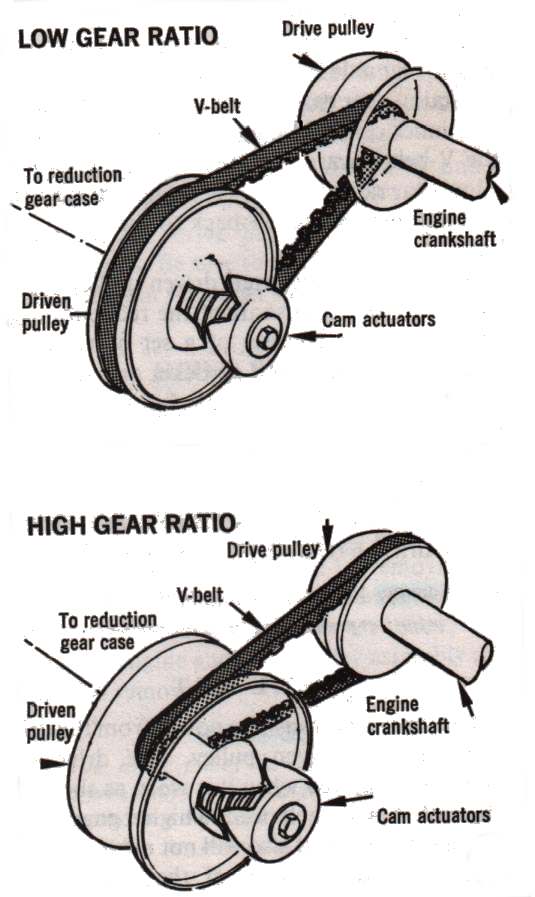
But belt driven drill presses are all I've ever used.
Ratio changes are a simple no tools needed operation. Just derail the belt and select another ratio.
The beauty of this method is the motor runs at a constant speed, drill speed and torque is determined by the ratio selected.
Small drive pulley with large driven pulley is low speed , high torque operation.
Large drive pulley with small driven pulley is high speed low torque operation.
Like a snowmobile or minibike torque converter.
But belt driven drill presses are all I've ever used.
Ratio changes are a simple no tools needed operation. Just derail the belt and select another ratio.
The beauty of this method is the motor runs at a constant speed, drill speed and torque is determined by the ratio selected.
Small drive pulley with large driven pulley is low speed , high torque operation.
Large drive pulley with small driven pulley is high speed low torque operation.
OP
RVA
Ambassador
Thanks Hack. How often do you actually need to change the belt/speed? Have you found a speed that works most of the time?Its a shame that the belt ratio can't change automatically with the load.
Like a snowmobile or minibike torque converter.
But belt driven drill presses are all I've ever used.
Ratio changes are a simple no tools needed operation. Just derail the belt and select another ratio.
The beauty of this method is the motor runs at a constant speed, drill speed and torque is determined by the ratio selected.
Small drive pulley with large driven pulley is low speed , high torque operation.
Large drive pulley with small driven pulley is high speed low torque operation.
gasket
Ambassador of the Guitarded
if you were going to set the belt for a speed that will likely be good for most purposes, at which speed would you set it?
Way back when I was an apprentice all of this stuff was on the tip of my tongue, it had to be to pass exams but these days I just look at the speed and job and know that it's within an acceptable range or not.
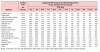
Mr. Google has these charts available.

eSGEe
Ferengi Ambassador of Trade
Guys Ray likes to adjust stuff--- a LOT-- he will be opening and closing that lid so much the hinges will drop off!!!!! 
rumor has it he buys pickup set screws in weight bulk (like 25 lb boxes) because he wears them out adjusting things up and down and up and down
sorry its Friday eve and Im in a mood
rumor has it he buys pickup set screws in weight bulk (like 25 lb boxes) because he wears them out adjusting things up and down and up and down
sorry its Friday eve and Im in a mood
The speed / torque is determined by the task at hand.Thanks Hack. How often do you actually need to change the belt/speed? Have you found a speed that works most of the time?
I supposed a middle ratio would be an all around handy speed for most projects.
The ability to adjust this up or down is golden.
Too high of speed ruins bits due to heat. I always use a lubricant when drilling any steel.
When using paddle bits or hole saws, ones first inclination is to bear down full speed ahead, just to get the job done.
But going slowly will be kinder to the tools and the work at hand.
FYI, I don't have a proper drill press.
I just use a hand drill chucked up in one of those drill stand thingies.

The drawback is one speed only, and the paddle bits have just about killed my drill motor, due to the torque needed for use.
OP
RVA
Ambassador
You ain't wrong. I like options! I have "adjusted" almost every guitar I touched in the last month. I have been known to start a fret level at 11pm and continue until it is finishedGuys Ray likes to adjust stuff--- a LOT-- he will be opening and closing that lid so much the hinges will drop off!!!!!
rumor has it he buys pickup set screws in weight bulk (like 25 lb boxes) because he wears them out adjusting things up and down and up and down
sorry its Friday eve and Im in a mood
Last edited:
OP
RVA
Ambassador
What lubricant do you use for metal drilling?The speed / torque is determined by the task at hand.
I supposed a middle ratio would be an all around handy speed for most projects.
The ability to adjust this up or down is golden.
Too high of speed ruins bits due to heat. I always use a lubricant when drilling any steel.
When using paddle bits or hole saws, ones first inclination is to bear down full speed ahead, just to get the job done.
But going slowly will be kinder to the tools and the work at hand.
FYI, I don't have a proper drill press.
I just use a hand drill chucked up in one of those drill stand thingies.
The drawback is one speed only, and the paddle bits have just about killed my drill motor, due to the torque needed for use.
OP
RVA
Ambassador
I made sure to say for metal drilling!You really asked a lubrication question?!?!?
Any thing handy. Motor oil in a squirt can, WD40 or PB Blaster.What lubricant do you use for metal drilling?
The lube cools the work as well as lubricates.
They also make commercial cutting fluids for sawing & drilling, probably available at Lowe's or Home Depot.
You know, Mods, we should have a section for tools.
Most of us use all kinds of tools daily.
It could be an add on to the Garage. Like Fender - Squier, Gibbo - Epi, and Other Electric Guitars is a sub forum for Twang Terrace.
Most of us use all kinds of tools daily.
It could be an add on to the Garage. Like Fender - Squier, Gibbo - Epi, and Other Electric Guitars is a sub forum for Twang Terrace.