
You are using an out of date browser. It may not display this or other websites correctly.
You should upgrade or use an alternative browser.
You should upgrade or use an alternative browser.
Thinking Outloud on Tuning:
- Thread starter Inspector #20
- Start date


marshalltsl
Well-Known Member

I talk about the experience on my guitars. My best stable tuning guitar it's a '94 Ibanez S540 with Floyd ( low pro edge) bridge. But I have a '15 Ibanez Prestige s5521Q (strings through the body) that his stable tuning was like G string on the Gibson LP. I solved but It don't have the S540 stable tuning.I've wrestled with that for years. I even went "to school" with Wayne Charvel to learn about setup. I've also experimented with making nut width wider by nearly .010" (admittedly excessive) with no effect on tuning stability.
Its temperature.
I can tune a guitar and once the sun hits it, all bets are off.
I've conducted experiments myself putting Les Paul's in the sun and monitoring the tuning. They ALL go sharp without ever touching them. (Long thread about this)
And my Genuine Gibson's were far worse about tuning animals than my replicas.
I've used locking tuners, Grovers, different strings, you name it. The devil is in the wood. Its in the construction of the guitar itself...and anything that copies that construction methodology.
My Floyd Rose equipped guitars stay rock solid even at +120°F fretboard temps.
I work with a colleague who has a 1970 Gibson Les Paul - set up by Dan Erlewine himself - and he does not use it anywhere but in the studio because of tuning instability, so I would think a Dan Erlewine setup is "correct."
I'm just quietly going back to Les Paul's in the studio and either a Schecter or Jackson for outdoor performances...
For years, Kirk Hammett played Les Paul's on recordings, but never used them live. There's a documentary where you can see everyone playing old Gibson's.
I've also heard an interview where he talks about Gary Moore's 1959 Les Paul giving him "fits" with regards to tuning...
I bought two brand new Gibson LP's. '12 standard, '18 Classic. Both have had a unstable tuning. I solved but often they need use new strings. I mean when the strings have lost their elasticity, the guitar has unstable tuning. I use 10 46 strings.

eSGEe
Ferengi Ambassador of Trade

look at these LONG Norlin Gibbo -----------necksI do. Every Norlin-era/maple necked Les Paul I've owned has been absurdly stable concerning both tuning and setup. I tweak the truss-rod on them once a year at most. Sometimes they'll go years without really needing it.
I had an SGJ for a while and that too was incredibly stable.
hold tune like a damn ROCK
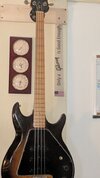
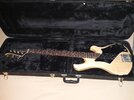
and the one on my Sonex is also rock stable -------

and you dont even have to ASK about the LPR --- this thing has 50 year old NUT BAR electrics in it with more solder joints than Carter has Liver Pills .............and it still FOOGIN WORKS --- stock EVERYTHING ---- slays everything
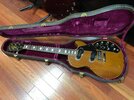
but ....yeah NORLIN ERA Gibbos are "junk" -- if anyone has one lying around just send it here for disposal.

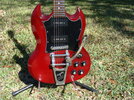
OP

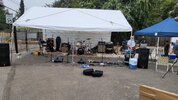
Best decision ever taking the Schecter and the Jackson. Not only did they stay in perfect tune, the more mid-range tone blended so well with the darker 1976 Gibson Les Paul Deluxe and the 2016 Gibson Firebird....
OP
I live on the Ocean and a rain forest when it's bad I use the Parker Fly Deluxe zero break angle at the nut or bridge.
The thing about a Floyd Rose yes zero Break angle but if you break a string your done.
Yes, Sir!!@@!! If that string breaks, gotta reach for a backup!!!!!

eclecticsynergy
Ambassador of Electric Synergy
Could it all come down to something as simple as mahogany swelling or shrinking more than maple when the temp changes?
Perhaps Asian mahogany substitutes like sapele, nato and lauan (Epiphone "mahogany") are more stable than the real thing, too?
One of my set-neck Fenders is all mahog, both body and neck. But I don't remember ever playing it outdoors.
Maybe I should try leaving it in a sunny window for a couple of hours next to a maple-neck Fender.
It might be an interesting experiment.
Perhaps Asian mahogany substitutes like sapele, nato and lauan (Epiphone "mahogany") are more stable than the real thing, too?
One of my set-neck Fenders is all mahog, both body and neck. But I don't remember ever playing it outdoors.
Maybe I should try leaving it in a sunny window for a couple of hours next to a maple-neck Fender.
It might be an interesting experiment.

Ahhh yes, tuning issues with environmental changes.
Physics strikes again!
The physics is gonna get you,
The physics is gonna get you,
The physics is gonna get you ... tonight!
That being said, my Stratocaster and Jackson Dinky are my most stable. Both guitars have maple necks with bolt-on construction. Not sure the bolt-on construction matters. But, maybe I can start a new internet guitar debate!
That could be fun, huh?
Physics strikes again!
The physics is gonna get you,
The physics is gonna get you,
The physics is gonna get you ... tonight!
That being said, my Stratocaster and Jackson Dinky are my most stable. Both guitars have maple necks with bolt-on construction. Not sure the bolt-on construction matters. But, maybe I can start a new internet guitar debate!
That could be fun, huh?
OP
Could it all come down to something as simple as mahogany swelling or shrinking more than maple when the temp changes?
Perhaps Asian mahogany substitutes like sapele, nato and lauan (Epiphone "mahogany") are more stable than the real thing, too?
One of my set-neck Fenders is all mahog, both body and neck. But I don't remember ever playing it outdoors.
Maybe I should try leaving it in a sunny window for a couple of hours next to a maple-neck Fender.
It might be an interesting experiment.
Could very well be interesting!!@@!!
OP
Ahhh yes, tuning issues with environmental changes.
Physics strikes again!
The physics is gonna get you,
The physics is gonna get you,
The physics is gonna get you ... tonight!
That being said, my Stratocaster and Jackson Dinky are my most stable. Both guitars have maple necks with bolt-on construction. Not sure the bolt-on construction matters. But, maybe I can start a new internet guitar debate!
That could be fun, huh?
Yes!!! LOL!!!
Here's the only fact I can share.
My 2016 Gibson SG, my Mom's 1979 Gibson Les Paul Custom, my 2016 Gibson Les Paul Studio, two 2016 Gibson Les Paul 50's Tributes and my two fake Les Paul's all gave me tuning stability issues when played outdoors and required tuning adjustments between every song...yet do not behave this way when played indoors.
Our guitarists' two Gibson's (a 1976 Les Paul Deluxe and a 2016 Firebird) are getting frequent tunings between songs.
On a couple of songs, I could hear the Firebird was out of tune on some of the open chord phrasing.
We played from 10am to 5pm and I intentionally left both my Schecter and the Jackson in the sunlight during a couple of breaks without any tuning issues. I also did a lot of tremolo work just for show too.
Its a tough environment when we rehearse too. At 6,000 feet, we start around 5pm at 88°F and by the time we quit around midnight, the temps are in the 40°F range.
Although I love my Les Paul's (and Les Paul's in general) I will probably just use them for studio and temperature-stable inddor venues.
I just can't see a reason to keep fighting whatever this is...




Amp Mad Scientist
Ambassador of Heresy
Although I sing lead on quite a few of our numbers, my main role in this band is rhythm support. I've been quietly watching our string section members with regards to tuning.
The 1976 Les Paul is getting tuned between every song, as is the bandleaders' 2015 Gibson Firebird. I can hear some of the notes going out in the middle of these songs.
I remember my disastrous public performance in direct sunlight on September 7, 2019 in Crestline, California, where I couldn't get my 2016 Gibson Les Paul 50's Tribute through one song without tuning issues.
Last night, it was cold at 6,000 feet and it took a while to get the guitars acclimated to the temperatures, but this is a trend I have been watching for a while now and its a consistent anomaly both in the rehearsal studio and the garage.
Alternating between my Les Paul's, I would say it was necessary for me to tune between each song to keep my open chords sounding correct. I don't mind this, but I'm finding it really distracting.
In my studio, my guitars can be wailed on for weeks and never go out of tune, but outdoors is another story altogether.
I haven't played my Schecter Hellraiser C1FR in quite some time, but when I pulled it out of its case, it was dead on the money. I played it for the second run-through of our setlist and never had to retune it.
I'm really considering my Schecter Hellraiser for Saturday's outdoor performance with my Jackson San Dimas FR as a backup.
I just feel more "engaged" when I'm not constantly tuning.
Anybody ever experience this....????
There is a certain way to install strings on a guitar. If you do it this way, the strings don't slip out of tune.
The strings hold, even when you bend a lot of notes.
You do not need locking tuners, although it makes it a bit easier.
(I use Ratio tuners now which are higher than 18:1 ratio)
You don't need a locking nut either.
But it does help to have good high ratio tuners, such as Grover or Schallers.
This method was taught to me by Dan Armstrong.
Then I taught this method to Paul Reed Smith.
Now PRS uses this method on all guitars he sells. (because it works).
But if you use this method: your strings won't go out of tune anymore...
even if you bend a lot of notes in solos - It will hold.
1.
Lock the string onto the tuner post.
This is most important.
A. Use the "tie" method to lock the string.
B. Or use a set of locking tuners.
Both A and B accomplish the same exact thing.
2. Leave about 2-3 fingers of slack in the string.
WIND the slack DOWN the the string post. Make sure that the locked string travels DOWN around the post, and ends up near the bottom of the post.
3. Tune the string to pitch.
4. PULL on the string. Hard. Bend the string at least a full tone up. Now the string will slip out of tune.
5. Re-tune the string to pitch.
6. PULL the string, hard. Now the string will slip out of tune again.
7. Re-tune the string to pitch.
8. Now pull on the string again . At this time, pulling or bending should not make the string slip out of tune.
9. Repeat : (A) tune to pitch - (B) pull on the string and stretch the string - (C) Re-tune to pitch....
until the string stops slipping.
10. Note: If you have NOT locked your string to start with, this method will not work.
Now
if you do the above to each string -
you will soon find that the guitar holds in tune, no matter how much you play or bend strings.
Last edited:
That being said, my Stratocaster and Jackson Dinky are my most stable. Both guitars have maple necks with bolt-on construction. Not sure the bolt-on construction matters. But, maybe I can start a new internet guitar debate!
That could be fun, huh?
Here’s another point to ponder...
I haven’t thoroughly thought through how this may, or may not, affect things, but my Stratocaster and Jackson both use a full-floating bridge setup. The Strat uses the stock Fender floating bridge and the Jackson has a Floyd Rose.
Again, I haven’t really thought through the physics of this. But, I can’t help but wonder if the fact that the spring and string tension are held in a state of equilibrium above and below the plane of the neck factors into this.
Nevertheless, it is undoubtedly true that my Strat and Jackson are more consistent with temperature changes than my other guitars.
OP
There is a certain way to install strings on a guitar. If you do it this way, the strings don't slip out of tune.
The strings hold, even when you bend a lot of notes.
You do not need locking tuners, although it makes it a bit easier.
(I use Ratio tuners now which are higher than 18:1 ratio)
You don't need a locking nut either.
But it does help to have good high ratio tuners, such as Grover or Schallers.
This method was taught to me by Dan Armstrong.
Then I taught this method to Paul Reed Smith.
Now PRS uses this method on all guitars he sells. (because it works).
But if you use this method: your strings won't go out of tune anymore...
even if you bend a lot of notes in solos - It will hold.
I've experimented extensively, including the half-hitch string method i learned from Wayne Charvel.
Its just easier to play the Floyd Rose equipped guitars.
4 hours outdoors - with a 22°F temperature climb - and every time i looked at my tuner I was in pitch.

OP
Here’s another point to ponder...
I haven’t thoroughly thought through how this may, or may not, affect things, but my Stratocaster and Jackson both use a full-floating bridge setup. The Strat bridge uses the stock Fender floating bridge and the Jackson has a Floyd Rose.
Again, I haven’t really thought through the physics of this. But, I can’t help but wonder if the fact that the spring and string tension are held in a state of equilibrium above and below the plane of the neck factors into this.
Nevertheless, it is undoubtedly true that my Strat and Jackson stay are more consistent with temperature changes than my other guitars.
All my Floyd's are full floating and set parallel to body with 4 springs...you might be onto something...
Amp Mad Scientist
Ambassador of Heresy

BFT Gibson
Ambassador of Originality
This time of year in PA..no heat or AC is on . Its been radical lately..up & down temp in the band room. Play quite few guitars throughut the day..the overnight drop has them all changed a bit..but pretty consistent on them all. Soon as heat goes on for the winter. The tuning prety much stabilizes on em all. Same in AC in summer.
Every gig..my guitars are out & acclimating immediately. We keep em in the trailer on stands..same in studio..soon as get there out come the guitars.
Every gig..my guitars are out & acclimating immediately. We keep em in the trailer on stands..same in studio..soon as get there out come the guitars.
Amp Mad Scientist
Ambassador of Heresy
This time of year in PA..no heat or AC is on . Its been radical lately..up & down temp in the band room. Play quite few guitars throughut the day..the overnight drop has them all changed a bit..but pretty consistent on them all. Soon as heat goes on for the winter. The tuning prety much stabilizes on em all. Same in AC in summer.
Every gig..my guitars are out & acclimating immediately. We keep em in the trailer on stands..same in studio..soon as get there out come the guitars.
Temperature will be a factor. People complain about the weather and the weather pays no mind.
eclecticsynergy
Ambassador of Electric Synergy
Yep, adequate stretching is critically important and I'm surprised some players ignore this.There is a certain way to install strings on a guitar. If you do it this way, the strings don't slip out of tune.
The strings hold, even when you bend a lot of notes.
You do not need locking tuners, although it makes it a bit easier.
(I use Ratio tuners now which are higher than 18:1 ratio)
You don't need a locking nut either.
But it does help to have good high ratio tuners, such as Grover or Schallers.
This method was taught to me by Dan Armstrong.
Then I taught this method to Paul Reed Smith.
Now PRS uses this method on all guitars he sells. (because it works).
But if you use this method: your strings won't go out of tune anymore...
even if you bend a lot of notes in solos - It will hold.
1.
Lock the string onto the tuner post.
This is most important.
A. Use the "tie" method to lock the string.
B. Or use a set of locking tuners.
Both A and B accomplish the same exact thing.
2. Leave about 2-3 fingers of slack in the string.
WIND the slack DOWN the the string post. Make sure that the locked string travels DOWN around the post, and ends up near the bottom of the post.
3. Tune the string to pitch.
4. PULL on the string. Hard. Bend the string at least a full tone up. Now the string will slip out of tune.
5. Re-tune the string to pitch.
6. PULL the string, hard. Now the string will slip out of tune again.
7. Re-tune the string to pitch.
8. Now pull on the string again . At this time, pulling or bending should not make the string slip out of tune.
9. Repeat : (A) tune to pitch - (B) pull on the string and stretch the string - (C) Re-tune to pitch....
until the string stops slipping.
10. Note: If you have NOT locked your string to start with, this method will not work.
Now
if you do the above to each string -
you will soon find that the guitar holds in tune, no matter how much you play or bend strings.
Locking in at the post, too. Some without locking tuners just stick it through the hole and start cranking. I don't know how they can expect it to set properly.
These are the ones for whom locking tuners were a godsend. I like 'em too but I never had slippage problems before they existed.
When I was a studio engineer I was continually amazed how many guitarists don't know how to string a guitar.
Still, I think slippage/stretching and thermal issues need to be treated as separate problems, even though both affect tuning.