I'll go with shepherds pie.
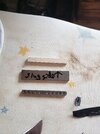
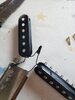
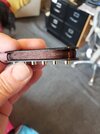
@eclecticsynergy have you experimented with different alloys for the slugs, pole screws and keeper bars? Rumor has it that the amount of carbon in the alloy can have a small effect on brightness.
Experts agree that higher carbon steel in the various components does yield brighter tone and some feel it may give more immediate attack too. Low carbon seems widely accepted as being more vintage in character.
Metallurgy is a fascinating subject. It's cool that we have many more options available today. In the 50s I think they just used what was available and inexpensive. It makes sense that they wouldn't have chosen harder, more costly steel for components where strength was not relevant, and I doubt Seth Lover did tests on various grades when he developed the original design that led to the fabled Gibson PAFs. Now we know the grade of steel affects tone. If they'd known in the 50s they might've gone with higher carbon since the goal was to replicate the tone of P90s, only without hum.
Then again, maybe economy would've won out over sound. Those who know say that Gibson bought whatever magnets were cheapest, and that that accounts for the use of four different magnets during the PAF/Pat# period - five if we're counting short A5s.
Also, specs for the various alnico magnet grades were not scientifically specific. Even with today's automatedproduction they vary from one foundry to another, enough to affect the sound of a pickup. Throbak claims to have had vintage A4s lab analyzed, then commissioned a batch of mags in that precise formulation. That's some serious dedication to vintage correctness.
But not everything can be made to match exactly. It's said the enamel insulation on vintage winding wire used some hazardous chemicals which today are proscribed by industrial safety laws. A few years back Wizz got hold of a couple spools of NOS vintage wire and made afew runs of pickups using that.
Then there's the PRS story of tracking down one particular vintage extruder responsible for the wire in certain outstandingly great vintage pickups. They repaired it, added CNC capability, and use the wire from it (with modern enamel coating) in a few models. I have some 57/08 and 59/09 humbuckers and there really does seem to be a certain especially three-dimensional quality to their sound. Don't know if it's really the magic wire, but IME it does seem to be unique to these pickups.
Well, I've gone off the rails yet again. That often happens to me when I get started on a favorite topic.
Getting back to the subject at hand, I haven't built any pickups from scratch and my only firsthand experience (so far) has been with straight-up magnet swaps. Might experiment swapping pole screws at some point, maybe keeper bars too. That seems simple enough.
Slug swaps aren't totally out of the question either. Still, the difference is said to be pretty subtle. From what I've read, switching to hex screws (or even shortening the existing filisters) can yield more change with less effort.
Have also heard about two other component swaps I'd like to try at some point: changing baseplates between brass and nickel silver, and replacing slugs with alnico rods.
There was a post on the PRS forum awhile back from a guy who put rod mags into the B&G humbuckers of his PRS SE. The goal was to boost output, improve definition, and perhaps get closer to the great split tone of the old T&B pickups. I'd like to try that mod on a high quality humbucker someday.
And one of these days I'd like to try mitigating the "cocked-wah" sound of a DiMarzio humbucker by replacing the brass baseplate. Some feel this is a far bigger factor in the trademark DiMarzio vowel tone than has been widely recognized.
The sheer amount of specific information available on the Web still astonishes me. So much of what used to be esoteric knowledge reserved only to a few can be had with just a few keystrokes...
The downside - which applies to internet info on various aspects of just about any skill - is the temptation to lose sight of the difference between information and understanding, mistaking knowledge for expertise.
Some things you only really learn by doing.