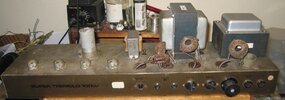
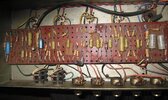
For many guitarists and rock fans, Slash’s signature sound in 1987’s “Appetite For Destruction” represents the ultimate rock n’ roll guitar tone. From the melodic, neck-pickup-driven opening riff on “Sweet Child O’ Mine” to the action-packed breakdown solo on “Paradise City,” few would disagree that Slash really “hit the sweet spot” in the studio on that particular rig.
But what exactly *was* this rig?
This is the question that has been debated over and over by countless guitarists since the first time the video for “Welcome to the Jungle” aired on MTV. Seeking to replicate that tone, we’ve eagerly read every Slash interview we could find, scoured the internet for clues, and plugged our Les Pauls into every 1980s Marshall we could get our hands on.
But for most of us, it’s been a discouraging and confusing journey, at best. Reports are conflicted and contradictory. Every interview seems to say something different. Was the ’59 Les Paul replica built by MAX or Derrig (no explanation needed for my fellow Slash fanatics)? Was it a Marshall JCM 800, a Silver Jubilee Model 2555 (not likely, since recording for “Appetite” began in August 1986, and the Jubilees weren’t produced until 1987), or something else? Was the amp modified, and if so, how, and by who?
Personally, I’ve always believed that the amp-related questions were the most crucial – and the most intriguing. This is because I believe that the amp used on Slash’s lead/solo parts was probably the one *constant* ingredient throughout all of the songs on “Appetite.” When you listen carefully to every song on “Appetite,” as I have literally hundreds of times, you just might come to the conclusion that Slash didn’t use the Les Paul replica on *all* of his solo parts.
A perfect example is “Nightrain,” arguably a song with solos that epitomize Slash’s “Appetite” tone. To my ear, Slash makes use of tremolo-bar bending a couple of times (listen carefully, and keep an open mind!) during his “Nightrain” lead work (obviously, impossible to do on an ABR-1-and-tailpiece based Les Paul), and the pickups sound a bit hotter than in other songs. Perhaps this other guitar is the “double-locking superstrat” (said to have been a Jackson) that Slash originally brought to the studio for “Appetite.”
(I don’t want to go off on a tangent here, but if you’re still not quite convinced about the tremolo-bar/Jackson argument, listen for the pinch-harmonics “dive” almost exactly one minute into Nightrain. Also, check the inside of the “Appetite” album insert, and see where the band thanks Jackson Guitars (among a practically endless list of other people and companies). Also, keep in mind that Slash had been a major user of tremolo-bar tricks at that time – the first half of “G N’ R Lies” (the live half) is filled with dramatic examples.)
With respect to amps, after exhaustively putting all of the available clues together, and after being given the opportunity to put the question to Slash himself (albeit through a chain of third parties), I have come to the conclusion that Slash used *at least two* Marshall heads to record “Appetite” – a JCM 800, and another, more mysterious, pre-JCM-800 model Marshall – the *one*, true amp that our ears would recognize as Slash’s “Appetite” Marshall.
And that’s where the really interesting stuff begins.
WELCOME TO THE BUNGLE

On multiple occasions, primarily through interviews in guitar magazines, Slash has spoken of a Marshall head that he rented from S.I.R. (Studio Instrument Rentals in Los Angeles) and used heavily during the “Appetite” sessions (“Appetite” was recorded between August and December 1986). According to Slash, he loved the amp so much that, when S.I.R. wouldn’t agree to sell it to him, he invented a scheme to essentially “steal” the amp from them. After wrapping up the “Appetite” recordings, Slash told S.I.R. that the amp had been stolen so that he wouldn’t have to return it. Slash kept the amp for a time until a misstep by his roadie at the time spoiled Slash’s plans. During rehearsals at S.I.R. following the “Appetite” sessions (probably sometime in 1987), the roadie made the mistake of bringing the mystery Marshall to S.I.R.. When the guys at S.I.R. recognized their amp, they took it back.
Slash has said that he had a difficult time finding a suitable replacement for this Marshall (while prepping for the “Use Your Illusions” sessions). It is clear that Slash never again exactly replicated his “Appetite” tone, although this might have at least been partially attributable to an intentional evolution of tone on Slash’s part. Slash’s “Illusions” tone stands in stark sonic contrast to his “Appetite” tone, and seems to have been achieved using a JCM 800 exclusively.
THE LYNCH CONNECTION

To finish the story, we must first step back a year or two to 1985. According to interviews and other reports, during rehearsals for Dokken’s “Under Lock and Key” tour in late 1985, George Lynch was “blown away” by a modified Marshall owned by S.I.R.. Although George had utilized Lee Jackson-modified Marshalls during the actual recording of “Under Lock and Key,” he was so charmed by the modded Marshall, known to S.I.R. as “Stock #39,” that he tried his best to convince S.I.R. to sell it to him. S.I.R. refused to sell the amp (or even tell him who had done the mod), so George paid a substantial sum of money to S.I.R. just for the privilege of renting the amp during the first leg of the tour. The amp was returned to S.I.R. at some point before the conclusion of the tour in September 1986 (probably at least a few months prior to the tour’s end, since George only rented it for the first leg).
Later, despite S.I.R.’s attempts to keep the modifier’s name in the dark, George was able to track down the person who had modified the S.I.R. Marshall and contacted him personally in order to have four of his own Marshalls similarly modified.
But what exactly *was* this rig?
This is the question that has been debated over and over by countless guitarists since the first time the video for “Welcome to the Jungle” aired on MTV. Seeking to replicate that tone, we’ve eagerly read every Slash interview we could find, scoured the internet for clues, and plugged our Les Pauls into every 1980s Marshall we could get our hands on.
But for most of us, it’s been a discouraging and confusing journey, at best. Reports are conflicted and contradictory. Every interview seems to say something different. Was the ’59 Les Paul replica built by MAX or Derrig (no explanation needed for my fellow Slash fanatics)? Was it a Marshall JCM 800, a Silver Jubilee Model 2555 (not likely, since recording for “Appetite” began in August 1986, and the Jubilees weren’t produced until 1987), or something else? Was the amp modified, and if so, how, and by who?
Personally, I’ve always believed that the amp-related questions were the most crucial – and the most intriguing. This is because I believe that the amp used on Slash’s lead/solo parts was probably the one *constant* ingredient throughout all of the songs on “Appetite.” When you listen carefully to every song on “Appetite,” as I have literally hundreds of times, you just might come to the conclusion that Slash didn’t use the Les Paul replica on *all* of his solo parts.
A perfect example is “Nightrain,” arguably a song with solos that epitomize Slash’s “Appetite” tone. To my ear, Slash makes use of tremolo-bar bending a couple of times (listen carefully, and keep an open mind!) during his “Nightrain” lead work (obviously, impossible to do on an ABR-1-and-tailpiece based Les Paul), and the pickups sound a bit hotter than in other songs. Perhaps this other guitar is the “double-locking superstrat” (said to have been a Jackson) that Slash originally brought to the studio for “Appetite.”
(I don’t want to go off on a tangent here, but if you’re still not quite convinced about the tremolo-bar/Jackson argument, listen for the pinch-harmonics “dive” almost exactly one minute into Nightrain. Also, check the inside of the “Appetite” album insert, and see where the band thanks Jackson Guitars (among a practically endless list of other people and companies). Also, keep in mind that Slash had been a major user of tremolo-bar tricks at that time – the first half of “G N’ R Lies” (the live half) is filled with dramatic examples.)
With respect to amps, after exhaustively putting all of the available clues together, and after being given the opportunity to put the question to Slash himself (albeit through a chain of third parties), I have come to the conclusion that Slash used *at least two* Marshall heads to record “Appetite” – a JCM 800, and another, more mysterious, pre-JCM-800 model Marshall – the *one*, true amp that our ears would recognize as Slash’s “Appetite” Marshall.
And that’s where the really interesting stuff begins.
WELCOME TO THE BUNGLE
On multiple occasions, primarily through interviews in guitar magazines, Slash has spoken of a Marshall head that he rented from S.I.R. (Studio Instrument Rentals in Los Angeles) and used heavily during the “Appetite” sessions (“Appetite” was recorded between August and December 1986). According to Slash, he loved the amp so much that, when S.I.R. wouldn’t agree to sell it to him, he invented a scheme to essentially “steal” the amp from them. After wrapping up the “Appetite” recordings, Slash told S.I.R. that the amp had been stolen so that he wouldn’t have to return it. Slash kept the amp for a time until a misstep by his roadie at the time spoiled Slash’s plans. During rehearsals at S.I.R. following the “Appetite” sessions (probably sometime in 1987), the roadie made the mistake of bringing the mystery Marshall to S.I.R.. When the guys at S.I.R. recognized their amp, they took it back.
Slash has said that he had a difficult time finding a suitable replacement for this Marshall (while prepping for the “Use Your Illusions” sessions). It is clear that Slash never again exactly replicated his “Appetite” tone, although this might have at least been partially attributable to an intentional evolution of tone on Slash’s part. Slash’s “Illusions” tone stands in stark sonic contrast to his “Appetite” tone, and seems to have been achieved using a JCM 800 exclusively.
THE LYNCH CONNECTION

To finish the story, we must first step back a year or two to 1985. According to interviews and other reports, during rehearsals for Dokken’s “Under Lock and Key” tour in late 1985, George Lynch was “blown away” by a modified Marshall owned by S.I.R.. Although George had utilized Lee Jackson-modified Marshalls during the actual recording of “Under Lock and Key,” he was so charmed by the modded Marshall, known to S.I.R. as “Stock #39,” that he tried his best to convince S.I.R. to sell it to him. S.I.R. refused to sell the amp (or even tell him who had done the mod), so George paid a substantial sum of money to S.I.R. just for the privilege of renting the amp during the first leg of the tour. The amp was returned to S.I.R. at some point before the conclusion of the tour in September 1986 (probably at least a few months prior to the tour’s end, since George only rented it for the first leg).
Later, despite S.I.R.’s attempts to keep the modifier’s name in the dark, George was able to track down the person who had modified the S.I.R. Marshall and contacted him personally in order to have four of his own Marshalls similarly modified.
Last edited:


 )
)