


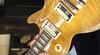
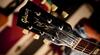
The famous Gibson replica that Slash used to dominate the world...Serial # 90607
Slash's Les Paul was hailed as an impressive instrument. When Premier Guitar reviewed it, they said, “It’s a well-built, high-quality Les Paul with flawless playability and gorgeous looks.” The review carried a 4.5 rating out of a possible 5.
That review also pointed out something that Slash fans and internet forum users had known all along: The Slash Appetite Les Paul is actually a replica of a replica— because the instrument Slash rocked on the iconic album wasn’t actually a Gibson.
The “original,” as Slash calls it in the videos, was made by California luthier Kris Derrig, who passed away in 1987.
When Guns N’ Roses entered the studio in late 1986 to record Appetite for Destruction, Slash was apparently playing an assortment of guitars that did not— according to some—include a Les Paul, whether replica or Gibson.
“Now, I was not there in the studio, but there are too many accounts from Slash and other people that a lot was recorded with a black Jackson and a red B.C. Rich,” Rist says. He claims that most of the record was recorded with these instruments and that the second legendary Les Paul replica did not enter the picture “until Slash did all of the solo stuff.”
Other sources claim a Les Paul replica was more prominent on the album. In Stephen Davis’ 2008 book Watch You Bleed: The Saga of Guns N’ Roses, he writes, “Slash cut most of the tracks with a Les Paul copy plugged into a Marshall amplifier.”
But in a July 2010 interview with AOL’s Noisecreep website, Slash himself seems to confirm, at least in part, the assertion that the LP didn’t show up until late in the game, as well as rumors about the disposition of his earlier instruments.
“I was really broke and I hocked all my decent guitars before we went into the studio to make Appetite for Destruction,” Slash tells the website staff. “All I had left were a B.C. Rich Warlock and two Jackson guitars, a Firebird, and a prototype archtop Strat-style guitar. I brought them all into the recording studio for the Appetite session and they all sounded horrible. I was like, ‘F---, what do I do? I have to do the overdubs and I have no instrument.’ So Guns N’ Roses manager, Alan Niven, showed up the night before I went in to do the Appetite overdubs and brought me this Les Paul. I went in the next day and it was the most amazing sounding guitar.”
That instrument, the second Les Paul replica in Slash’s epic journey, is widely reported to be the work of the late Kris Derrig. Luthier Baranet references this guitar when he says, “And then the Derrig model came in, you know, at the last minute for the overdubs and solos.”
At first glance, that seems to conflict with Slash’s own statement in his book that, “It was made by the late Jim Foot[e], who owned MusicWorks in Redondo Beach.”
However, guitar-building contemporaries explain that Derrig shared space with Foote (who is still alive), which probably accounts for Slash’s statement in the book, especially since band manager Alan Niven brought the instrument to the guitarist. The rocker did not go to the shop himself.
“Kris had a workshop in the back of Jim Foote’s store,” Rist says. “Most guitar builders, they just want to be left alone and do their thing, and one thing you do not want to do a lot is deal with customers. So if you can have a buffer man out front, you can do your own thing a bit easier.”
The Derrig model is presumed to be Slash’s main guitar to this day. In the Gibson promotional materials, when Slash says, “the original,” he’s referencing the Derrig. Since that instrument went directly to the guitarist, the builders interviewed for this article don’t have any firsthand knowledge of the guitar.
Slash and Gibson did not respond to interview requests for this article. However, we should note that the general attitude among savvy guitarists is that Gibson’s Appetite Les Paul isn’t some attempt to hoodwink an unsuspecting public. Most observers feel that if a customer is a big enough fan to pay the list price of nearly five grand for the instrument, they’d also know the true story. And Gibson’s new Appetite guitar does include some modern updates that theoretically improve its practicality for a mass audience. And in many ways the Gibson initiative to sell such an instrument addressed a burgeoning demand among consumers—and addressed it well.
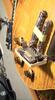
Here for your enjoyment, are the actual photos of the Kris Derrig Gibson Les Paul Replica, forever immortalized on Appetite for Destruction...
Slash's Les Paul was hailed as an impressive instrument. When Premier Guitar reviewed it, they said, “It’s a well-built, high-quality Les Paul with flawless playability and gorgeous looks.” The review carried a 4.5 rating out of a possible 5.
That review also pointed out something that Slash fans and internet forum users had known all along: The Slash Appetite Les Paul is actually a replica of a replica— because the instrument Slash rocked on the iconic album wasn’t actually a Gibson.
The “original,” as Slash calls it in the videos, was made by California luthier Kris Derrig, who passed away in 1987.
When Guns N’ Roses entered the studio in late 1986 to record Appetite for Destruction, Slash was apparently playing an assortment of guitars that did not— according to some—include a Les Paul, whether replica or Gibson.
“Now, I was not there in the studio, but there are too many accounts from Slash and other people that a lot was recorded with a black Jackson and a red B.C. Rich,” Rist says. He claims that most of the record was recorded with these instruments and that the second legendary Les Paul replica did not enter the picture “until Slash did all of the solo stuff.”
Other sources claim a Les Paul replica was more prominent on the album. In Stephen Davis’ 2008 book Watch You Bleed: The Saga of Guns N’ Roses, he writes, “Slash cut most of the tracks with a Les Paul copy plugged into a Marshall amplifier.”
But in a July 2010 interview with AOL’s Noisecreep website, Slash himself seems to confirm, at least in part, the assertion that the LP didn’t show up until late in the game, as well as rumors about the disposition of his earlier instruments.
“I was really broke and I hocked all my decent guitars before we went into the studio to make Appetite for Destruction,” Slash tells the website staff. “All I had left were a B.C. Rich Warlock and two Jackson guitars, a Firebird, and a prototype archtop Strat-style guitar. I brought them all into the recording studio for the Appetite session and they all sounded horrible. I was like, ‘F---, what do I do? I have to do the overdubs and I have no instrument.’ So Guns N’ Roses manager, Alan Niven, showed up the night before I went in to do the Appetite overdubs and brought me this Les Paul. I went in the next day and it was the most amazing sounding guitar.”
That instrument, the second Les Paul replica in Slash’s epic journey, is widely reported to be the work of the late Kris Derrig. Luthier Baranet references this guitar when he says, “And then the Derrig model came in, you know, at the last minute for the overdubs and solos.”
At first glance, that seems to conflict with Slash’s own statement in his book that, “It was made by the late Jim Foot[e], who owned MusicWorks in Redondo Beach.”
However, guitar-building contemporaries explain that Derrig shared space with Foote (who is still alive), which probably accounts for Slash’s statement in the book, especially since band manager Alan Niven brought the instrument to the guitarist. The rocker did not go to the shop himself.
“Kris had a workshop in the back of Jim Foote’s store,” Rist says. “Most guitar builders, they just want to be left alone and do their thing, and one thing you do not want to do a lot is deal with customers. So if you can have a buffer man out front, you can do your own thing a bit easier.”
The Derrig model is presumed to be Slash’s main guitar to this day. In the Gibson promotional materials, when Slash says, “the original,” he’s referencing the Derrig. Since that instrument went directly to the guitarist, the builders interviewed for this article don’t have any firsthand knowledge of the guitar.
Slash and Gibson did not respond to interview requests for this article. However, we should note that the general attitude among savvy guitarists is that Gibson’s Appetite Les Paul isn’t some attempt to hoodwink an unsuspecting public. Most observers feel that if a customer is a big enough fan to pay the list price of nearly five grand for the instrument, they’d also know the true story. And Gibson’s new Appetite guitar does include some modern updates that theoretically improve its practicality for a mass audience. And in many ways the Gibson initiative to sell such an instrument addressed a burgeoning demand among consumers—and addressed it well.
Here for your enjoyment, are the actual photos of the Kris Derrig Gibson Les Paul Replica, forever immortalized on Appetite for Destruction...


