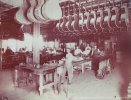
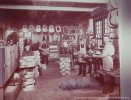
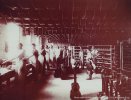
The Harmony Factory circa 1920.

Scott Baxendale

Well-Known Member
Country flag
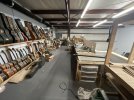
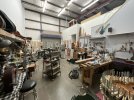
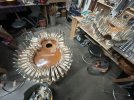
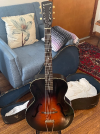
Here are some cool,photos of the old Harmony factory in Chicago around 1920. In the first photo you can see the belts and pulleys that ran all their power tools off a main shaft that was turned by a big diesel engine. The sounds in this shop must have been quite different that the sounds in a modern shop with all the belts, pulleys, clutch mechanisms etc.
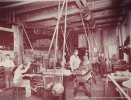
IMG_2049.jpegIMG_2054.jpegIMG_2050.jpegIMG_2051.jpegIMG_2056.jpeg
 
We rebuild them everyday and sell them from $1500-3000. It’s been my business for over 20 years.
I'm just joking man, I know vintage Harmony's are great... But just pretty select models and years are actually desirable right? I bought a little Harmony acoustic that somebody painted at an antique store for like $50. Can you imagine anyone doing that to a Martin, Guild, Gibson, etc ?
 
I'm just joking man, I know vintage Harmony's are great... But just pretty select models and years are actually desirable right? I bought a little Harmony acoustic that somebody painted at an antique store for like $50. Can you imagine anyone doing that to a Martin, Guild, Gibson, etc ?
I’ve seen that done to martins and guilds, but I’ve seen pretty much everything.

Certain models are better than others, but all models made between 1920-1970 are good candidates for our process and turn out great when done. All harmony’s made during this time period were all made with solid woods, even the 3/4 Stella and silvertones with faux grain paint jobs. These are still made with solid birch.

I’ve paid less than $50 for many amazing guitars over the years. I’ve also seen Martins completely trashed, hacked, painted weird.

Guilds were always kinda second rate in comparison to Martin and Gibson pre 1970. Guild came about because Gibson bought out Epiphone in the mid 50’s. Epiphone was originally a New York factory making mostly archtops, mandolins, banjos, and flat top guitars. Gibson bought them out and the workers in New York took over the old NY Epi factory and formed a Guild amongst the workers, hence the brand name Guild. These early Guilds were essentially NY Epiphone’s, but by the 60’s they had changed their designs and they became very heavy and overbuilt guitars for the most part.
 
Back
Top