#YOLO


It might open some wormhole portal to hell lol#YOLO


I've seen this type explanation several times on the internet. For someone trying to learn from the explanation, it is incorrectly informing them.The screen grid resistors in any tube power amp are: current limiting resistors.
They are supposed to blow if the tube is shorted, protecting the transformers.
But put in a larger wattage resistor --- and the protection is now bypassed.
The people who designed these amps were not idiots.

I think you have to add a choke for that to work.It might open some wormhole portal to hell lol


A resistor cannot drop voltage, without a current load.I've seen this type explanation several times on the internet. For someone trying to learn from the explanation, it is incorrectly informing them.
Screen grid current is drawn from the cathode. The screen grid (series) resistor is external to the tube, so cannot directly limit current drawn by the screen grid. What the screen resistor does do is to drop voltage due to ohms law. As screen current increases, so does the voltage drop across the screen resistor. This means lower voltage on the screen grid & thus a reduction in current drawn.
Cheers

A nice treble booster pedal into a cranked Marshall can be magical!My conclusion after mucho Marshall madness..all stock & a treble booster pedal for the xtra intensity

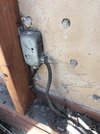
Wow! Judging by the cloth type insulation and the style of nail on box, it looks at least mid to late 30s, up to around the mid 50s. Thats NM Type wiring but it definitely has to be earlier than the 1960s because at that time they had begun to use plastic and nylon jacketing. Id say by that plaster board wall? Looks really similar to that hospital section i just did and that was about mid 30s
Of course a resistor can't drop voltage until there is current flowing through it. In this case it is the screen grid current that causes the voltage drop across the resistor. More screen grid current = greater voltage drop across the resistor = lower screen grid positive potential. I do have a slight grip on ohms law. CheersA resistor cannot drop voltage, without a current load.
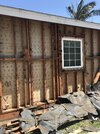
Yeah its kinda weird: it itself, is sorta like a drywall/gypsum board ( yet predates drywall, go figure) and it has a pattern of holes that let the plaster pour thru and bond better i suppose. Theres usually a metal mesh screening directly over top of it that allows the plaster to be applied and stick.I've never seen that kind of plaster backing before. Was this a transition between lathe and drywall?
Thanks buddy, I later found out that it was built in 49.Wow! Judging by the cloth type insulation and the style of nail on box, it looks at least mid to late 30s, up to around the mid 50s. Thats NM Type wiring but it definitely has to be earlier than the 1960s because at that time they had begun to use plastic and nylon jacketing. Id say by that plaster board wall? Looks really similar to that hospital section i just did and that was about mid 30s
Seems about right! Old school huh? LolThanks buddy, I later found out that it was built in 49.
We are stripping the exterior for new siding..View attachment 71047

By the suggestions, I think it's settled then and decided:
Lol its in the mail!Let me help you out.
1. You send the amp to me.
2. I’ll use all the suggestions here on the forum and replace all the bad components for you. (You just have to pay for the components! Yay!)
3. I’ll keep the amp for thorough testing and evaluation for about five to ten years.
Deal?
I have seen it before, they called it button boardI've never seen that kind of plaster backing before. Was this a transition between lathe and drywall?
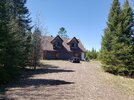
If I was a roofer I could answer correctly , but I have not seen that done beforeView attachment 71048
Since we are completely off the rails here. @Mitch Pearrow SJMP can I put a steel roof over the existing shingles, or do they need to come off?
Thanks buddy, I later found out that it was built in 49.
We are stripping the exterior for new siding..