Snap Crackle Pop gawddammit!!

jtcnj

Ambassador of the Crossroad
Country flag
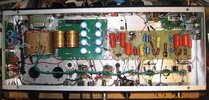
I have been having issues with my 18w tmb build; some noise which I traced to V1 socket.
I reflowed the solder joints and it was playing ok, but still crackly if I wiggled the tube in the socket.
I snatched a 9 pin from my stalled JCM800 1w micro build.
It's rock solid now.

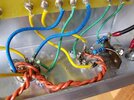
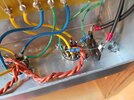
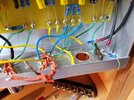
If you look at the pin at the 12:00 position; I hate that I f**ked a Belton socket.
It took heat damage in the build. that is pin8, the cathode of the tmb channel I play most often.
20200808_160547.jpg20200808_163245.jpg20200808_163335.jpg20200808_170919.jpg
 
I have been having issues with my 18w tmb build; some noise which I traced to V1 socket.
I reflowed the solder joints and it was playing ok, but still crackly if I wiggled the tube in the socket.
I snatched a 9 pin from my stalled JCM800 1w micro build.
It's rock solid now.

If you look at the pin at the 12:00 position; I hate that I f**ked a Belton socket.
It took heat damage in the build. that is pin8, the cathode of the tmb channel I play most often.
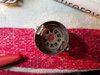

View attachment 47089View attachment 47090View attachment 47091View attachment 47092

You "do" realize that soldering to aluminum, is not possible?
You can make a blob of solder on top of aluminum, but it will never flow or remain permanent.

When 2 dissimilar metals (such as steel and aluminum) are connected, the connection will oxidize and fail.
The oxide which forms between the 2 metals becomes an insulator....

No matter how tight a screw is...dissimilar metals are electromagnetically incompatible.
This is why an electrical connections between dissimilar metals were outlawed in 1971.
 
Last edited:
Yes, I know you cant solder aluminum.
If you are referring to the joint to the right side of the chassis, I figure that is a tig weld.
This is the only build I bought the chassis and populated board for.
A wholesaler bought up VHT / AXL stock and I got a bunch of stuff dirt cheap, including LP jr and LP husks that I built into great playing guitars.
They had all the routes cuts and big holes drilled, and the fret slots cut.
 
I will never use Belton sockets ever again. I got a bad batch of octal shorted out between the pins on a few
the trash can revived all 50 of them. Since that experience I only use ceramic mill spec sockets they cost $18.00 each.

amp 001.JPG
 
Yes, I know you cant solder aluminum.
If you are referring to the joint to the right side of the chassis, I figure that is a tig weld.
This is the only build I bought the chassis and populated board for.
A wholesaler bought up VHT / AXL stock and I got a bunch of stuff dirt cheap, including LP jr and LP husks that I built into great playing guitars.
They had all the routes cuts and big holes drilled, and the fret slots cut.

Now here's something interesting, concerning the galvanic corrosion of aluminum
Yes, I know you cant solder aluminum.
If you are referring to the joint to the right side of the chassis, I figure that is a tig weld.
This is the only build I bought the chassis and populated board for.
A wholesaler bought up VHT / AXL stock and I got a bunch of stuff dirt cheap, including LP jr and LP husks that I built into great playing guitars.
They had all the routes cuts and big holes drilled, and the fret slots cut.

I found something that I didn't see before.
Apparently, combining tungsten carbide with the aluminum chassis can reduce the galvanic corrosion to about 1% of what we normally expect.
This gives some hope to aluminum chassis tube amplifiers....which "as is," can be quite dangerous.

The usual practice being:
A. using the aluminum as a circuit path.
B. Using dissimilar metals to connect ground connections to the chassis, with screws and nuts.
Because a layer of oxide forms between the 2 metals, creating an insulator.
These type of connections break down and fail over time.
But with this newer concept of "WC Aluminum particles," the expected break down of continuity is greatly reduced.
 
when in a position of attaching to aluminum, I use a product called No-Ox.
First started using it when I started working in the wastewater treatment plants.

that was the late 70's and still use it today.
 
when in a position of attaching to aluminum, I use a product called No-Ox.
First started using it when I started working in the wastewater treatment plants.

that was the late 70's and still use it today.

They broke the press this morning.

:pound-hand:
 
That reminds me -
dielectric grease is good for this or no?

No-Ox is dielectric grease.
But it is only intended for aluminum to aluminum connections.
It was not made for dissimilar metals.
The grease itself is made from aluminum particles.

The best way is to tig weld mig weld the steel or copper terminals to the aluminum...
The oxygen is then excluded from between the 2 metals. When that oxygen is gone, the aluminum won't break down so fast.
Then the steel / copper can then be soldered to ground wires.

That what makes this tungsten aluminum so cool. It stops the aluminum from breaking down. It cuts the corrosion down like 99%.

You can still use an aluminum chassis if you don't use the chassis as the circuit path. The grounds are wired instead.
I think it's called the "Larry" Method.
 
For shielding stuff(non copper p/u cover and the p/u), I used adhesive shielding tape instead of soldering.
 
Back
Top