Amp Mad Scientist
Ambassador of Heresy

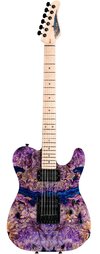
Why shouldn't you buy a new guitar?It is the Christmas season and a USA Schecter PT is screaming at me...
View attachment 76718View attachment 76719View attachment 76720
Only 3 easy payments.

Why shouldn't you buy a new guitar?It is the Christmas season and a USA Schecter PT is screaming at me...
View attachment 76718View attachment 76719View attachment 76720

 www.musiciansfriend.com


Yep, that would be too wild for me Greg!This is wild:
View attachment 76766
View attachment 76767
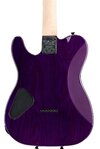
Schecter Guitar Research USA PT Buckeye Burl Electric Guitar
Get the guaranteed best price on Solid Body Electric Guitars like the Schecter Guitar Research USA PT Buckeye Burl Electric Guitar at Musician's Friend. Get a low price and free shipping on thousands...


Why shouldn't you buy a new guitar?
Only 3 easy payments.

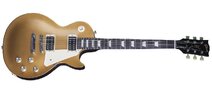
Let's use a real-word scenario for this example of bringing an entry-level Gibson les Paul into fighting shape.
(1) Brand New 2016 Gibson Les Paul 50's Tribute - Purchased on 04/30/2017 SKU #GIB LPST5HT16 for $899.00
View attachment 76764
Now, lets see what I spent to "make it right" enough to record with and earn a living with. (this isn't required of you are a bedroom player) For labor, I used established price guides from local SoCal Luthier's websites, although I did my most of my own work:
1. High quality aluminum ABR-1 Bridge and Tailpiece SKU# LPB-1272-NK $70.00
2. Faber #3095-O steel tailpiece studs: $22.00
3. Gibson/Grover Tuners PMMH025 $119.99
4. New Hand-Fabbed Bone Nut installed with prep: $80.00
5. Tone Man 1950's Style Wire Harness Bourns Pots, Gravitt Wire $129.95
6. Full Level & Crown $200.00
7. Thro-Bak PAF Pickups SLE 101 MXV Matched Pair: $575.00
8. Copper Shielding tape - 10 Foot Roll From Art Of Tone, Ventura, Ca. $16.95
9. Gator Poly TSA Case #GAT GCLPS : $119.99 (Gig Bag Only This Model)
Cost of Guitar & Upgraded Parts: $1,954.00
Local Taxes @ 7.75%: $ 151.43
Labor as listed above: $ 280.00
Total Cost: (less shipping) $2,385.43
Now, after you've invested this $2,400.00 amount, you still have a entry-level Les Paul without binding, visible wood grain on the back that is painted with a sticky sort of "latex-esque" black or mud brown paint (both cost cutting measures) and you could not recover your investment if you were not happy with it or had to sell it for any other reason.
I took a huge loss on this guitar. I lost 3-4 months of time researching and doing the work, the cost of the parts which I sold on client's projects for pennies on the dollar and I tried unsuccessfully to sell the guitar (with case) for $700.00.
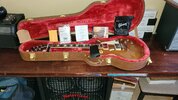
Now, for comparison, let's look at the 2021 Gibson Les Paul 50's Standard I recently acquired:
View attachment 76765
Ok, now let's dig the specs...
1. Flawless paint and nitrocellulose clear coat
2. Aluminum ABR-1 and Tailpiece from factory
3. Gibson Green Keys
4. Graph Tech Nut from factory - Expertly cut when viewed under intense magnification
5. Burstbucker 2 in the neck Burstbucker 3 in the bridge (hand written note on back of case photo)
6. Hand-Wired 50's Style Harness with Sprague .022uf Orange Drops
7. Neck angle is dead-on Gibson specs at 4.5°
8. Frets are all uniform and guitar was plekked. Frets highly polished and feel slick.
9. 1.695" nut width - .981" @ 1st Fret 1.00" @ 12th Fret - 2.26" wide @ heel
10. Gibson case included
Out The Door Total Retail Cost with case & 7.75% tax: $2,908.53
TBTH, this was a way better deal. The guitar was factory setup to my preferences (which happen to be Gibson's published setup specs) of .030" @ 1st Fret, .070" @ 12th Fret and the guitar plays and sounds great, stays in tune under all conditions (still has the factory strings) and @Don O and I both were unable to find a single flaw or issue with it.
Maybe a fixer-upper can be fun every now and again, but I'd rather spend the extra time playing, making music, writing music, working in sessions with great people than slaving over my workbench while wearing a sea-sickness inducing magnifying hood.
I would not recommend EVER buying a guitar you cannot physically touch/see/play no matter how good "The Deal" may sound.
Having said that, sometimes you have to 'ante up' and pay for the level of quality that you expect from an instrument, instead of going the cheap route and then being upset/frustrated that the "engineered-to-meet-a-price-point" guitar is of substandard quality.
Now, @Don O has an interesting Epiphone Les Paul (Sunburst with Z-90's) that really is one of the best I have seen/played in terms of build quality and unplugged volume, so there can always be the possibility of a less expensive guitar that checks all the boxes, but what I am trying to convey is this.
DO NOT do what I did and buy (5) brand new, CHEAP Gibsons (sight unseen) then either lose money on the upgrades, lose practice/playing time fussing/fighting with action/intonation/neck angle/EMI/RFI issues and end up selling/trading at a loss.
Remember this fact....I traded @eSGEe one of the 2016 Gibson SG T Series (I bought brand new) for a Chibson Les Paul, that was built much better (almost prefect fret placement and intonation) and served me as a main studio & stage guitar for 2 years, although I invested a small fortune in wiring, pickups and hardware, plus a lot of labor to get it to that level.
As far as new guitars go, and basing this opinion on the guitars that come through the local music academy and also based on what we see crossing the warranty repair bench of a local tech, we see the fewest problems with Schecter and Jackson, which are both import models, with Jackson being built by Samick Indonesia.
We see zero problems with quality on Wylde Audio Guitars which are built by WMI Korea on the Schecter line.
We see very few problems with the Ibanez models
The PRS 'SE' Indonesian models seem to be very well made with few problems other than inconsistent setup and inaccurate nut prep
Fender USA models have come up in overall quality in the past 2 years. Seeing fewer problems here.
Fender MIM models still have the usual issues, like sharp fret ends, and poorly setup nuts, but some have sub-par electronics and soft saddles.
We are seeing zero issues with new Yamaha guitars and basses (and we are a Yamaha Authorized Dealer)
What about getting a low priced guitar that isn't a trainwreck???
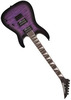
My absolute favorite and top recommended guitar (for new students and I only offer this advice when directly asked) is the The Jackson JS Series Dinky Arch Top JS32Q DKA HT in Transparent Purple Burst.
View attachment 76768
These Jacksons look killer, feature a graphite-reinforced maple neck, compound radius fretboard, have six-inline ergonomic tuners, hardtail reliability for ease of string changes and every one of them (thus far) has had consistently excellent setup right out of the box.
These guitars are $299.00 from Sweetwater ($99.00/month for 3 months zero interest) and these are currently one of the few guitars that I recommend people to order online. You cannot go wrong with Sweetwater's return policy.
All the best...
- Rob
Hey, when did they change spec on the pickups? Mine has BB1/BB2, and I think they still list it that way on the website.
Hey, when did they change spec on the pickups? Mine has BB1/BB2, and I think they still list it that way on the website.
I like how you broke this down for comparison. I would argue with the Throbak pickups due their extreme cost. But nevertheless, even if you didn't replace the pickups, the LP 50's Standard would still be the better investment.Let's use a real-word scenario for this example of bringing an entry-level Gibson les Paul into fighting shape......

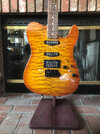
The question which comes to my mind, and which I think is really the most pressing question, is …. why do those guitars have two strap buttons?

Best i can tell is one of two things: A) its possibly to let you hang the strap either extra high or extra low or B) allegedly, this is something Andertons began doing on their guitars as well and its to, believe or not, keep the guitar from falling over if you stand it up/lean it against something.Can anyone explain the two strap buttons on the guitars in the OP?
Right now, all other issues are of secondary importance!
This is driving me nuts!


Tom Anderson’s use the 2 button design too.Best i can tell is one of two things: A) its possibly to let you hang the strap either extra high or extra low or B) allegedly, this is something Andertons began doing on their guitars as well and its to, believe or not, keep the guitar from falling over if you stand it up/lean it against something.
Crazy right?
It's a tricky method to expose the nut-cases lurking in our society...Can anyone explain the two strap buttons on the guitars in the OP?
Right now, all other issues are of secondary importance!
This is driving me nuts!


Can anyone explain the two strap buttons on the guitars in the OP?
Right now, all other issues are of secondary importance!
This is driving me nuts!
I'm not sure, but quite a few of my commercial straps have two holes on the tail end spaced the exact distance of those two strap buttons.
Security is all I can think of....

Can anyone explain the two strap buttons on the guitars in the OP?
I'm not sure, but quite a few of my commercial straps have two holes on the tail end spaced the exact distance of those two strap buttons.
Security is all I can think of....