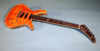
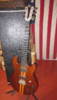
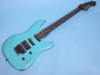
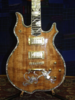
Here is one that 67 plexi can add to. From Wiki
The first model launched by Parker was the
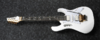
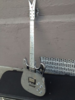
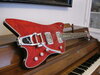
Fly in 1993. Designed by Ken Parker and Larry Fishman, this model was unique for its use of composite materials and light weight. The guitar's combination of traditional magnetic pickups and piezo-electrics in the bridge allowed players to achieve both electric and acoustic tones. Perhaps most significant to the guitar’s design is the almost complete absence of a neck heel to permit greater ease of access to the uppermost frets.
[6]
Parker guitars were characterized as thin and ultra-lightweight instruments; they were generally made from lighter woods like
poplar,
basswood, and
spruce, although there were maple and
mahogany Fly models. They had composite materials (
resin,
epoxy and carbon glass skin) to reinforce a thin carved body and neck. Fingerboards were composite and use
stainless steel frets. Electronics include the integrated use of coil split
humbuckers,
single coil and
piezo pickups with active circuitry. The proprietary vibrato bridge used a unique flat steel spring which helped the guitar to maintain the pitch. The vibrato had three settings; bend down only, full floating and locked.
In October 2002, Parker initiated the first production run of the Fly
bass guitar, in both 4-string and 5-string versions. The 5-strings were noted for their ease of use for 4-string players, both with respect to weight and string spacing. Parker 4-string basses produced in the original factory in Wilmington, MA shipped in 2003 and had seven digit serial numbers using the same formula for dating as the original NiteFly guitars while 5-string basses were shipped first and had six digit numbers that begin with 092 reflecting the 2002 manufacturing. Basses made by
U.S. Music Corporation used the same seven digit formula continuing the 4-string serial number and dating. As with other Parker guitars, they offered both magnetic and
piezoelectric pickups, with the ability to blend the two. The Fly Bass was discontinued in 2008 and Parker currently offers 4 and 5 string basses with the newer MaxxFly shape.
The last original Fly guitars, with the balance wheel on the face of the guitar and the four-knob layout, appeared in 2003. That same year, the Fly was "refined" with a new control layout, consisting of a master volume, a master tone (with coil-split function) and a master volume for the
piezo, eliminating the separate volume control for the magnetic pickups and the piezo tone control. Numerous other changes were made as well.[
example needed]
Several Special edition Flys were also introduced in later years. Major names in these were; the Fly Mojo
Snakeskin, stock guitars covered in
snakeskin; the "Four Seasons" Fly Mojos with thematically corresponding finishes; and a
koa Fly Mojo released as part of the Select series.
In 2010, the MaxxFly model was introduced. Based on the Fly, the MaxxFly features a modified headstock (allowing the instrument to be hung a standard guitar wall hanger), a modified top horn (more ergonomically and traditionally shaped), standardized pickup cavities, 22 frets instead of 24, and a slightly thicker, heavier body. It shares the same general construction as the standard Fly.
When Parker sold his company to the
U.S. Music Corporation in 2003, most of the guitars started to be manufactured outside the United States.
[2]
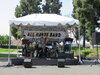
This band and festival is where I saw the Parker Fly for the first time back in the summer of 2001.
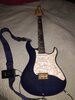
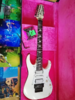
I have a pre production Parker Fly Deluxe Serial Number # 233058 = 1998
084089bp-031009-1399woc

www.guitarhalo.com