ROUNDUP of OTHER GUITARS. Homage to Hidden Gems

chilipeppermaniac

Ambassador of Decibels
Country flag
OK, The title mostly says it all. But since there is a ton of material devoted to the Big names, and kind of a shotgun pattern of the various brands/models that trickle in as we present our non typical, or unique guitars not made by Fender, Gibson, Epi...

What I have in mind is how about we all post a few or big number of Other makers' guitars we own, we admire players of, or even would like to own for ourselves one day. And of course, feel free to add background info, specs, histories or other interesting info about the manufacturer, the brand and models, etc.

So come on and put together all our Peavey's, Schecters, Framus', Washburns, Ovations, Yammies, Ibby's, Ken Smith's, Rickenbacker, Godins, Parker, Heritages, Ernie Ball's, Alembic, PRS etc
 
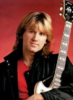
OK, Players such as Rik Emmett, Carlos Santana and my friend Paul Rose in the UK come to mind with some of their guitars.

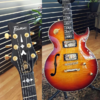
First, Rik's Framus Ackerman
1606495984245.png

Rik got me aware of Framus's My friend Paul also plays Framus's and others.

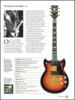
Rik and Carlos both played Yamaha double cut guitars too.

1606496113837.png

1606496177408.png
 
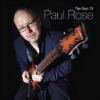
Here is Paul with one of his Framus guitars

1606496457134.png

Paul came to my attention when he got up and jammed with a band a few friends were in here in Baltimore Md. I had no idea he was a Brit until we met up at the house of a lady friend of his who lived out in Baltimore County one Saturday. I took him my Marshall 1/2 stack to check out.

He had his 62 RI Strat with him that he won from a contest that this next paragraph will illustrate. I actually got to try it out. That is my closest to someone as cool as Rory as I have experienced.

" Rory Gallagher awarded Paul a Fender ’62 Reissue Strat, with a Vox AC30, in a Fender sponsored competition that invited guitarists from all over the UK to appear in local music shops. Entrants were required to play in front of a video camera using the guitar and amp in question, without any pedals, to be edited and shown to Rory at a later date. Out of 1000 guitarists, Rory selected Paul as the winner and described him as ‘a hot player with a hot future."

Paul also plays LsL guitars. At one point he had a video of maybe a factory tour of theirs that he did.
 
Last edited:
Well Chilli, I have played many makes, and there are many fine Instruments out there, But what draws me back to Godin guitars is the quality and playability for the dollar. For me I have not found a neck on another guitar to this day that is as comfortable as the ones on my Godin's. This could be because Godin builds ergonomic necks and bodies. The feel of the guitars just mould to you so to speak. I don't have long fingers so the thin ergo necks allow me to wrap my hands around much easier than other guitars. And I have no hand pain with these necks, which I have experienced on other brand guitars. The bodies of the guitars are lighter in weight therefore less strain on back as well. These guitars have made me want to play more, because I can play for longer periods of time without pain. I am thankful to Godin guitars for their innovation in making guitars practical.DSC00237.JPG
 
Here is one that 67 plexi can add to. From Wiki


The first model launched by Parker was the Fly in 1993. Designed by Ken Parker and Larry Fishman, this model was unique for its use of composite materials and light weight. The guitar's combination of traditional magnetic pickups and piezo-electrics in the bridge allowed players to achieve both electric and acoustic tones. Perhaps most significant to the guitar’s design is the almost complete absence of a neck heel to permit greater ease of access to the uppermost frets.[6]

Parker guitars were characterized as thin and ultra-lightweight instruments; they were generally made from lighter woods like poplar, basswood, and spruce, although there were maple and mahogany Fly models. They had composite materials (resin, epoxy and carbon glass skin) to reinforce a thin carved body and neck. Fingerboards were composite and use stainless steel frets. Electronics include the integrated use of coil split humbuckers, single coil and piezo pickups with active circuitry. The proprietary vibrato bridge used a unique flat steel spring which helped the guitar to maintain the pitch. The vibrato had three settings; bend down only, full floating and locked.

In October 2002, Parker initiated the first production run of the Fly bass guitar, in both 4-string and 5-string versions. The 5-strings were noted for their ease of use for 4-string players, both with respect to weight and string spacing. Parker 4-string basses produced in the original factory in Wilmington, MA shipped in 2003 and had seven digit serial numbers using the same formula for dating as the original NiteFly guitars while 5-string basses were shipped first and had six digit numbers that begin with 092 reflecting the 2002 manufacturing. Basses made by U.S. Music Corporation used the same seven digit formula continuing the 4-string serial number and dating. As with other Parker guitars, they offered both magnetic and piezoelectric pickups, with the ability to blend the two. The Fly Bass was discontinued in 2008 and Parker currently offers 4 and 5 string basses with the newer MaxxFly shape.

The last original Fly guitars, with the balance wheel on the face of the guitar and the four-knob layout, appeared in 2003. That same year, the Fly was "refined" with a new control layout, consisting of a master volume, a master tone (with coil-split function) and a master volume for the piezo, eliminating the separate volume control for the magnetic pickups and the piezo tone control. Numerous other changes were made as well.[example needed]

Several Special edition Flys were also introduced in later years. Major names in these were; the Fly Mojo Snakeskin, stock guitars covered in snakeskin; the "Four Seasons" Fly Mojos with thematically corresponding finishes; and a koa Fly Mojo released as part of the Select series.

In 2010, the MaxxFly model was introduced. Based on the Fly, the MaxxFly features a modified headstock (allowing the instrument to be hung a standard guitar wall hanger), a modified top horn (more ergonomically and traditionally shaped), standardized pickup cavities, 22 frets instead of 24, and a slightly thicker, heavier body. It shares the same general construction as the standard Fly.

When Parker sold his company to the U.S. Music Corporation in 2003, most of the guitars started to be manufactured outside the United States.[2]


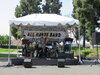
This band and festival is where I saw the Parker Fly for the first time back in the summer of 2001.

 
Last edited:
Well Chilli, I have played many makes, and there are many fine Instruments out there, But what draws me back to Godin guitars is the quality and playability for the dollar. For me I have not found a neck on another guitar to this day that is as comfortable as the ones on my Godin's. This could be because Godin builds ergonomic necks and bodies. The feel of the guitars just mould to you so to speak. I don't have long fingers so the thin ergo necks allow me to wrap my hands around much easier than other guitars. And I have no hand pain with these necks, which I have experienced on other brand guitars. The bodies of the guitars are lighter in weight therefore less strain on back as well. These guitars have made me want to play more, because I can play for longer periods of time without pain. I am thankful to Godin guitars for their innovation in making guitars practical.View attachment 52914

Norm, I fully understand. When I go to choose something as simple as a hammer for pounding nails, or any other tool I have to grip, I get a feel for how well it fits my grip. If it feels "off" I hunt for a different one.
 
Also, I had no idea Peavey made guitars and basses until I saw my friend Josh's bass and another fella Johnny Copeland doing Tin Pan Alleyt together. Oh and of course all the models Adrian knows about.

 
Here’s my Yamaha 12 string. Around 20 years old. Was at Jim’s music in Tustin CA when I saw it on the wall. Got it down and well, the neck played great, plugged it in and it sounded great. Took it home that day.

Used for some softer sounds at a company all hands meeting gig a few year ago.

E16EA271-55CC-4DF9-B120-5E4D3463211E.jpeg
A53CDCF0-D878-4AC7-9736-32F6283918E5.jpeg
 
Last edited:
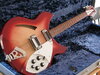
I have a couple of nice Rickenbackers. Actually, they all are.

a '91 330/6 in Jetglow.

IMG_1650.JPG


Then, a 2000 330/12 in Fireglow.


IMG_1048.JPG


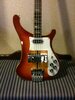
Then, I found this really cool '70s Electra 4001 copy. It has neck-through construction, checkerboard binding, and Rick-O-Sound. I can see why John Hall was mad that these were being sold here. It's quite a nice bass.


142.JPG


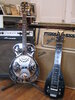
I've also been a huge slide guitar fan, so I have a nice '70 Dobro resonator. I need to play this one more often. My '40s Epiphone lap steel is also in the photo.


IMG_1891.JPG


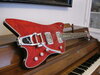
And, because I always wanted a Gretsch Billy-Bo, I made one to my own specs.


018 (2).JPG
 
Here is one that 67 plexi can add to. From Wiki


The first model launched by Parker was the Fly in 1993. Designed by Ken Parker and Larry Fishman, this model was unique for its use of composite materials and light weight. The guitar's combination of traditional magnetic pickups and piezo-electrics in the bridge allowed players to achieve both electric and acoustic tones. Perhaps most significant to the guitar’s design is the almost complete absence of a neck heel to permit greater ease of access to the uppermost frets.[6]

Parker guitars were characterized as thin and ultra-lightweight instruments; they were generally made from lighter woods like poplar, basswood, and spruce, although there were maple and mahogany Fly models. They had composite materials (resin, epoxy and carbon glass skin) to reinforce a thin carved body and neck. Fingerboards were composite and use stainless steel frets. Electronics include the integrated use of coil split humbuckers, single coil and piezo pickups with active circuitry. The proprietary vibrato bridge used a unique flat steel spring which helped the guitar to maintain the pitch. The vibrato had three settings; bend down only, full floating and locked.

In October 2002, Parker initiated the first production run of the Fly bass guitar, in both 4-string and 5-string versions. The 5-strings were noted for their ease of use for 4-string players, both with respect to weight and string spacing. Parker 4-string basses produced in the original factory in Wilmington, MA shipped in 2003 and had seven digit serial numbers using the same formula for dating as the original NiteFly guitars while 5-string basses were shipped first and had six digit numbers that begin with 092 reflecting the 2002 manufacturing. Basses made by U.S. Music Corporation used the same seven digit formula continuing the 4-string serial number and dating. As with other Parker guitars, they offered both magnetic and piezoelectric pickups, with the ability to blend the two. The Fly Bass was discontinued in 2008 and Parker currently offers 4 and 5 string basses with the newer MaxxFly shape.

The last original Fly guitars, with the balance wheel on the face of the guitar and the four-knob layout, appeared in 2003. That same year, the Fly was "refined" with a new control layout, consisting of a master volume, a master tone (with coil-split function) and a master volume for the piezo, eliminating the separate volume control for the magnetic pickups and the piezo tone control. Numerous other changes were made as well.[example needed]

Several Special edition Flys were also introduced in later years. Major names in these were; the Fly Mojo Snakeskin, stock guitars covered in snakeskin; the "Four Seasons" Fly Mojos with thematically corresponding finishes; and a koa Fly Mojo released as part of the Select series.

In 2010, the MaxxFly model was introduced. Based on the Fly, the MaxxFly features a modified headstock (allowing the instrument to be hung a standard guitar wall hanger), a modified top horn (more ergonomically and traditionally shaped), standardized pickup cavities, 22 frets instead of 24, and a slightly thicker, heavier body. It shares the same general construction as the standard Fly.

When Parker sold his company to the U.S. Music Corporation in 2003, most of the guitars started to be manufactured outside the United States.[2]


This band and festival is where I saw the Parker Fly for the first time back in the summer of 2001.

I have a pre production Parker Fly Deluxe Serial Number # 233058 = 1998

 
Back
Top