
You are using an out of date browser. It may not display this or other websites correctly.
You should upgrade or use an alternative browser.
You should upgrade or use an alternative browser.
Reducing an Amp's Heater AC Voltage Supply
- Thread starter syscokid
- Start date
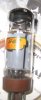
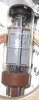

Vox AC30
Well-Known Member

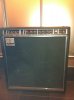
Burman 502 50watt
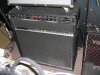
Burman 2000 100 watt
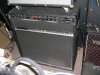
Burman 502 Pro .... 50watt and 100 watt Pro 2000 …. Once called the Rolls-Royce of British tube amplifiers due to their incredible build quality, Burman tube gear is exceedingly hard to find and is cherished by musicians "in the know." Either 2 or 4 GEC KT77's. 1st channel is the clean channel, on the left, and it's sound is quite unique, KT77s are heavy-duty versions of the EL34 with an upgraded maximum plate dissipation of 32w over the 25w max with EL34s.
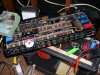
Cap fest weeding out the dodgey ones, and checking Tangent 8, leakage, capacitance, Anatek Blue ESR Meter, and if really needed after all that to the Osd'silly scope! Nothing better than being an amp geek! The layout reeks of Harry Joyce style lead dress… The three red knobs are gain taps into various points of the second channel as one can put these kinds of preamp taps all over the circuit topology wherever the designer desires.
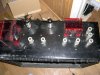
This is the 50watt. The Iron is definitely two massive Partridge, like HiWatt and Orange. Ain't no moisture getting through to those laminations. Both are ungodly heavy. I think I was trying out the JJ KT77 reissues in the pic above , but, they didn't come close, they sounded all right I guess if you've never heard the GEC's but such is life ,and, compared to the originals nothing touched them, either clean or distorted. So, I put the GEC KT77's right back in as the quality of GEC tubes were second to none and were guaranteed to last 10,000 hours, at least! Same as The GEC KT88's and The GEC KT66's. As a spoiler I also have a matched Quad of Mullard EL37's which also kicks a$$ but that's another story.
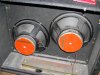
Greg Burman had Goodman build his speaker designs as those magnets weigh a full ton! I'm pretty sure their difficult to blow their that well made! Greg Burman was a perfectionist , being an Engineer !
If I can Locate The 100w 2000 Pro pics I will post em. I think the 100 watt 2000 sounds better than the 50 but to each his own ears would have to decide!
If I can find the time I'll try to walk ya through the circuit, nothing too crazy, just different values based on the designers quirks, so to speak.
The terms “handmade” and “boutique” are very familiar to guitar players nowadays who are looking for the best in amplification. But, in the mid-to-late ‘70s, the demand for guitar amps was so immediate and huge that high volume sales and turnaround times were starting to phase out the handwired, artisanal production methods of the previous decade. But, for Newcastle-based musician and amp designer Greg Burman, that simply wasn’t good enough.
Though Burman Amplification had been slowly germinating since 1966, by 1978 The Burman Pro Series of amplifiers were arguably the best built and most versatile amps you could buy—not just in the UK, but the world over. The Pro 502 was the 2x12 combo of the range. Like its spiritual high gain American cousin—the Mesa Boogie Mark 1—the Burman Pro 502 was one of the first amps ever designed that could supply searing gain without the aid of a booster or transistorized front end. With no less than three blendable gain dials, juicing a staggering seven preamp tubes, the user can dial in every conceivable shade of gain at any volume. In the heart of the highly developed poweramp section, glowed a destructive duet of Golden Lion KT-77s. And boy could they roar. Though the Burman 502 was rated at 70 watts, it dished out as much rib shattering volume as most 100-watt half stacks, all from a 2x12 combo. Burman was so dedicated to his amps’ performance that he had custom oversized transformers built for him by Partridge and extremely efficient custom speakers supplied from Goodmans. Opening up the chassis reveals Mullard Caps and one of the most meticulously hand wired turret board topographies in the history of amplification.
Greg Burman is like any maverick artist in that his creations were not motivated by sales. His pride in his work went to the extent of home visits to his customers to help them dial in his wildly versatile circuits and he was known to write personal letters to his patrons if they had a query. Perhaps one man’s vision of the perfect amp was never meant to be a large-scale sustainable business model, but for those that I have spoken too who own a Burman, nothing else will ever measure up.
For a comprehensive showcase of the unique voices of the Burman, listen to anything Killing Joke recorded in the 1980s. Geordie Walker was the undisputed champion of these proto-boutique amps and laid down more classic tracks with Burmans than anyone else has or ever will.
Burman Amplifiers
Attachments

Vox AC30
Well-Known Member
Playing my old, old diamond input Vox AC 50 head sounds absolutely killer on 92volts, 60 cycles. Then I surmise you know self, an AC50 is not supposed to sound anything like that! So I go outside and plug in a Sawzall and I could stop the blade with my fingers, couldn't saw thru table butter …. Hmmmm . Grab a meter inside and sure enough I read 92 volts, the first thing I think is where is the other 28 volts goin? Check the neutral and the ground, nope not there. Then I go outside again and check the trees to see if their branches are close to the house, also, look for any signs of possible rodent entrance … find 2 or 4 possibilities! The one with the Grease Trail to the gable vent was the giveaway. they got up their, the Attic, and probably gnawed on the circuit lines. So I have a hissy fit that there's a 30 VOLT LOSS and if it's creating a resistor their's a potential fire hazard. Owner never fixed it, lease was almost up and I chased a rabbit outta there fast to another rental. But geese, that AC50 Red top , Diamond input, was absolutely killer w/ a large box AC50 cabinet, with the horn turned off, and 2 Vox T530 blues, and 92 volts.
That's it above … it's the only amp I've ever had that had way too much Bass AND Treble at the SAME time. I barely got it out of the box and I get a call from the UK, where it just arrived from, and, was offered $1500 more than I paid! Seems he got ripped off real bad from Music Ground. I was shocked and had to tell him , look , I appreciate his generous offer but I wasn't quite finished with it yet and, Amps get me through times of no money but money does not get me through times of no amps!
That's it above … it's the only amp I've ever had that had way too much Bass AND Treble at the SAME time. I barely got it out of the box and I get a call from the UK, where it just arrived from, and, was offered $1500 more than I paid! Seems he got ripped off real bad from Music Ground. I was shocked and had to tell him , look , I appreciate his generous offer but I wasn't quite finished with it yet and, Amps get me through times of no money but money does not get me through times of no amps!

maybe helpful?
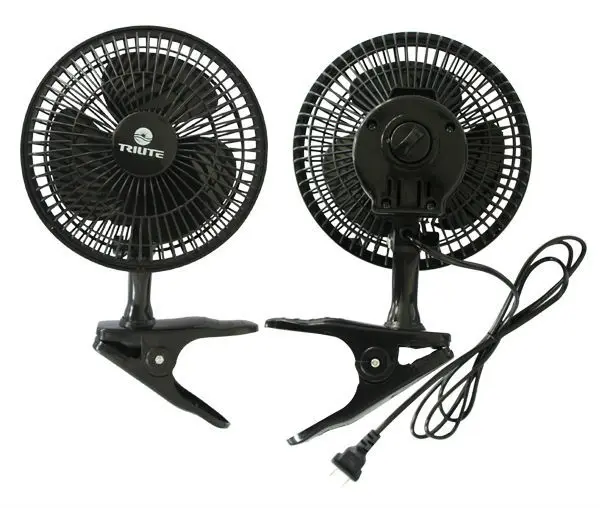
Not a bad suggestion!!!@!!!
I am digging that little fan with the bent-tube base....

67plexi
Ambassador of Amps
Your on to something with the 92 VAC input voltage. Your power transformer was designed for 110 VAC not 125 VAC
VOX AC-50 V-1 ECC82 pin 1 & 6 200 VDC V-2 pin 1 & 6 250 VDC V-3 pin 1 & 6 270 VDC and plate voltage 450 VDC EL-34 pin 6
If I was to fine tune the AC-50 V-1 185 VDC V-2 200 VDC V-3 250 VDC adjusting the dropping string. Give a warm mid-range
The SSS amps in the photo are 177 VDC V-1 and V-2
VOX AC-50 V-1 ECC82 pin 1 & 6 200 VDC V-2 pin 1 & 6 250 VDC V-3 pin 1 & 6 270 VDC and plate voltage 450 VDC EL-34 pin 6
If I was to fine tune the AC-50 V-1 185 VDC V-2 200 VDC V-3 250 VDC adjusting the dropping string. Give a warm mid-range
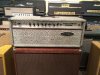
The SSS amps in the photo are 177 VDC V-1 and V-2
Vox AC30
Well-Known Member
Not a bad suggestion!!!@!!!
I am digging that little fan with the bent-tube base....
That's gonna be my "new " effect pedal w/ a speaker on one side and a ribbon mike on the other! Which way they'll go depends on the outcome of the as of yet unforeseen
@ivan H - can you educate me on bias drift and how to repair it???
Anyone????

DonP
Guest
Anyone????
The curve of anode current vs cathode/grid voltage is temperature dependent. It also drifts over time. So bias is best set up after the amp is up to temperature.
The curve of anode current vs cathode/grid voltage is temperature dependent. It also drifts over time. So bias is best set up after the amp is up to temperature.
Thanks, Don...reason I asked was I've seen amps where the bias would virtually 'run away' and couldn't be controlled.
I want to ask some questions of our knowledgeable fellows before ever considering buying a tube amp with this malady.
What would be the cure in such a case???
DonP
Guest
Thanks, Don...reason I asked was I've seen amps where the bias would virtually 'run away' and couldn't be controlled.
I want to ask some questions of our knowledgeable fellows before ever considering buying a tube amp with this malady.
What would be the cure in such a case???
Bias runaway is usually caused by being greedy for power, and putting too small a resistor from cathode to ground. Somehow Marshall seem to be able to get away without any resistor. I think it is to do with how they generate their bias voltage.
Bias runaway is usually caused by being greedy for power, and putting too small a resistor from cathode to ground. Somehow Marshall seem to be able to get away without any resistor. I think it is to do with how they generate their bias voltage.
I'm looking for a cheap vintage tube amp with issues as a learning platform.

ivan H
Ambassador of Tubes & Grooves

@ivan H - can you educate me on bias drift and how to repair it???
Hi Robert, sorry I wasn't here earlier.
DonP has explained bias drift for you (bias can also drift a little over time as tubes wear down), & also "cathode biased" tubes being biased too hot, causing them to red plate, but I'm thinking you are asking about an amp that was once performing just fine that develops a condition where the power tubes "run away" & red plate badly.
This sort of thing can have a few causes & we'll deal with the more common "fixed bias" type amps first.
Possible causes of tube runaway could be
(1) a problem in the negative bias supply circuit.
(2) leaky coupling caps (between the phase inverter & power tubes).
(3)power tube sockets that have loose or oxidised/cruddy pin connections or have become conductive (yes, sockets can become conductive).
In a "cathode biased amp possible causes could be
(1) a problem with a component in the cathode resistor/bypass cap combination (unlikely but possible).
(2 & 3) As above in the "fixed bias" causes.
These would be the most common causes of tube runaway.
I have seen conditions (2) & (3) where the amp is fine at idle, "no signal" (quiescent) condition, & then the tubes "run away" as soon as a signal is applied to the amp. Then again, I've seen both (2) & (3) cause the tubes to run away as soon as the amp warms up/ is taken off standby. Hope this helps. Cheers
Last edited:
ivan H
Ambassador of Tubes & Grooves
Ha ha, amps do often sound great just before they "blow up". CheersI tell everyone to get the beaters that hardly work … cause they have the greatest potential.
Hi Robert, sorry I wasn't here earlier.
DonP has explained bias drift for you (bias can also drift a little over time as tubes wear down), & also "cathode biased" tubes being biased too hot, causing them to red plate, but I'm thinking you are asking about an amp that was once performing just fine that develops a condition where the power tubes "run away" & red plate badly.
This sort of thing can have a few causes & we'll deal with the more common "fixed bias" type amps first.
Possible causes of tube runaway could be
(1) a problem in the negative bias supply circuit.
(2) leaky coupling caps (between the phase inverter & power tubes).
(3)power tube sockets that have loose or oxidised/cruddy pin connections or have become conductive (yes, sockets can become conductive).
In a "cathode biased amp possible causes could be
(1) a problem with a component in the cathode resistor/bypass cap combination (unlikely but possible).
(2 & 3) As above in the "fixed bias" causes.
These would be the most common causes of tube runaway.
I have seen conditions (2) & (3) where the amp is fine at idle, "no signal" (quiescent) condition, & then the tubes "run away" as soon as a signal is applied to the amp. Then again, I've seen both (2) & (3) cause the tubes to run away as soon as the amp warms up/ is taken off standby. Hope this helps. Cheers
That's a great explanation! That gives me a resource....