C-Grin
Ambassador of Wonderland

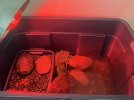
So kind of a ( to me ) crazy story about a turtle. A couple months ago I was going to my kids place to help whom with his car. And when I pulled up there was a turtle in the bark dust in front of his unit. Now he does live on a fairly large creek in Portland that does have turtles that live in it, painted turtles are native to this region but it is not one of those. It is a red slider which can live in the wild here but is considered an invasive species. But not being sure how it got to the patch of bark dust in a big parking lot? My first thought was that someone had it as a pet and dumped it in the creek. So anyhow I picked it up and took it to our place that has a creek and a pond on it. Well it did not like the creek and though the pond would be better. I saw it several times and thought maybe it was getting along fine . But this morning it made its way to our house and it looked like it was distressed. So now we are turtle parent apparently. This is it in its new temporary home. I figure it has sought humans out twice now it must want this.
Last edited:














 . But I’ll take advice, I’m not too proud
  .
.