It’s been said that, up until that point in time, Hysteria was the most expensive record ever produced in the U.K. Reportedly, you had to sell five million copies just to break even.
I believe that’s true. We spent so much money in the studio. And we worked on the record for more than three years. But when you’re recording you don’t even think about it, because the artistic thing outweighs the business thing. We all were thinking, It doesn’t really matter how much we spend, as long as we make this amazing record. And then I saw all the bills and went, “poop!” Changed my mind real quick! One thing that sticks out is I remember seeing a line item that said, “Sundries: $20,000.” And I was thinking, What the Intercourse’s sundries? And that was just from sending out for food from the restaurant next to one of the studios. Because you have to eat, right? [laughs]
Supposedly the bill was also ratcheted up because you had to buy out producer Jim Steinman’s contract. [The band had begun work on the album with Steinman prior to Lange coming onboard.]
That’s true. Jim got a hell of a lot of money for not doing very much. But I’ll tell you, he would have gotten a lot more if he’d taken points on the album instead of the buyout.
Over the years, Jim hasn’t had kind words to say about his time working with the band. It seems like you didn’t get along well.
We just had completely different approaches. We had worked with Mutt for two albums, and then when he wasn’t available at the start of Hysteria [Lange was in the midst of producing the Cars’ Heartbeat City], we decided to try someone else. But Jim was very set in his ways as far as what he liked, whereas we wanted to evolve and do something different. So it was a bit disappointing after having worked with Mutt. Because to be quite honest, I don’t know anybody else who can do what Mutt does.
“What Mutt does” turned out to be a lot of things that weren’t being done at the time, particularly on rock records. From a guitar perspective, is it true that there are no traditional amps on Hysteria and that you and Steve Clark played all your parts through a Rockman unit, which is essentially a headphone amplifier?
Pretty much. I used a small Gallien-Krueger amp on the demo for “Love Bites,” which made it on to the record, and also on a bit of “Animal”—that little feedback thing in the intro is me leaning hard on the Krueger. But otherwise the sound is all Rockman. And the reason for that was there were so many layers of tracks, and the sound was so huge that if you had had a massive Marshall sound it wouldn’t have fit sonically. The guitars would have smothered the vocals and drums. They really had to fit in a specific slot. Plus, Steve and I weren’t playing straight power chords; we were doing all these inversions and partials and different things that required definition. That would have been lost with a big, overdriven-amp sound.
You and Steve came from the guitar-into-Marshall school of playing. Did the fact that there were no amps to crank up strike you as odd?
Yes and no. Because it became apparent early on that it was all about the song. So you had to step out of the “I’m the guitar player, check my poop out” way of thinking. The big amps are fine if you don’t do a lot of overdubs. But we were moving into something more nuanced, with a lot of depth. So the guitar playing in some ways really took a backseat. The band and the song and the production came before the guitars. What Steve and I were doing was really just an enhancement of the overall song. And we accepted that.
The fact that the Rockman was developed by Boston’s Tom Scholz is an interesting connection. Even though those first few Boston albums were recorded before he invented the unit, was the sound that Tom achieved with Boston a template for what you were doing on Hysteria?
Absolutely. Big time. You listen to “More Than a Feeling” and then some of the stuff we were doing, and it’s almost like part two of that, if you like. Boston had incredible vocal sounds and the guitars were great. A Boston record is so well recorded and it does everything it’s supposed to. At the end of the day it wins all around. That’s what we were trying to achieve.
What was your main guitar on Hysteria?
A 1978 Japanese Strat I call Felix. It had two stock single-coils, and then I put in a DiMarzio humbucker at the bridge. My mom had actually bought it for me for my 21st birthday. I got so many sounds out of that guitar. I also used a few Charvels and my Jackson with the Cracklejack finish, and Mutt brought in a few of his own Teles. Steve tended to favor his three-pickup Les Paul with a Kahler on it, but he ended up using my Strat as well. So that’s the main sound you hear on the record: Felix through the Rockman.
Perhaps the most enduring guitar legend surrounding Hysteria is that Lange had you and Steve record many of your parts by breaking chords down into single notes and then building the chords back up by layering the tracks. But the truth is you only used this technique on the title song, correct?
Yes. I’ve heard the rumors taken as far as people saying we did the entire album one string at a time, which is crazy! [laughs] We really only did it on the bridge in “Hysteria”—the part that begins, [sings] “I gotta know tonight…” If I remember correctly it was just Mutt and me, sitting in a little jingle studio in Dublin, with me playing the part on one string, then stopping and doing it again on the next string and so on.
What was Mutt’s reasoning for having you do it this way?
He heard a certain sound in his head and he knew he wanted it to be a guitar and not a keyboard, but he also didn’t want there to be any sort of arpeggiation to it. And when you strum a chord on a guitar there’s always a certain amount of that. He wanted all the notes to hit right on the nose, so that everything about the sound hit the listener at the same time. And it worked.
At the time did this strike you as somewhat ridiculous? Did you think, I could just strum the chords and no one will notice the difference?
I’d feel that way all the time. [laughs] But then you’d do what Mutt asked you to do, and when you heard it back you’d go, Oh, okay. I get it. So at some point I just stopped even questioning him. Because at the end of the day you’d listen to the finished product and it would be like, You know, I’ve never actually heard that on a record before. So that was the payoff.
Mutt also took an interesting approach in terms of the order in which the instruments were tracked. Rather than laying down bass and drums first, as is customary, those instruments were actually added on after the guitars and vocals. As I’ve heard it told, Rick Allen’s drums weren’t brought in until the mixing stage and were actually played through a Fairlight sampler.
Yes, though I believe by the time we got to mixing we were using a Synclavier. Basically, Rick went in right at the end of the sessions and played all the drums on his electronic kit. That went into a Fairlight III and was then transferred to a Synclavier. So everything was time-coded and sequenced and quantized, and all that. This was all done right at the last minute. But with a record like Hysteria we couldn’t have laid down the drums first. There was no way, because the songs kept changing. Parts would be rewritten, tempos would shift, whole arrangements would come and go. “Animal” alone took three years to do. We kept changing it and redoing it. There was something in there, but we just couldn’t tell what it was. At one point we redid the entire song under Joe’s vocal. Mutt just scratched everything and we started over. That’s the way we were working.
One of the most recognizable aspects of Lange’s production style is the layered sound of his background vocals. In addition to the band members, he performed many of those backing vocals himself, correct?
Absolutely. Mutt sings on everything he’s ever done with us. And he’s an amazing singer. That’s his voice you hear in back on Highway to Hell, Back in Black, the Shania Twain stuff, the Bryan Adams stuff. He can make his voice sound like anything. On Hysteria, he basically said that we needed to make the backing vocals sound like another instrument.
Is it true that some songs feature upward of 100 vocal tracks stacked together?
Yes. On, say, “Gods of War,” I can remember all of us standing around a microphone and everyone doing a bunch of takes that were then copied and added together, and ultimately you had this massive, boomy, rich sound. There’s probably more than 100 vocals on there. And some songs needed that. But then something like “Pour Some Sugar on Me,” that’s me doing the main chorus background vocal, and I only did about four or eight tracks. But I almost lost my voice doing it because Mutt had me sing in such a rip-your-throat-out style. But it had the desired effect.


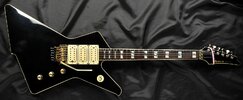
 that is so freaking cool I think I'm gonna pass out!!