NGD - tele

To be clear, based on what you've described, completed guitars are not imported. Rather, parts are imported into the United States, and they are assembled here. Is that correct?
Not uncommon. Some years back we had a Dodge Intrepid and a Toyota Solara (2 door Camry) There were more parts and manufacturing done in the US for the Toyota than the Dodge. Majority of the Dodge
Parts were imported and then assembled in the US. In the end. More American hands touched the Toyota in the building process than did the Dodge. Yet the Dodge was touted as Made In America and the Toyota was an import.

Edit: after doing some further research. I was fairly correct on the Toyota…. As in, something like 75-80% of the components that went into the Solara were sourced and manufactured in the US. Then assembled at their KY plant. I was not on the Dodge. It was actually assembled in Canada….. not the US.
 
Last edited:
To be clear, based on what you've described, completed guitars are not imported. Rather, parts are imported into the United States, and they are assembled here. Is that correct?

That's not a completely accurate overview.

Imported guitars are delivered completely assembled, to include all Mexican, Japanese, Chinese and Indonesian models.

In the case of the Made In California variants (which are not the same as a Made In USA model), they are much different.

Bodies arrive from imported sources already painted, foreign pickguards arrive already assembled and wired, and nearly every part of that guitar is imported from various sources, which is why they are labeled Corona California, because they do not meet the requirements to be described and marketed as a Made in USA product.

I think the main point that you missed (posted above) is this:

An American Stratocaster - with an American flag on the label - is not Made in the USA and is made from roughly 75% imported parts and costs $2,700.00.

A premium 40th Anniversary Squire Stratocaster is Made in Indonesia by Cort, from approximately 35% USA produced parts, and costs $499.00.

There are several premium Squire variations that feature USA sourced parts in their construction.
 
That's not a completely accurate overview.

Imported guitars are delivered completely assembled, to include all Mexican, Japanese, Chinese and Indonesian models.

In the case of the Made In California variants (which are not the same as a Made In USA model), they are much different.

Bodies arrive from imported sources already painted, foreign pickguards arrive already assembled and wired, and nearly every part of that guitar is imported from various sources, which is why they are labeled Corona California, because they do not meet the requirements to be described and marketed as a Made in USA product.

I think the main point that you missed (posted above) is this:

An American Stratocaster - with an American flag on the label - is not Made in the USA and is made from roughly 75% imported parts and costs $2,700.00.

A premium 40th Anniversary Squire Stratocaster is Made in Indonesia by Cort, from approximately 35% USA produced parts, and costs $499.00.

My question was pertaining only to those guitars which are assembled in the US (the Corona, CA models), not the others. I apologize if I did not make that clear.

So, is my understanding correct that the Corona, CA guitars do not arrive as complete guitars, but are assembled in the USA from mostly imported parts (approximately 75%)?
 
So, when you look at the bills of lading, you can see the country of manufacture listed.

Ping tuners are Made In China. What's ironic is, the same tuners are routed to the CS.

At one point, there were a lot of Korean subcontractors and those were decent parts.
 
My question was pertaining only to those guitars which are assembled in the US (the Corona, CA models), not the others. I apologize if I did not make that clear.

So, is my understanding correct that the Corona, CA guitars do not arrive as complete guitars, but are assembled in the USA from imported parts?

Again, here's where the El Salvadoran Bus Station Shell Game starts.

No, Corona Made guitars don't arrive completely assembled, but each model has varying degrees of imported sub-assembly and largely foreign content, bit then again, sometimes the rules change unexpectedly.
 
All in all, what i saw at Fender vexed my spirit and i no longer felt good about what i was doing. Even when i produced a stellar product, i was troubled by the deceptive marketing.

I suppose that, based on the responses - or lack thereof - to this thread, i must assume that I'm a minority and that these marketing ploys have become so deeply engrained into our psyche that this is now considered the new normal of modern American business culture.
 
No, Corona Made guitars don't arrive completely assembled, but each model has varying degrees of imported sub-assembly and largely foreign content, bit then again, sometimes the rules change unexpectedly.

So, when it comes to the price of the Corona guitars vs. the price for the completed imports, such as the Indonesian-made guitars, my first consideration is really tied to how much of a labor difference and cost of business difference that there may be between Corona, California and those other locations. I would not expect a Corona-assembled guitar to be as inexpensive as an Indonesian-assembled guitar simply due to the difference in labor and cost of doing business between the two locations.

Does that mean I think it justifies a $2700.00 price tag? I don't know. My gut says, "No." But, I don't know what kind of overhead or other business expenses that Fender incurs in Corona, California. Suffice it to repeat that I would not expect a Corona-assembled guitar to be the same price as an Indonesian-assembled guitar.

Of course, this says nothing of the "shell game", as you describe it. That is a separate matter from cost. That is a matter of marketing. Of course, there is an influence. If an item can be marketed with the impression that it is more domestic, the manufacturer often can get away with a higher asking price. But, that is still a separate matter from the actual costs of the operation which must be recouped in the price of the instrument.
 
So, when it comes to the price of the Corona guitars vs. the price for the completed imports, such as the Indonesian-made guitars, my first consideration is really tied to how much of a labor difference and cost of business difference that there may be between Corona, California and those other locations. I would not expect a Corona-assembled guitar to be as inexpensive as an Indonesian-assembled guitar simply due to the difference in labor and cost of doing business between the two locations.

Does that mean I think it justifies a $2700.00 price tag? I don't know. My gut says, "No." But, I don't know what kind of overhead or other business expenses that Fender incurs in Corona, California. Suffice it to repeat that I would not expect a Corona-assembled guitar to be the same price as an Indonesian-assembled guitar.

Of course, this says nothing of the "shell game", as you describe it. That is a separate matter from cost. That is a matter of marketing. Of course, there is an influence. If an item can be marketed with the impression that it is more domestic, the manufacturer often can get away with a higher asking price. But, that is still a separate matter from the actual costs of the operation which must be recouped in the price of the instrument.

Here's the thing i cannot get past.

An Indonesian made 40th Anniversary Squire Stratocaster is nearly flawless (based on 400+ units personally inspected) and cost $499.00

A Corona California Stratocaster is full of flaws, scratches, stripped screes (which we try to fix on the line) and costs $2,700.00, bit yet both are made from the same basic parts.
 
Here's the thing i cannot get past.

An Indonesian made 40th Anniversary Squire Stratocaster is nearly flawless (based on 400+ units personally inspected) and cost $499.00

A Corona California Stratocaster is full of flaws, scratches, stripped screes (which we try to fix on the line) and costs $2,700.00, bit yet both are made from the same basic parts.

Yes, they are made from the same basic parts, but the cost of labor to assemble in those two countries is much different. And, the total cost of doing business is much different, as well.

Again, I am not insisting that the difference justifies the actual $2700.00 price tag. My only point is that one cannot expect the price to assemble in Corona, California to be as inexpensive as Indonesia. Hence, at a minimum, the price of the Corona guitars will be priced to accommodate that additional cost of labor and doing business vs. Indonesia. So, some increase in price is justified, even if one wants to argue that the actual $2700.00 price is excessive.

The number of flaws is a separate issue. That comes down to the actual manufacturing control. Good quality or bad, people are still being paid to do the job.
 
I detect such a tolerance and/or acceptance of all of this based, at leadt tome some degree, on an apparent perception that in all of this, the cost could, somehow, justify these practices. That factor alone just baffles me, but it is a very modern and trendy consumer mindset in which any wrong can be justified simply by the cost of doing business.

#1 reason i decided to go to law school.

Moving along...

I've seen the manufacturing and importation invoices and Fender's internal publications that show exactly how much these instruments cost to produce.

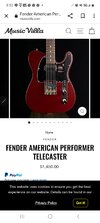
I will use this particular guitar as a factual example. A Corona California Assembled American Telecaster with a $1,450.00 MSRP.

Screenshot_20230426_085207_Chrome.jpg

The actual total parts and labor as invoiced on this model is $362.50 USD.

$362.50 is roughly 25% of the MSRP.

Now, on the Indonesian 40th Anniversary Squire Stratocaster, the MSRP is $499.00 and the parts & labor as invoiced is $126.00USD, which is $25% of the MSRP.

These 25% figures also appeared in Fender's internal town hall presentations.

Yeaes ago, Fender’s business model was a little different than it is today. Fender had a published MSRP and the price that the dealer paid was right about half of Fender’s MSRP.

Most dealers would sell at a “street price,” which was well below the MSRP in order to be competitive with the larger stores, which were paying a lower price for those guitars than a typical Mom & Pop store could afford.

When i was at Fender, i could buy any Fender product at a 40% discount.

Here's proof:

20220803_102321.jpg

So, even selling internally at a 40% discount, the firm was still making a 15% profit.


I have no issue with a business profiting, but it does bother me that it is done in such deceptive fashion.
 
Last edited:
:D

Yeah, we love to love and love to hate, but I'd love a tele that connects with me.

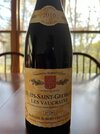
As I'm reading this, sipping my 2005 Calon Segur, I can't much complain about a reasonably priced geetar... :io:

View attachment 92115

Mmm (although, these classic vibes have doubled in price (just like the SG faded...) in a short time.
Classiest wine we have in our wine fridge. Gift from my youngest when I retired in 2020. It’s getting opened Memorial Day weekend as we celebrate our 45th.
1682550296475.jpeg
 
I detect such a tolerance and/or acceptance of all of this based, at leadt tome some degree, on an apparent perception that in all of this, the cost could, somehow, justify these practices. That factor alone just baffles me, but it is a very modern and trendy consumer mindset in which any wrong can be justified simply by the cost of doing business.

#1 reason i decided to go to law school.

Moving along...

I've seen the manufacturing and importation invoices and Fender's internal publications that show exactly how much these instruments cost to produce.

I will use this particular guitar as a factual example. A Corona California Assembled American Telecaster with a $1,450.00 MSRP.

View attachment 92299

The actual total parts and labor as invoiced on this model is $362.50 USD.

$362.50 is roughly 25% of the MSRP.

Now, on the Indonesian 40th Anniversary Squire Stratocaster, the MSRP is $499.00 and the parts & labor as invoiced is $126.00USD, which is $25% of the MSRP.

These 25% figures also appeared in Fender's internal town hall presentations.

Yeaes ago, Fender’s business model was a little different than it is today. Fender had a published MSRP and the price that the dealer paid was right about half of Fender’s MSRP.

Most dealers would sell at a “street price,” which was well below the MSRP in order to be competitive with the larger stores, which were paying a lower price for those guitars than a typical Mom & Pop store could afford.

When i was at Fender, i could buy any Fender product at a 40% discount.

Here's proof:

View attachment 92300

So, even selling internally at a 40% discount, the firm was still making a 15% profit.


I have no issue with a business profiting, but it does bother me that it is done in such deceptive fashion.
Same deal with Gibson my first Custom Shop Les Paul retail $5700.00 paid $2000.00 new
think I was the first to part out Fender Custom Shop guitars my friend Reese Gibson and Fender dealer since 1970
my friend Cal bankrolled Reese so I got everything at cost.
 
So, this turned out to be right...

After this thread was put up, the wife came home crying because she'd been scammed out of $5000... Really quite annoying, but poop happens. We're pulling the purse strings in, so I cancelled the purchase - just can't justify it at the moment. I'll have to reduce the wine purchases too although I do have a few in the wine fridge that make the Calon Segur look reasonably priced, so I'm alright for a while.

I don't think teles and me will every make it.
Dayum!
Some people suck!
So sorry you went through that situation.
 
Love the set necks !
I was looking at those for a while.
Honestly, I think my old BC Rich Mockingbird would be good competition for the set neck Tele. Another guitar I let go of.
 
Last edited:
I detect such a tolerance and/or acceptance of all of this based, at leadt tome some degree, on an apparent perception that in all of this, the cost could, somehow, justify these practices. That factor alone just baffles me, but it is a very modern and trendy consumer mindset in which any wrong can be justified simply by the cost of doing business.

I certainly hope this comment was not directed at me. Cost of business is a real thing and the actual costs that a business incurs are myriad. Labor is usually the largest single cost. And, a business has to recoup those costs in the price of its products; otherwise, it will soon go out of business. But, as I've attempted to make clear, I do not support a marketing ploy that attempts to leave an inaccurate impression about the manufacturer of an item.

The actual total parts and labor as invoiced on this model is $362.50 USD.

$362.50 is roughly 25% of the MSRP.

Now, on the Indonesian 40th Anniversary Squire Stratocaster, the MSRP is $499.00 and the parts & labor as invoiced is $126.00USD, which is $25% of the MSRP.

So, this illustrates my point. The assembly of the guitar in the US is more expensive than assembling the same parts in Indonesia.


Yeaes ago, Fender’s business model was a little different than it is today. Fender had a published MSRP and the price that the dealer paid was right about half of Fender’s MSRP.

Most dealers would sell at a “street price,” which was well below the MSRP in order to be competitive with the larger stores, which were paying a lower price for those guitars than a typical Mom & Pop store could afford.

A dealer cost of about 50% less than MSRP is very common; in fact, it is practically the norm across many industries. In reality, the MSRP is a bit of a phantom. The MSRP is very rarely paid by any customer at the retail level. If a customer purchases directly from the manufacturer, say in an online store, the customer ~may~ pay MSRP. One common misunderstanding that a lot of people have (I'm not saying you do), is that somehow a manufacturer, such as Fender, gets the MSRP because that's what you see on the website. In reality, they get what the dealer pays them for the item. They don't actually receive the MSRP. You say the dealer cost used to be about 50% less than MSRP. I'd be curious to know what they do now.

At any rate - using the 50% dealer discount model - if manufacturing costs are about 25% of MSRP, and if the dealer pays 50% of MSRP to purchase the item, then the manufacturing costs are really 50% of what Fender actually gets, because they are being paid by the dealer, not usually a retail customer. A sell price to dealers of about double the costs of manufacturing is pretty standard in many industries.

The street price is interesting, too. Also, often manufacturers will impose a MAP (minimum advertised price) on their dealers. This is the lowest price a dealer is allowed to publicly advertise. However, the actual price the dealer sells the item for - the street price - may be different from the MAP, or it may be the same. I don't know if Fender imposes a MAP. One way to check (though not conclusive proof), is to look up the same item on several dealers' websites. If they all list the same price, it is a hint that this price is the MAP. However, they may just be charging the same as each other to stay competitive.

When i was at Fender, i could buy any Fender product at a 40% discount.

I would hope so! I'd be surprised and disappointed if Fender did not give it's employees a steep discount.

I have no issue with a business profiting, but it does bother me that it is done in such deceptive fashion.

To this, I agree. Whereas it appears Fender is technically compliant with legal requirements, it does seem that uninformed purchasers would see the words, "Corona, California" and the US flag sticker on the guitar and assume they are purchasing a "Made in USA" guitar.
 
To this, I agree. Whereas it appears Fender is technically compliant with legal requirements, it does seem that uninformed purchasers would see the words, "Corona, California" and the US flag sticker on the guitar and assume they are purchasing a "Made in USA" guitar.

This, my good fellow, is my entire point in a nutshell.

It really bummed me out that i was a part of that scheme...
 
This, my good fellow, is my entire point in a nutshell.

It really bummed me out that i was a part of that scheme...

Yeah, I really do see that. Honestly, as informed as I attempt to be on these things, I did not know of this until you explained it.

It is an eye-opening thing, to be sure.

But, I don't really have any guitar acquisitions on the horizon. If I did, I would probably do a Warmoth Strat build with a Gibson-scale conversion neck. That conversion neck has me fascinated.
 
Yeah, I really do see that. Honestly, as informed as I attempt to be on these things, I did not know of this until you explained it.

It is an eye-opening thing, to be sure.

But, I don't really have any guitar acquisitions on the horizon. If I did, I would probably do a Warmoth Strat build with a Gibson-scale conversion neck. That conversion neck has me fascinated.

I think that is - quite possibly - a very close to near-perfect Stratocaster.
 
Back
Top