New BluGuitar amp coming next year

Astral Traveler

Ambassador of Both Time and Space
Country flag
As ypu may know I have a BluGuitar Amp 1 that I'm very happy with and I've kept my eye onnthe company for a while to see what's happening. The next generation, currently called the Amp X has been in the pipes for a while and now they say it will be released next year. I certainly don't need one and I suspect it'll be priced like a Kemper which is more than I'd spend but I'm crazy curious about it.

From what I understand it's kind of a profiling amp but with all analog circuitry and no software involved in the process, except for a few digital effects. I'd love to try one...

I wonder if there's a benefit to using analog circuits over software and from a technical point of view I curious about how it all works. Any ideas?

 
As ypu may know I have a BluGuitar Amp 1 that I'm very happy with and I've kept my eye onnthe company for a while to see what's happening. The next generation, currently called the Amp X has been in the pipes for a while and now they say it will be released next year. I certainly don't need one and I suspect it'll be priced like a Kemper which is more than I'd spend but I'm crazy curious about it.

From what I understand it's kind of a profiling amp but with all analog circuitry and no software involved in the process, except for a few digital effects. I'd love to try one...

I wonder if there's a benefit to using analog circuits over software and from a technical point of view I curious about how it all works. Any ideas?

Systems designed with computer hardware and software are not designed to last very long. Every few years they are obsolete and need to be replaced. They go bad very fast.
Computer systems are not durable. The manufacturers who make the parts do not keep making replacements.
So if you need to repair computer hardware, you do it with used parts or salvaged parts / re-manufactured drives, etc.

Analog systems are usually made (or can be made) to last much longer....many years. But even transistors / op amps etc...become obsolete and are no longer manufactured. Same story: you get parts out of the scrap heap if you need them.

Compared to tube amps, which are made frequently to last forever. Like Fender or Marshall that can be serviced and repaired even after 50-60 years or more.

There have been many manufacturers who claimed: "the future of guitar amps." It's a sales pitch.
But none of them really endured. They were one hit wonders.....then they disappeared.

The only systems that truly endured, were tube amplifiers.
There have been many attempts by manufacturers to replace tube amps (with solid state etc) but musicians rejected them all. They were all failures.
In the early 1970's
the plan was to end the manufacture of tube amplifiers........this was a miserable failure. Nobody would buy the transistor amps.
(the transistor amps sounded like crap)
Anybody with brains - returned to making tube amps, the rest of them failed.

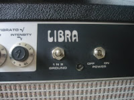
The Fender "Zodiac,"
Fenders attempt to replace tube amps - almost put Fender out of business. If you find a working one today, consider yourself lucky because most of them went into the trashcan.
1598432508553.png

1598432549710.png

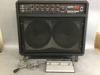
The Sunn "Beta Lead," "Alpha," etc....all failures. And it put Sunn out of business.
A complete failure. (besides which, sounded like a Jet Plane with Asthma.)
1598432701920.png

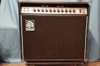
Ampeg Solid State amps = another trashcan legend. Another complete failure.

1598432992580.png
 
Last edited:
I wonder if there's a benefit to using analog circuits over software and from a technical point of view I curious about how it all works. Any ideas?
I don't know how it all works, but I believe in giving new products a fair assessment. Software obsolescence, as pointed out by AMS, has a lot of merit in deciding whether to invest in the product... 'Time will always tell!'.

By the way, the upcoming BlueGuitar Amp X is exactly what TTR's @Robert Herndon is asking for... :fingersx:
 
Interesting, very, very interesting.
I'm not big on amps that simulate other amps, but... I still keep and eye/ear on what comes out.
I'd like to check one of these amps out, never know, could be the one I like ;)
 
Systems designed with computer hardware and software are not designed to last very long. Every few years they are obsolete and need to be replaced. They go bad very fast.
Computer systems are not durable. The manufacturers who make the parts do not keep making replacements.
So if you need to repair computer hardware, you do it with used parts or salvaged parts / re-manufactured drives, etc.

Analog systems are usually made (or can be made) to last much longer....many years. But even transistors / op amps etc...become obsolete and are no longer manufactured. Same story: you get parts out of the scrap heap if you need them.

Compared to tube amps, which are made frequently to last forever. Like Fender or Marshall that can be serviced and repaired even after 50-60 years or more.

There have been many manufacturers who claimed: "the future of guitar amps." It's a sales pitch.
But none of them really endured. They were one hit wonders.....then they disappeared.

The only systems that truly endured, were tube amplifiers.
There have been many attempts by manufacturers to replace tube amps (with solid state etc) but musicians rejected them all. They were all failures.
In the early 1970's
the plan was to end the manufacture of tube amplifiers........this was a miserable failure. Nobody would buy the transistor amps.
(the transistor amps sounded like crap)
Anybody with brains - returned to making tube amps, the rest of them failed.

The Fender "Zodiac,"
Fenders attempt to replace tube amps - almost put Fender out of business. If you find a working one today, consider yourself lucky because most of them went into the trashcan.
View attachment 47843

View attachment 47844

The Sunn "Beta Lead," "Alpha," etc....all failures. And it put Sunn out of business.
A complete failure. (besides which, sounded like a Jet Plane with Asthma.)
View attachment 47845

Ampeg Solid State amps = another trashcan legend. Another complete failure.

View attachment 47846
I don't know how it all works, but I believe in giving new products a fair assessment. Software obsolescence, as pointed out by AMS, has a lot of merit in deciding whether to invest in the product... 'Time will always tell!'.

By the way, the upcoming BlueGuitar Amp X is exactly what TTR's @Robert Herndon is asking for... :fingersx:
I did not intend for this to be a tube vs SS discussion but I'll say this and leave it at that:

There's nothing inherent in digital systems that make them prone to breaking more than analog systems. When they do break it's usually the same kind of hardware problems that would kill an analog system but compared to simpler designs like tube amps and older SS amp, digital systems and modern SS amps are harder to repair, so much so that it's virtually impossible and the unit must be replaced.

What we must remember is that modern electronics, TV's, computers etc. are built to a price point, they are not designed to last for decades and we don't pay for them to be. I work with a lot of digital as well as analog systems and they can all be specified to last for a long long time, if you're willing to pay the price. As an anecdote, we had a computer system (originally designed as a flight control system) that was comissioned in 1986. In 2006 it was decommissioned with approximately 90000 hours on the clock. Just for fun it was turned on again last fall after having been shut off for 13 years. Guess what? It started right up.

Also, software doesn't degrade. If you have a modeling amp that sounds good it will sound just as good in 10, 20 or 50 years as long as the hardware keeps it together. If you don't need a firmware upgrade you're golden until it catches on fire and the little genie finally escapes.

Stating that old SS amps were prone to breaking and therefore all SS amps are junk is kinda crazy. They were usually poorly designed and built cheap, to be sold cheap. For every poorly designed SS amp there is an equally poorly designed tube amp.

When I buy an amp I don't ask if it's tube or SS to make my decision based on the answer, I play it and listen and ultimately don't give a flying Intercourse what's onntge inside so let's forget the technology for a while and just focus on sound and feel (I know I said I was curious about what makes it tick but lets leave tube vs SS out of it).
 
I did not intend for this to be a tube vs SS discussion but I'll say this and leave it at that:

There's nothing inherent in digital systems that make them prone to breaking more than analog systems. When they do break it's usually the same kind of hardware problems that would kill an analog system but compared to simpler designs like tube amps and older SS amp, digital systems and modern SS amps are harder to repair, so much so that it's virtually impossible and the unit must be replaced.

What we must remember is that modern electronics, TV's, computers etc. are built to a price point, they are not designed to last for decades and we don't pay for them to be. I work with a lot of digital as well as analog systems and they can all be specified to last for a long long time, if you're willing to pay the price. As an anecdote, we had a computer system (originally designed as a flight control system) that was comissioned in 1986. In 2006 it was decommissioned with approximately 90000 hours on the clock. Just for fun it was turned on again last fall after having been shut off for 13 years. Guess what? It started right up.

Also, software doesn't degrade. If you have a modeling amp that sounds good it will sound just as good in 10, 20 or 50 years as long as the hardware keeps it together. If you don't need a firmware upgrade you're golden until it catches on fire and the little genie finally escapes.

Stating that old SS amps were prone to breaking and therefore all SS amps are junk is kinda crazy. They were usually poorly designed and built cheap, to be sold cheap. For every poorly designed SS amp there is an equally poorly designed tube amp.

When I buy an amp I don't ask if it's tube or SS to make my decision based on the answer, I play it and listen and ultimately don't give a flying intercoarse what's onntge inside so let's forget the technology for a while and just focus on sound and feel (I know I said I was curious about what makes it tick but lets leave tube vs SS out of it).

"There's nothing inherent in digital systems that make them prone to breaking more than analog systems. "

Digital systems are intended to break (or become obsolete), so that you will keep buying new ones.

"Also, software doesn't degrade."

Software is intended to become obsolete, so that you will continue to buy more new software.

You will also notice that every time you change to new hardware, the peripherals need to be replaced.
This is also intentional.
Your perfectly good printer, or perfectly good camera, etc...will become useless -- and it's deliberate.
This is why digital is not good long term investment.
It's made so that you need to replace it over and over and over again.

"Stating that old SS amps were prone to breaking and therefore all SS amps are junk is kinda crazy."

I said that musicians (overall) did not like SS amplifiers. And that was very true, especially for professional musicians.
I said that attempts to change musicians to SS amplifiers failed. That was also very true.


Concerning the reliability of SS amplifiers:
How many Sunn Beta lead amps do you know of that still work?
How many Fender solid state amps?
How many Ampeg solid state amps?
I guess you just answered your own question.
 
All I have to say is my Eden WT-800 bass amp 880 watts RMS @ 8 ohms it started cutting out so I have a 100 watt tube amp
The 100 watt tube amp blows it away volume 3 master volume 2 sounds 1000 times better warm and punchy in the jazz mode
it has a 1968 Marshall output transformer and a custom wound PT 4 EL34'S.
I have 10 SS amps in my shop for repair now and getting the stock transistors is difficult.

183 001.JPG

bass 001.JPG
 
"There's nothing inherent in digital systems that make them prone to breaking more than analog systems. "

Digital systems are intended to break (or become obsolete), so that you will keep buying new ones.

"Also, software doesn't degrade."

Software is intended to become obsolete, so that you will continue to buy more new software.

You will also notice that every time you change to new hardware, the peripherals need to be replaced.
This is also intentional.
Your perfectly good printer, or perfectly good camera, etc...will become useless -- and it's deliberate.
This is why digital is not good long term investment.
It's made so that you need to replace it over and over and over again.

"Stating that old SS amps were prone to breaking and therefore all SS amps are junk is kinda crazy."

I said that musicians (overall) did not like SS amplifiers. And that was very true, especially for professional musicians.
I said that attempts to change musicians to SS amplifiers failed. That was also very true.


Concerning the reliability of SS amplifiers:
How many Sunn Beta lead amps do you know of that still work?
How many Fender solid state amps?
How many Ampeg solid state amps?
I guess you just answered your own question.

Digital systems are intended to break (or become obsolete), so that you will keep buying new ones.

Yes, that's what I said, they are designed to break or become obsolete but that had nothing to do with them being digital. Lightbulbs are also designed to break and they are very much analog. Look at the marine industry, the military or the aviation industry. Just go into the cockpit of a modern airliner and look around, everything is digital and it has been digital since they figured out that "fly by wire" is much safer tha just plain old wire. I guarantee you that that stuff is designed to do anything but break. An average wheel marked computer designed for the marine industry has an MTBF of 50.000 hours, translated to a regular PC that gets an average of 2 hours use per day that's 68 years of use.

Software is intended to become obsolete, so that you will continue to buy more new software.

Well, I didn't use the word "obsolete", I said degraded. Yes, software becomes obsolete, not because it's designed to but because things evolve, the hardware on which the software runs evolves and so do operating systems. The once widely used vacuum tube has also become obsolete in everything but guitar amplifiers and Russian fighter jets (they use them for a reason) because technology progressed.

If we talk about digital amplifiers, their software is really firmware and obsolescence is not an issue. That's why I choose the word "degrade".

I said that musicians (overall) did not like SS amplifiers. And that was very true, especially for professional musicians.
I said that attempts to change musicians to SS amplifiers failed. That was also very true.


True but that could also be because most of the early SS amps were hunks of junk, poorly designed and built to be cheap.
 
This week have really opened up my eyes to new tech as we are staring down hosting shows again soon. Definitely going with the Kemper stage floor unit cause can have pretty darn close to whats in my studio & the use the actual amps used to record it all.. the amps get to stay put at home. I start to see all this as tools.. use what you like & get the job done..which is actually the making of the music
 
Breaking and becoming obsolete are two different things. I have digital equipment that has been obsolete for more than 25 years, but it still works and I still use it, for the purpose it was designed for.

CRT TVs, valve radios, where are they now?

Answers on a postcard to someone who cares...
 
Back
Top