
Clockworkmike
Ambassador of STACKS in WV SHACKS

Silver Bullet!Yes we should I also have much respect. And I truly enjoy beer.
Cheers

Silver Bullet!Yes we should I also have much respect. And I truly enjoy beer.
Cheers

Ok, im listening: what might they be and what can they do? LolThere is one mod, or two for a 900.
But most people can't handle the unbridled power and glory.
Oh poop dude...for real?! Man, im clear across the other side of the country but still, you need anything, you say the word, no questions askedI have lived at this hotel for a year now.
Tomorrow I become homeless.
I am no longer a citizen of the Sunbeam motel.
I am a citizen of the street; a citizen of the world.
I no longer belong anywhere, and I am everywhere.
See you guys when I have a Wi Fi signal. Don't know exactly when.
The Prado homeless shelter is locked down from the plague.
I have nowhere to go.
This is not an end however. It's a beginning.
Starting over, starting now.
Do you know how to mute your strings when you play?Ok, im listening: what might they be and what can they do? Lol

I still love my completely redone mkiii. I don't know that I would mess with an slx. Never had the pleasure of playing one.There is one mod, or two for a 900.
But most people can't handle the unbridled power and glory.
MkIIIs and SLXs are nearly one in the same honestly. The control layout IS the same, but the biggest difference is the SLX has an extra preamp tube for gain and the MkIII has clipping diodes. Pretty much the only differences. Both are wonderful in my opinion and i even like the Dual Reverbs too ( though the popular verdict is split on those). Had one for a month actually and it was the first Marshall I ever ownedI still love my completely redone mkiii. I don't know that I would mess with an slx. Never had the pleasure of playing one.


Thanks @Robert Herndon, but it's mainly @syscokid that deserves the recognition as he did all the work, I just made a few suggestions.
You're an amp guru, I said so.Thanks @Robert Herndon, but it's mainly @syscokid that deserves the recognition as he did all the work, I just made a few suggestions.
I imagine @syscokid now realises why I prefer to avoid working on amps that utilise these multi layer, machine populated, wave soldered type printed circuit boards.
I'm no amp guru either. I've been servicing/repairing/restoring etc valve guitar amps, stereo amps, radios etc for decades & am still learning. None of us will ever know it all. Collectively though, there is a decent knowledge bank here at TTR. Cheers
Which model 900 do you have now?MkIIIs and SLXs are nearly one in the same honestly. The control layout IS the same, but the biggest difference is the SLX has an extra preamp tube for gain and the MkIII has clipping diodes. Pretty much the only differences. Both are wonderful in my opinion and i even like the Dual Reverbs too ( though the popular verdict is split on those). Had one for a month actually and it was the first Marshall I ever owned
I have a 2500 SLX these days. I actually updated the main filter caps about a year ago and had to fix a bridge rectifier ( BR3 ) and capacitor beside it ( C8). Currently its dead from another issue in the heater circuit i believe it was? ( you tried to help me on it but it was beyond my capabilities lol something going on with too much resistance, blew a power tube and main fuse, so i gotta send it to a tech ive used before, bout 2hrs away)Which model 900 do you have now?
To mod a 900, you got to get down into the circuit board and change a bunch of electrolytic caps, to make it reliable.
Because modding an amp is not much unless it keeps working....
The 900s have old caps now and they need to be changed out with new ones.
You need to have PC board soldering skills to work on it.
And the circuit tracks are very delicate / easily damaged if you don't know how.
Basically you can take out or reduce the negative feedback which is what's holding it back.
You can add a bypass cap to give it some low end.
You can take out some diodes to make the clean channel actually clean....
But all of this depends on making sure it works 100% right before you start any modifications.
See? I don't mod amps indiscriminately.
And I don't pretend that a old worn amp can be modified, until it's all up to spec first.
But when you do that stuff, it turns into a monster that can blow just about anything else away.
(it will eat mesas for breakfast) burp.
I would put a modded 900 up against any amp and it's seriously ferocious highly aggresive.
Control: you need to have the playing skills to know how to use it.
Muting strings yes. Not for the inexperienced players. An inexperienced player would freak out seriously.

Hi, Robert. reading this thread & the comments from AMS has prompted me to ask you about one of your posts when you discussed testing & taking certain measurements & making adjustments on your HF Modded ORI50, i didn't understand quite a bit of what the measurements where (i recall it was mainly about balancing voltages & biasing.
 ), a bit like putting the cart before the Horse!,i thought i'd ask if you have any further info about what measurements where done & maybe how to make the adjustments.
 .
.
Hi, Robert. reading this thread & the comments from AMS has prompted me to ask you about one of your posts when you discussed testing & taking certain measurements & making adjustments on your HF Modded ORI50, i didn't understand quite a bit of what the measurements where (i recall it was mainly about balancing voltages & biasing.
After reading the comments by AMS about not doing mods unless the Amp was working properly etc before doing any Mods(a bit late for me, i've already done the mods
I agree 100% with your comments about the Amps sound etc. I've now done 3 gigs(pub gigs) with it & it's the best sounding/feeling Amp i've had for years, maybe ever, but i'm to old to be sure about that
I have a 2500 SLX these days. I actually updated the main filter caps about a year ago and had to fix a bridge rectifier ( BR3 ) and capacitor beside it ( C8). Currently its dead from another issue in the heater circuit i believe it was? ( you tried to help me on it but it was beyond my capabilities lol something going on with too much resistance, blew a power tube and main fuse, so i gotta send it to a tech ive used before, bout 2hrs away)
A wise man once said the following:
"To remove muddiness,
Change C1 from 1uF to .68 uF. Remove C2 which is 100pf.
Instead of C2, install 3-7 pf 1000V cap between plate and grid of V1a.
(this keeps the microphonics and hiss under control)
This allows the CRUNCH to prevail. This takes the diaper off the preamp.
The key to getting a much better tone:
A. Crank the gain and master very high, let the power amp overdrive.
B. Never turn the master down low.
C. Use a speaker attenuator* to control the loudness. Forget the master volume.
*never use a cheap attenuator. Use ONLY professional attenuator...like Marshall power brake, THD hotplate, etc...
Make sure the impedance is all correct. Very important.
The master volume is what spoils the tone. Keep it on 10.
Drive the output tubes until they scream and beg for holy mercy. This will unlock the real tone of the amplifier.
D. Let the tech bias the amp on the hot side. Make sure the crossover distortion is GONE, until AFTER the power amp clips. This is vital.
E. Concentrate on getting the best tone, WITHOUT distortion pedals. The amp will have a much better tone than any pedal."
Man i appreciate it a billion, just giving your input alone! It had kinda been fritzy for a few years anyways, doing this weird volume cut out.Too bad, I would fix it for you if I wasn't in crisis...
The DC filament circuit for the preamp tubes uses a bridge rectifier and filter caps.
The problem is actually the filter caps which go stale and short out. When the filter caps short out, it causes the bridge rectifier to overheat.
Many people focus only on the bridge rectifier...not realizing that it's the filter caps which cause the problem.
So...if you have already replaced the filter caps for the filament DC power good for you.
Many people also think they need a bigger bridge rectifier, but this is ludicrous.
There is nothing wrong with the original sized rectifier and it works fine...IF...the filter caps are good.
See how this gets misdiagnosed?
See why people jump to the conclusions without knowing the actual cause of the problem?
See why (for no reason at all) people install a bigger rectifier?
A bigger rectifier does not solve anything. The problem is still there until the filter caps are changed to new ones.
So all that being explained...
I would fix your amp for you anytime. If I was not in crisis.
I would then mod your amp into a FIRE BREATHING BOOGIE EATER.
Mesa amps would pale in comparison...it would be laughable.
The funny thing is you can do this by changing only a few parts.
And so I wish you luck getting your amp straightened out.
(maybe the circuit tracks were damaged from soldering, I don't know)
I will still help if I can just ask.
From what you are describing I think the coupling caps between the PI and power tubes are shorting out.Man i appreciate it a billion, just giving your input alone! It had kinda been fritzy for a few years anyways, doing this weird volume cut out.
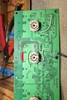
You could have the volume at less than 5 and it would just drop out like it was off. Replaced the speaker cables, tested the cabinet inputs: all good. So i read about a bridge rectifier ( BR3) being a possible culprit along with a larger capacitor ( C8). Allegedly, something about heat toasting it. So i replaced those and lifted the BR3 off the board, along with changing the two main Filter Caps.. Seemed to fix that ailment entirely.
Fast forward like 8 months and i got a Marshall Powerbrake to try out. Was working fine for about 10 minutes, cranked it up and WHOOSH!: amp blows the mains fuse, the Phase Inverter tube and one of the power tubes. Replaced the tubes and fuse? POW! Blown the fuse again but the tubes survived. At that point, i realized its out of my hands as far as me fixing it. Not blaming the Powerbrake cause its worked since on another amp but something is going on in this poor guy
Anyways, hope your doing ok man and everything is holding up on your end! Again, need anything just ask!
Hi Robert, sorry i missed your reply, i've realised i was posting in 2 different threadsGood Morning @old rocker ,
First of all, it was forum members @syscokid and @ivan H who conspired to do the Headfirst and Jose Arredondo Zener Diode Mods on my Marshall Origin 50H. I'm just the messenger in this case.
Collectively, we discovered that the Origin 50 operates at higher voltages than the Origin 20 and when the Origin 20 Headfirst Mod is performed, some of the voltage readings were much higher than we expected to see.
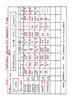
Here's our voltage chart immediately following the Headfirst Modification:
View attachment 73577
Jason himself told me the high voltages "were to be expected," but we soon realized that nobody had (apparently) charted the amp's before and after voltage readings, so there was no baseline to go by.
Since we know that my choice of preamp tube, the Genelex Gold Lion B759, has a max rating of 330V, @syscokid and @ivan H felt it would be beneficial, to long term tube life, if we reduced the voltages.
This is like walking a tightrope in that the higher voltages give more headroom and typically make the amp seem more responsive.
Resistor values were changed to reduce voltages on V2 and V1 slightly.
View attachment 73579
Additionally, @syscokid altered the values of the cathode bypass caps to change the amp's voicing.
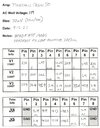
Here's our chart following these changes:
View attachment 73580
I don't think your amp will give you any problems and I'm not sure that our modifications were 100% necessary, because my amp worked fine before these changes were made, but I believe having these voltages lower is a good idea when you consider that my amp often idles for many hours at a time in the studio.
Have a great weekend!!!!
, i'll keep my responses in the other(high voltage) thread.