UN-plug power from amp.
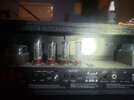
Take the power tubes out.
Set meter for ohms.
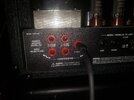
Connect red probe to pin 4 of output socket.
Connect black probe to pin 5 of output tube socket.
What is the ohm reading?
Write that down.
Now test the other 3 output tube sockets the same way and write down all the readings.
Plug power back in to the amp.
Output tubes are still removed for your own safety.

Turn the power on, but leave the standby switch set to "warm up." {the high voltage is turned OFF}
Do not turn the standby to "operate."
Set meter for DC volts.
Connect the black probe to the metal chassis.
Connect red probe to pin 5 of the output tube socket.
What is the DC volt reading? Should be a negative DC voltage on pin 5 of each output tube socket.
Now test the other 3 output tube sockets the same way and write down the DC volt reading for each output tube socket pin 5.
Now tell us what all those wonderful readings are. (we can't wait!) Inquiring minds want to know...
Don't put the output tubes in.
Don't turn the standby to "operate."
Don't play the amp until we finish troubleshooting.
It can get worse, so don't do that.
Well heck yes it can be a bad output tube.
But we test everything first to make sure the same thing won't happen again.
Like for example
If you put new tubes in, you don't want the new tubes to blow up.
So we test all the stuff first, and put the tubes in LAST. This is an insurance policy that we don't fry the new tubes....
These amps "can" have issues. So lets make sure before the money goes up in smoke.
Today's fun amp Tips:
There is a DC negative voltage on pin 5 of the output tube socket.
This is called: "the bias voltage."
This voltage controls the current of each output tube.
If this voltage is missing, the current will run wild.
The tube will overheat and blow chunks. There will be red plating.
And so, this is the most important voltage in the entire amplifier.