OP


If you decided to use 8200 then you should buy that spare head.


Quicker to setup and take down. Less to go wrong. You can concentrate on playing instead of hunting in the dark for the right pedal. It is so much easier to concentrate on the song when you have less to worry about.Simple is good.
Quicker to setup and take down. Less to go wrong. You can concentrate on playing instead of hunting in the dark for the right pedal. It is so much easier to concentrate on the song when you have less to worry about.

CongratulationsFunny...
I spent so much time insisting on tubes...and spending $$$ needlessly on the premise that only tubes can sound "real" or have "that certain feel" or be loud enough...basically, it's like a form of tube peer pressure...and it's total B.S.
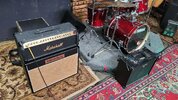
The 8200 has more available volume than the Origin 50 and more volume - knob position for knob position - than the studio's JCM800 2204 and it sounds better, fuller and more defined at any volume level. It doesn't have to be cranked to sound good, but when you do crank it, it takes on this multidimensional effect where it sounds like 3 guitars playing at once...each of the 3 EQ bands is broadly represented...whereas a JCM800 2204 is just loud, dry and one dimensional...perfect for playing AC/DC covers, but not at all versatile.
I've played live (12/18/2021) with a $249.00 (brand new) 1999 Marshall MG50RCD and had a Grammy nominated producer compliment me on my tone. That recent experience really changed my perspective...and my backline.
For years now we've been recording professionally with Blue Cat Destructor and Avid Eleven Mk II. That was a sort of eye opener. I've recorded countless tracks with a Blackstar ID-Core 100watt, and I Recently started using Steinberg VST Amp Rack Simulation for studio projects, but I was still a tube disciple because that's traditionally expected.
Of course, you will always have those who insist tubes are the only way to get an acceptable tone and I've personally heard the statement "only the poor use solid state amps," but it might surprise you to know how many famous guitar tones were created using modelers or even simple, solid state amplifiers.
Of course this isn't often mentioned in "brand conscious" circles of guitar society, perhaps because it stands in direct opposition to the dominant lore of the electric guitar, where vacuum tubes are the only source of tone worth considering, and solid-state amps are only acceptable for beginners and bedroom practice sessions.
History challenges this line of thinking, however, with a not insubstantial number of iconic guitar tones emanating from inglorious, humble workhorses made by Kustom, Sunn, Fender, Roland, and other manufacturers of solid-state technology.
Once I started looking around without "tube blinders," I noticed a lot of things that I had been previously oblivious to...like Eric Johnson playing a Roland Blues Cube, or The Beatles using Vox Super Beatles.
The Stray Cats recorded Stray Cat Strut with a Vox Royal Guardsman...Keith Richards has been playing a Triumph solid-state 100 Watt Lead. You hear this on "Start Me Up."
What about Wayne Static's MG100RCD, or Dimebag's chugging tone on "Cowboys From Hell?" That's Dime's Randall RG 100 ES solid-state, 120 watt amplifier.
Chuck Shculdiner's 8100 Marshall Valvestate or Alex Skolnick of Testament who states that Marshall's Mode Four MF350 is the "best amp that Marshall's ever made".
What about Brian May??? There’s a big secret weapon at the heart of May’s sound — or, should we say, a little one — one that fails to reveal itself on the concert stage, but May speaks openly about it.
In May’s case, this takes the form of an unassuming box of tricks known as “the Deacy,” a small, transistor-based amplifier built by Queen bassist John Deacon. Although it only has an output of around one watt, this totally solid-state amp produces a biting, saturated overdrive sound when cranked up and placed in front of a microphone, and has often been blended with an AC30 in the studio to produce a lead tone that could not be captured by the tube amp alone.
The solo to “Bohemian Rhapsody” is the most obvious example of this sound, but May has used it on many, many other iconic tracks too.
Equally interesting is Jimmy Page's elaboration on how his switch from a Tele to a Les Paul inspired a change in guitar amps.
“The amplifier on the first [Led Zeppelin] album is the Supro [Coronado 1690T] amplifier,” he confirms. It fits great with the Telecaster, but with the Gibson [Les Paul] it was a really overdriven sound, right? And when I started doing studio work, I realized that that was a bit too radical for them at the time.
I started using the Vox Super Beatles. The way that I heard about those amplifiers was The Beatles had them because they couldn’t hear their instruments over all the screaming, so they wanted louder amplifiers, and Vox duly obliged.”
Rory Gallagher, the enthusiastic user of German Stramp amplifiers, wanted a compact rig that could fit the trunk of his little Volkswagen. So, they built him a solid-state Stramp K-85 Power Baby. Rory was so exited about the amp that he actually even included parts of its circuit diagram to the cover of "Blueprint", kinda fitting...don't you think????
When Yes toured in 2013 Steve Howe very famously switched over from his two Fender Twins to a pair of Line 6 DT50s controlled by a Line 6 POD HD500.
The 80's had some notable SS amp users. Steve Clark and Pete Willis (Def Leppard) on both the early albums, "On Through The Night" and "High and Dry." Vivian Campbell (Dio, Whitesnake, etc.). George Lynch (Dokken). All were Randall RG players (RG80, RG100, etc.) which were amps designed by Gary Sunda during his time at Randall.
What about ZZ Top's 'Eliminator???' Who hasn't hear these iconic tunes???
Here's what producer Terry Manning said in an interview:
"THERE WAS ABSOLUTELY NO ROCKMAN USED ON THIS RECORDING!
Not a little bit, not a tiny bit; NOT ANY. I don't know how these stories get started. Billy may indeed have used Rockman at a later date, after I left the situation, but I did not allow it when I was working with him. He did bring one in to try, but I was not satisfied with the sound, compared to an amplifier.
The amp used on Eliminator was a Legend. This was about a 50 watt hybrid unit, employing a tube/valve preamp, and a transistor power amp. This is the amp which has a finished wood case, and a rattan-type cane grill. It has one 12" Celestion speaker. Legend were later bought by, or at least distributed by, Gibson, but they were independent when we started using them. I still have this amp; it is almost new. A couple of years ago I plugged one of the Eliminator guitars into it, just to see...there was the sound!
The guitar was recorded with basically only one setup; one amp (Legend), one speaker (12"), one guitar (Deans, the two were almost exactly the same), one mic (AKG 414B-ULS, I still have it) in one position (about 5" from the cone, placed at a slight angle off axis), one mic pre (the SpectraSonics console). 98% of ALL guitar on this album, whether lead or rhythm was done this way. Any variations were from the player himself, who, remember, did not even have a tone control. That's how good Billy was back then. We did use very briefly a small amp by Ross, but we didn't like it much, and I think only a tiny part or two was kept from this, if any.
The rhythm guitars were done in a precursor-to-Protools style. Short phrases were played, and then double tracked, onto one set of tracks, and then the chord change/next phrase was played on a second set of tracks. This allowed a seamless transition between changes; since the Deans were so close to feedback at all times (acoustically, through the fairly loud JBL monitors), we couldn't even lift the fingers to change chords! Then I would trim the edges of each section by punching in and out to silence at the beginnings and ends of the phrases (somewhat analogous to "trimming the region" today). This method also "eliminated" to a degree the loud harmonic squeaks between chord changes. The punch in/out points, if done exactly perfectly, made for a primitive cross fade of probably 10-20 ms, and ended up sounding very different as rhythm guitar, sort of like a big train rolling down a track, almost out of control; without knowing how it was done, one wouldn't really realize why it was different..."
Its so interesting to me to see that we have been so relentlessly programmed -by empty cabinet backlines and marketing strategies - to believe that only tubes can produce an acceptable tone.
I'm glad to have moved past all that....

Funny...
I spent so much time insisting on tubes...and spending $$$ needlessly on the premise that only tubes can sound "real" or have "that certain feel" or be loud enough...basically, it's like a form of tube peer pressure...and it's total B.S.
The 8200 has more available volume than the Origin 50 and more volume - knob position for knob position - than the studio's JCM800 2204 and it sounds better, fuller and more defined at any volume level. It doesn't have to be cranked to sound good, but when you do crank it, it takes on this multidimensional effect where it sounds like 3 guitars playing at once...each of the 3 EQ bands is broadly represented...whereas a JCM800 2204 is just loud, dry and one dimensional...perfect for playing AC/DC covers, but not at all versatile.
I've played live (12/18/2021) with a $249.00 (brand new) 1999 Marshall MG50RCD and had a Grammy nominated producer compliment me on my tone. That recent experience really changed my perspective...and my backline.
For years now we've been recording professionally with Blue Cat Destructor and Avid Eleven Mk II. That was a sort of eye opener. I've recorded countless tracks with a Blackstar ID-Core 100watt, and I Recently started using Steinberg VST Amp Rack Simulation for studio projects, but I was still a tube disciple because that's traditionally expected.
Of course, you will always have those who insist tubes are the only way to get an acceptable tone and I've personally heard the statement "only the poor use solid state amps," but it might surprise you to know how many famous guitar tones were created using modelers or even simple, solid state amplifiers.
Of course this isn't often mentioned in "brand conscious" circles of guitar society, perhaps because it stands in direct opposition to the dominant lore of the electric guitar, where vacuum tubes are the only source of tone worth considering, and solid-state amps are only acceptable for beginners and bedroom practice sessions.
History challenges this line of thinking, however, with a not insubstantial number of iconic guitar tones emanating from inglorious, humble workhorses made by Kustom, Sunn, Fender, Roland, and other manufacturers of solid-state technology.
Once I started looking around without "tube blinders," I noticed a lot of things that I had been previously oblivious to...like Eric Johnson playing a Roland Blues Cube, or The Beatles using Vox Super Beatles.
The Stray Cats recorded Stray Cat Strut with a Vox Royal Guardsman...Keith Richards has been playing a Triumph solid-state 100 Watt Lead. You hear this on "Start Me Up."
What about Wayne Static's MG100RCD, or Dimebag's chugging tone on "Cowboys From Hell?" That's Dime's Randall RG 100 ES solid-state, 120 watt amplifier.
Chuck Shculdiner's 8100 Marshall Valvestate or Alex Skolnick of Testament who states that Marshall's Mode Four MF350 is the "best amp that Marshall's ever made".
What about Brian May??? There’s a big secret weapon at the heart of May’s sound — or, should we say, a little one — one that fails to reveal itself on the concert stage, but May speaks openly about it.
In May’s case, this takes the form of an unassuming box of tricks known as “the Deacy,” a small, transistor-based amplifier built by Queen bassist John Deacon. Although it only has an output of around one watt, this totally solid-state amp produces a biting, saturated overdrive sound when cranked up and placed in front of a microphone, and has often been blended with an AC30 in the studio to produce a lead tone that could not be captured by the tube amp alone.
The solo to “Bohemian Rhapsody” is the most obvious example of this sound, but May has used it on many, many other iconic tracks too.
Equally interesting is Jimmy Page's elaboration on how his switch from a Tele to a Les Paul inspired a change in guitar amps.
“The amplifier on the first [Led Zeppelin] album is the Supro [Coronado 1690T] amplifier,” he confirms. It fits great with the Telecaster, but with the Gibson [Les Paul] it was a really overdriven sound, right? And when I started doing studio work, I realized that that was a bit too radical for them at the time.
I started using the Vox Super Beatles. The way that I heard about those amplifiers was The Beatles had them because they couldn’t hear their instruments over all the screaming, so they wanted louder amplifiers, and Vox duly obliged.”
Rory Gallagher, the enthusiastic user of German Stramp amplifiers, wanted a compact rig that could fit the trunk of his little Volkswagen. So, they built him a solid-state Stramp K-85 Power Baby. Rory was so exited about the amp that he actually even included parts of its circuit diagram to the cover of "Blueprint", kinda fitting...don't you think????
When Yes toured in 2013 Steve Howe very famously switched over from his two Fender Twins to a pair of Line 6 DT50s controlled by a Line 6 POD HD500.
The 80's had some notable SS amp users. Steve Clark and Pete Willis (Def Leppard) on both the early albums, "On Through The Night" and "High and Dry." Vivian Campbell (Dio, Whitesnake, etc.). George Lynch (Dokken). All were Randall RG players (RG80, RG100, etc.) which were amps designed by Gary Sunda during his time at Randall.
What about ZZ Top's 'Eliminator???' Who hasn't hear these iconic tunes???
Here's what producer Terry Manning said in an interview:
"THERE WAS ABSOLUTELY NO ROCKMAN USED ON THIS RECORDING!
Not a little bit, not a tiny bit; NOT ANY. I don't know how these stories get started. Billy may indeed have used Rockman at a later date, after I left the situation, but I did not allow it when I was working with him. He did bring one in to try, but I was not satisfied with the sound, compared to an amplifier.
The amp used on Eliminator was a Legend. This was about a 50 watt hybrid unit, employing a tube/valve preamp, and a transistor power amp. This is the amp which has a finished wood case, and a rattan-type cane grill. It has one 12" Celestion speaker. Legend were later bought by, or at least distributed by, Gibson, but they were independent when we started using them. I still have this amp; it is almost new. A couple of years ago I plugged one of the Eliminator guitars into it, just to see...there was the sound!
The guitar was recorded with basically only one setup; one amp (Legend), one speaker (12"), one guitar (Deans, the two were almost exactly the same), one mic (AKG 414B-ULS, I still have it) in one position (about 5" from the cone, placed at a slight angle off axis), one mic pre (the SpectraSonics console). 98% of ALL guitar on this album, whether lead or rhythm was done this way. Any variations were from the player himself, who, remember, did not even have a tone control. That's how good Billy was back then. We did use very briefly a small amp by Ross, but we didn't like it much, and I think only a tiny part or two was kept from this, if any.
The rhythm guitars were done in a precursor-to-Protools style. Short phrases were played, and then double tracked, onto one set of tracks, and then the chord change/next phrase was played on a second set of tracks. This allowed a seamless transition between changes; since the Deans were so close to feedback at all times (acoustically, through the fairly loud JBL monitors), we couldn't even lift the fingers to change chords! Then I would trim the edges of each section by punching in and out to silence at the beginnings and ends of the phrases (somewhat analogous to "trimming the region" today). This method also "eliminated" to a degree the loud harmonic squeaks between chord changes. The punch in/out points, if done exactly perfectly, made for a primitive cross fade of probably 10-20 ms, and ended up sounding very different as rhythm guitar, sort of like a big train rolling down a track, almost out of control; without knowing how it was done, one wouldn't really realize why it was different..."
Its so interesting to me to see that we have been so relentlessly programmed -by empty cabinet backlines and marketing strategies - to believe that only tubes can produce an acceptable tone.
I'm glad to have moved past all that....
When ya playin rock balls out who in the hell is gonna hear a phazer, or reducer,or pitchshifter or any of the other 314 pedals on a board.I mean ya the pros got all kinds of poop but as Robert learned its not nessisary.Chicks just want to dance,get drunk and get laid.They dont care if your using a small stone or have trebble bleads on ones Strat.Chorus/delay is all ya need besides a amp and guitar. GOOD JOB ROBERT.
I still want tubes because tubes can do what transistors can't do.
I can't get a transistor to amplify a guitar signal 50X in one clean stage. But a tube does that no problem.
A tube can sustain far beyond what a transistor ever dreamed of....
And I still think tubes sound better, at least for a guitar amp / hi fi amp.
Everything that comes after the guitar amp is solid state. The mixer, the PA amp, the recording, the CD player, everything.
The world is solid state I can't change that.
But I'm drawing a line at my guitar amp, where there are no transistors.
And I do agree that Marshall and Fender have both designed some good sounding solid state (really hybrid solid state and tube combined) amplifiers.
The JCM 900, the Valvestate, The Fender Stage, there are several that sounded good.
The Cybertwin, the cyber Deluxe, these (to me) are especially impressive sounding stereo guitar amps.
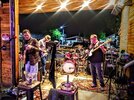

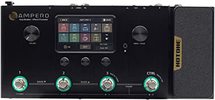
I didn’t know that about Yes. But, honestly, the HD500 really wasn’t that bad. Even my ancient and obsolete X3 Live isn’t too bad.When Yes toured in 2013 Steve Howe very famously switched over from his two Fender Twins to a pair of Line 6 DT50s controlled by a Line 6 POD HD500.
Now, you’re gettin’ it!TBTH, before I wised up and quit "drinking the Kool-Aid" so to speak) I found myself being constantly derailed in my own musical journey trying to follow these insanely expensive recommendations, that were largely the product of personal taste,
Now, you’re gettin’ it!

It took me long enough!!!