Let's talk this...Bass content Gibson

BFT Gibson

Ambassador of Originality
Country flag
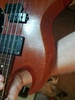
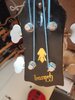
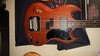
Just saw this, do have friends that can do anything..even build it..but...is this worth the fun ?

 
---er well.......I dunno -- Id "feel him out" hate to give away the farm when he woulda taken 2 cows and wagon

mines beat to crap -- and "altered" as you can see--- but it FEELS like a favorite pair of blue jeans and sounds awesome--I had to do some work to it-- and Drummiod helped me with that EVIL soldering business.....(it had NO mudbucker when purchased) for UNDER 300.00 on Craigslist--for fretless EB-- 1962 ......I "had to" lol
 
This put me on a Bass mindset for a bit..just took some time...found something cool...my Plexi for a Bass head....my prob is i love bass but forced to play guitar a few years ago the get the songs recorded...proper bass & drums drives the bus in music to me. I play 4ths on bass where roots should be at times...or counter melody in the scale or key....so glad my cuz is in a jazz band & plays funk...its all in the the layback & octave..you incorporate that into bass lines..the motor starts to run & the guitar can be the accent & coloring tool...less is more..across the board..the music breathes..the lows & highs & dynamics allow for songs to get big without getting heavier..like everybody on the downbeat..very hard on a singer..the words compete & the song congests...
 
here is the thing
IF you can get for around 2 bills---cool--

factor in all the work and additional cost........and -- if you LOVE it and want to keep and use it FOREVER --perfect-- but TBTH you will never get "original" $$$ out of it--

it might be worth 5-600.00 tops when finished--so -- Id keep that in mind -- its a great "husk" and a fun project -- and if you look at it like that you could build a great guitar-- that gets lots of compliments---for "little" $ out of pocket--
;)
 
looks like a can of worms... to me anyway.
I have done a rescue project, and it turned out well
but it was with a Squier Precision bass, so it was easy.
...and the stakes were low. I got it free.
The hardest (and most essential) part was getting the neck straight.

If you can't get the neck straight, it's a wall hanger.
If you can get the neck straight, then it's like a boat.
A boat is defined as a "large hole in the water, into which you pour money."

You have to ask yourself, do you want to play bass
or do you want to be a luthier. You CAN do both, but each is its own calling.
If you want to be a player, get a bass that's ready to rock
and concentrate on the music. You don't have to spend too much
and you don't have to swim in the 'vintage" pool, which is full
of bloodsuckers. A "vintage" bass has zero advantages, and a lot
of very likely and very real problems... for a player.

If you want to be a luthier, buy a lot of very cool (but expensive) tools and
take some classes from a master. Study hard, and practice a lot on
garbage instruments.


Luthier's first rule: Practice on scrap.
Don't learn how to be a luthier by experimenting on your prized Gibson
or Fender... or on a fine old war horse that should be in a museum.

Just my take, no offenses intended. I played a vintage bass for decades,
and destroyed its value by modding it as I pleased. At the time I did that
it was just an old bass. And I didn't care. But now I do.

I've also rescued a POS from a damp basement and moldy case,
and put it back onstage (with the help of a truly world class luthier
and about $450 very real dollars. I'm proud of doing that, and lucky someone
wanted that instrument because it was mine. So I was able to sell the boat.

I've also built my dream bass out of Warmoth parts, which I highly recommend.
The advantage of doing this is that the parts all fit, and the assembly is easy,
and a guy who is no luthier can end up with a playable totally custom instrument.
Hard to beat.

I've also run a half marathon. Twice. After the second half marathon, I said to myself:
"Cool. I did that. I don't ever have to do that again."
 
looks like a can of worms... to me anyway.
I have done a rescue project, and it turned out well
but it was with a Squier Precision bass, so it was easy.
...and the stakes were low. I got it free.
The hardest (and most essential) part was getting the neck straight.

If you can't get the neck straight, it's a wall hanger.
If you can get the neck straight, then it's like a boat.
A boat is defined as a "large hole in the water, into which you pour money."

You have to ask yourself, do you want to play bass
or do you want to be a luthier. You CAN do both, but each is its own calling.
If you want to be a player, get a bass that's ready to rock
and concentrate on the music. You don't have to spend too much
and you don't have to swim in the 'vintage" pool, which is full
of bloodsuckers. A "vintage" bass has zero advantages, and a lot
of very likely and very real problems... for a player.

If you want to be a luthier, buy a lot of very cool (but expensive) tools and
take some classes from a master. Study hard, and practice a lot on
garbage instruments.


Luthier's first rule: Practice on scrap.
Don't learn how to be a luthier by experimenting on your prized Gibson
or Fender... or on a fine old war horse that should be in a museum.

Just my take, no offenses intended. I played a vintage bass for decades,
and destroyed its value by modding it as I pleased. At the time I did that
it was just an old bass. And I didn't care. But now I do.

I've also rescued a POS from a damp basement and moldy case,
and put it back onstage (with the help of a truly world class luthier
and about $450 very real dollars. I'm proud of doing that, and lucky someone
wanted that instrument because it was mine. So I was able to sell the boat.

I've also built my dream bass out of Warmoth parts, which I highly recommend.
The advantage of doing this is that the parts all fit, and the assembly is easy,
and a guy who is no luthier can end up with a playable totally custom instrument.
Hard to beat.

I've also run a half marathon. Twice. After the second half marathon, I said to myself:
"Cool. I did that. I don't ever have to do that again."
cool, enjoy all feedback..kinda play both...bass is natural ..guitar still finding my way around it...going to pass on the bass.. can see doing some some projects like this in the future when i have my wood shop set up again. Was thinking at that point...make it from scratch . Never fixated on bass recording in studio until last 2 songs..got the pf50t head & spent hours layering yesterday..the 5 mid selector mid shift really is cool. Was so hyper focused on singer in the mix...now its time to put some personality on the bottom end. Have my eye on a few Gibson's..friend of mine has 70 basses & wants some guitar stuff. So we working n a multi item trade. Like to come home with SG & Jazz .
 
No No rid of an SG........:cry:
SG bass incoming soon,, also got my diabolical bass rig working..the pf50t into plexi into 2x15 cab with JBLs & since it has 2 DI's i am running it into my SVT4pro into peavey 1810 cab at the same time. The pft50 provides the sweet tones & the plexi & SVT do very cool things to pictures attached to my walls....J was like what the h.ll was that a few minutes ago...stuff on the Kitchen table was dancing..lol...we into this....
 
I thought you were selling or rid of your beloved SG...lol
Stupid me...your getting n SG BOOM STICK:love:
no..lol..if i ever could make a post without a work call coming in.. might be able to make sense someday. SG bass in the works , getting the P bass back soon. Bass is good..many basses seems better. That rig i just made was nutz..the plexi for a bass head is tight..& with SVT a lil grind..its an interesting blend..like a full tone vs each one on heir own
 
Back
Top