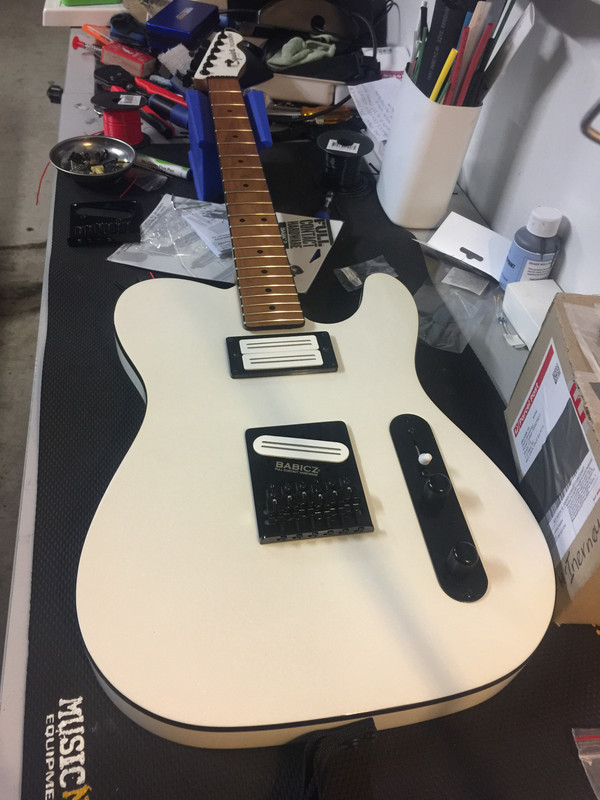
Okay, well I got the body back today and reassembled it. The break angle is a lot more with the string through setup and the feel is a lot tighter. Killer tone for rhythm stuff too. Not the greatest for lead work (I would probably want 11-56 strings for that) but that's not what I set this guitar up to do. It is meant to be a tight rhythm guitar and it delivers that in spades.
Here's a full final list of the mods:
Bare Knuckle Cobra-T single coil bridge pickup
Bare Knuckle Impulse humbucker neck pickup
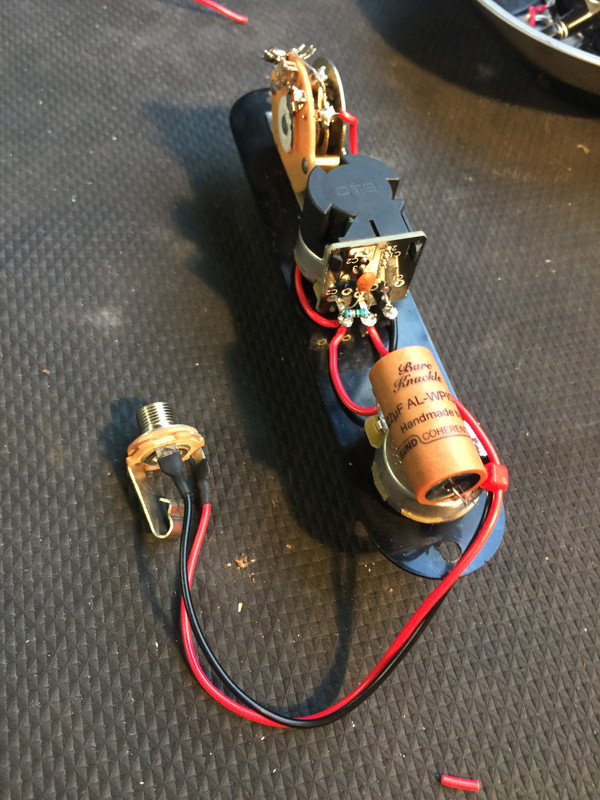
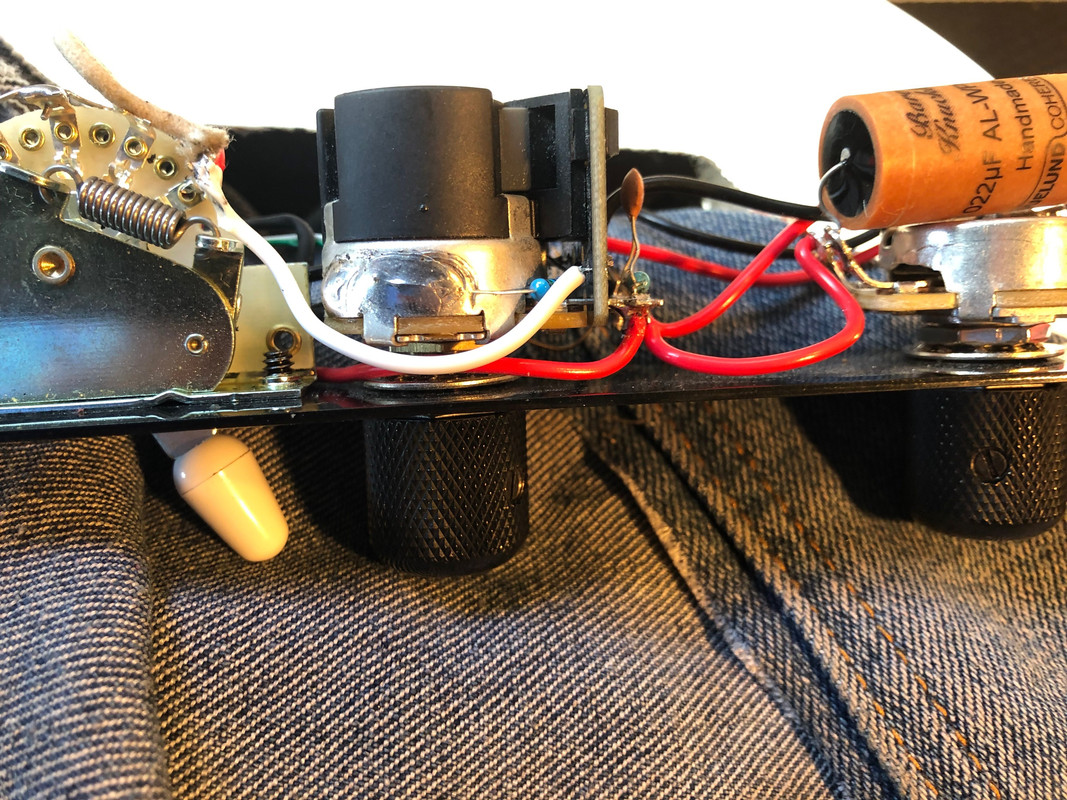
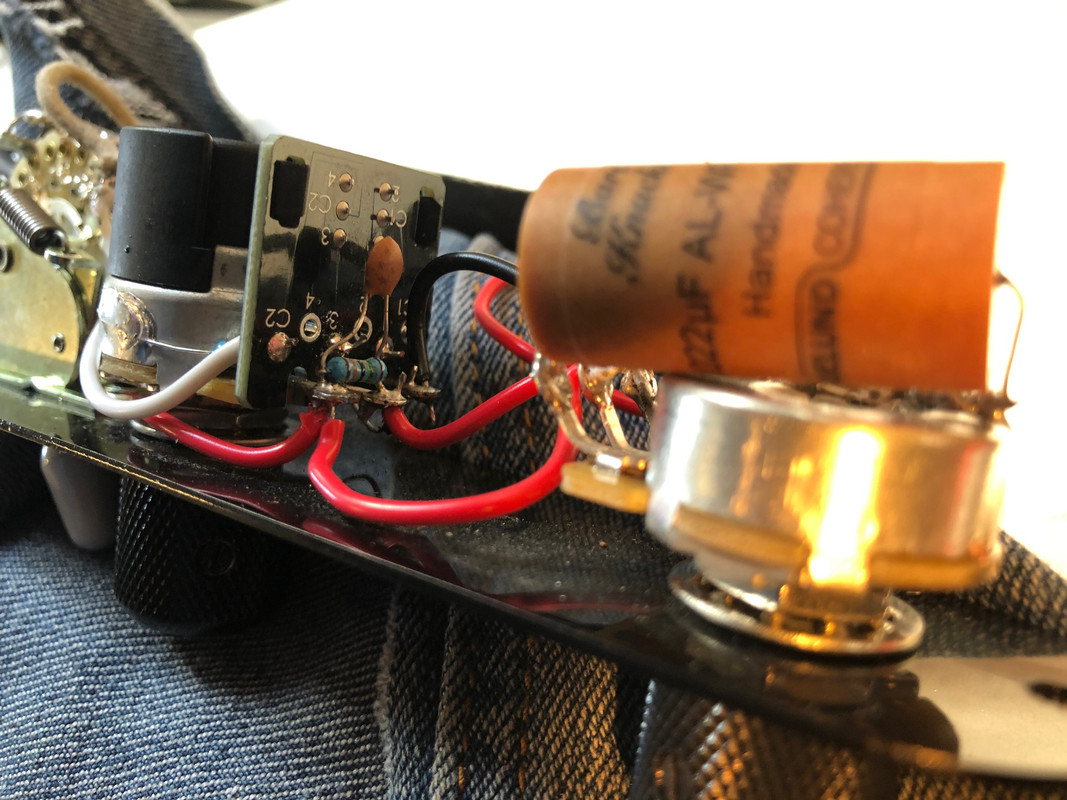
BKP CTS 550K push-pull volume potentiometer (splits neck pickup, which is reversed so that the coil closest to the neck is active when split)
BKP CTS 550K tone potentiometer
BKP Dueland 0.022uF PIO capacitor
Gotoh VK1-18 knobs
Oaks-Grigsby 3-way selector switch with white Stratocaster-style tip
Switchcraft mono output jack
Channel between bridge pickup cavity and control cavity enlarged to fit the cloth-covered pickup wires on the Cobra-T
Wood removed from bottom-centre of control cavity to provide room for the push-pull volume pot
All cavities and channels shielded with nickel conductive paint, with copper conductive tape for the screws of the control plate and the ground point for the bridge ground, with the new ground wire soldered to the tape and painted over
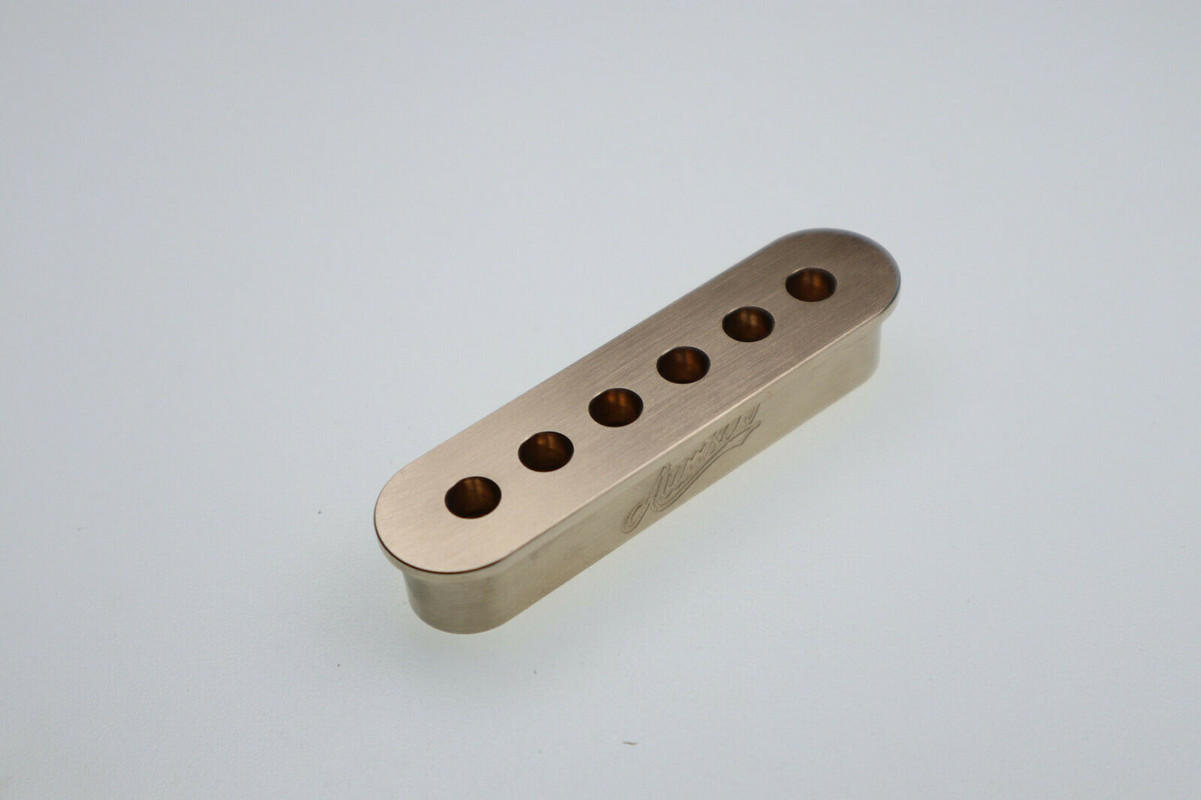
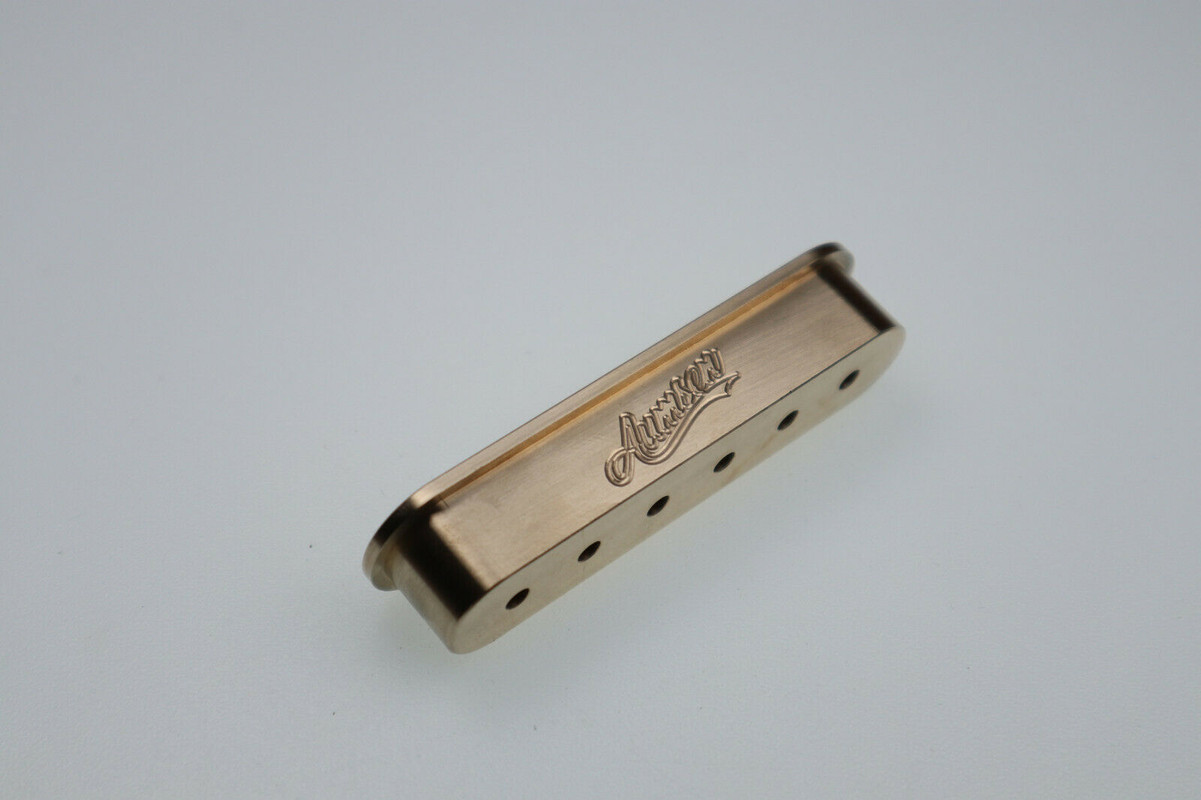
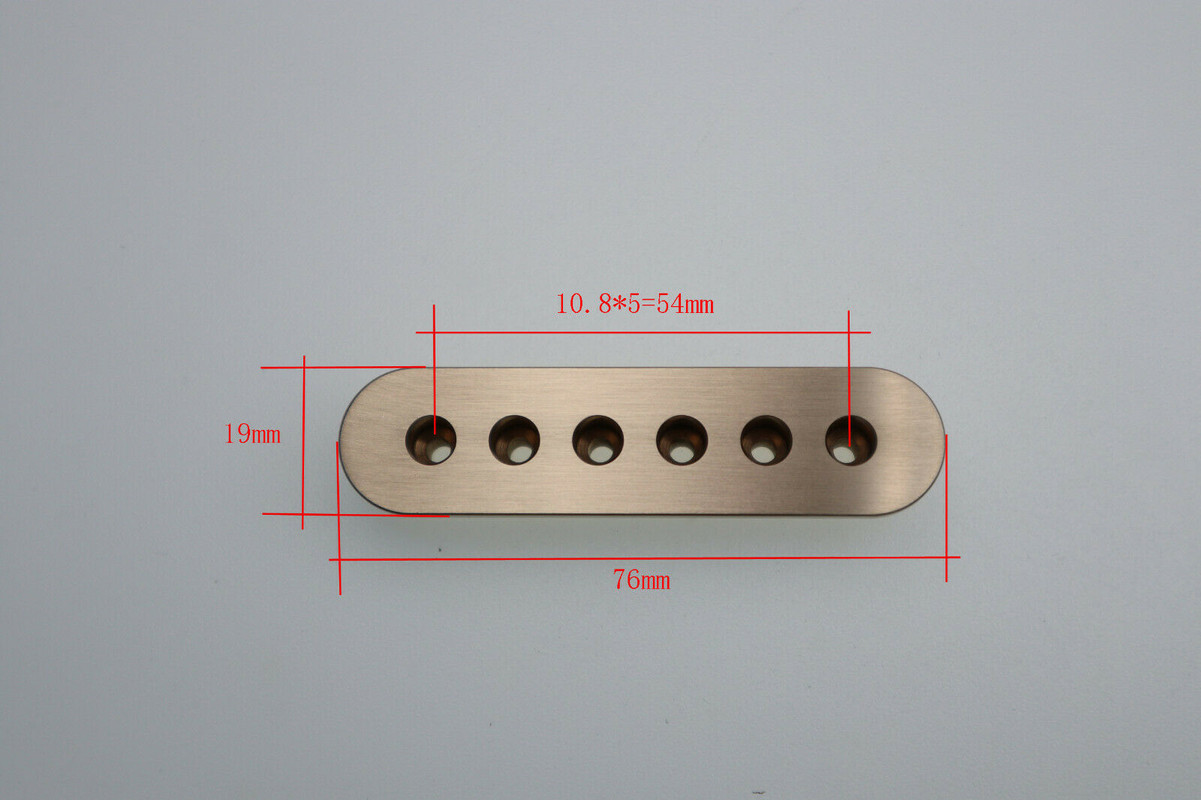
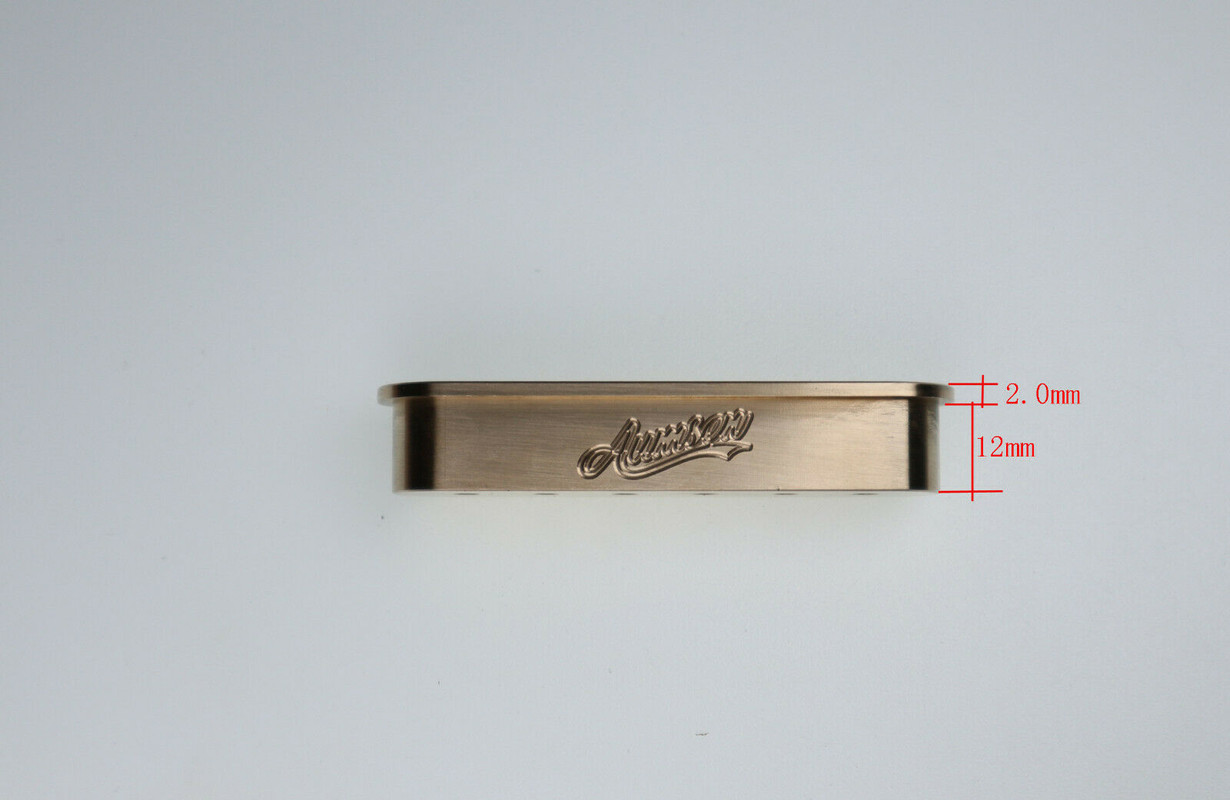
Body dowelled, drilled, and routed to convert the guitar to the vintage 4-screw type bridge mounting and ferrule placement, with a polished Aumsen brass ferrule block fitted into the back of the body
Babicz FCH TL bridge
Gotoh limited edition SG381-MGTB locking tuners
Graphtech Black TUSQ XL nut
Graphtech Black TUSQ XL string tree
Truss rod recess painted black
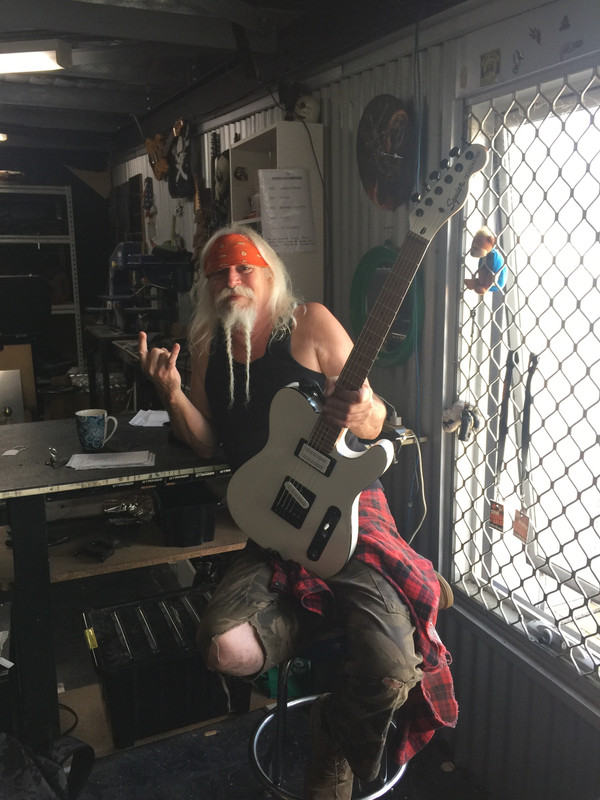
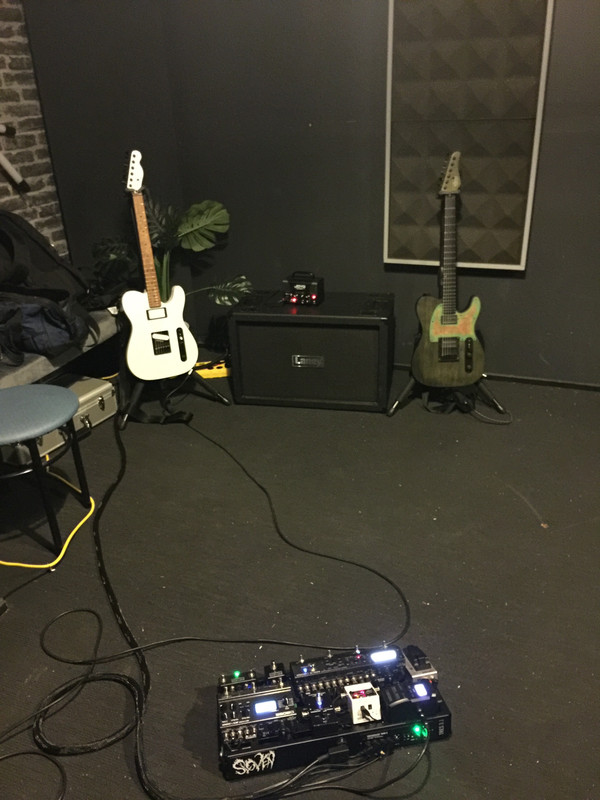
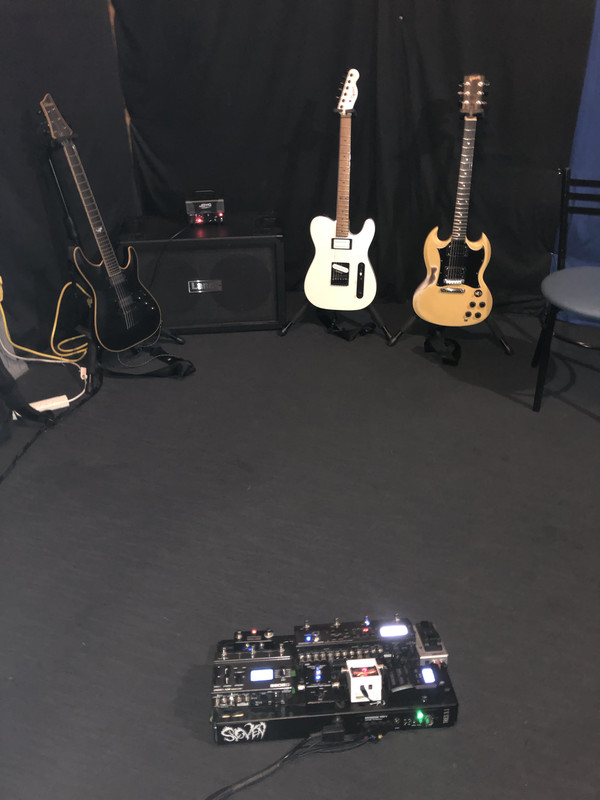
Here are some photos taken today.
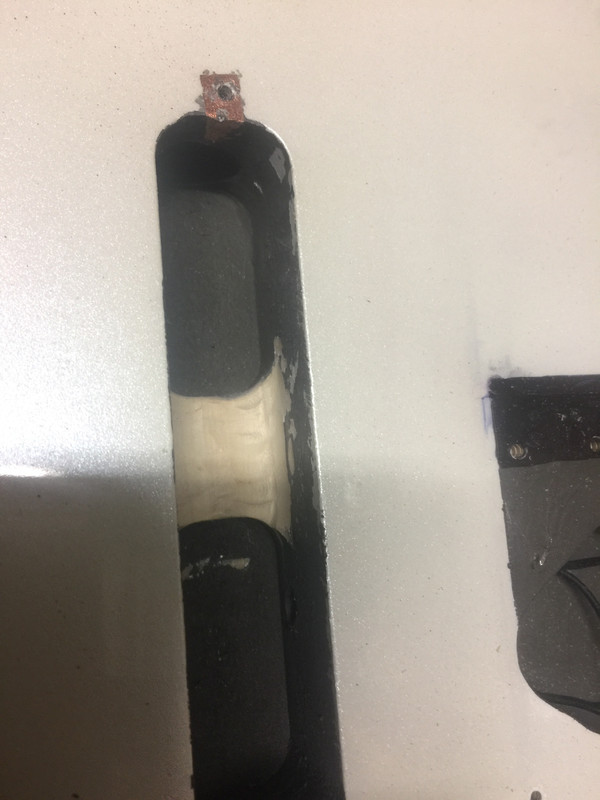
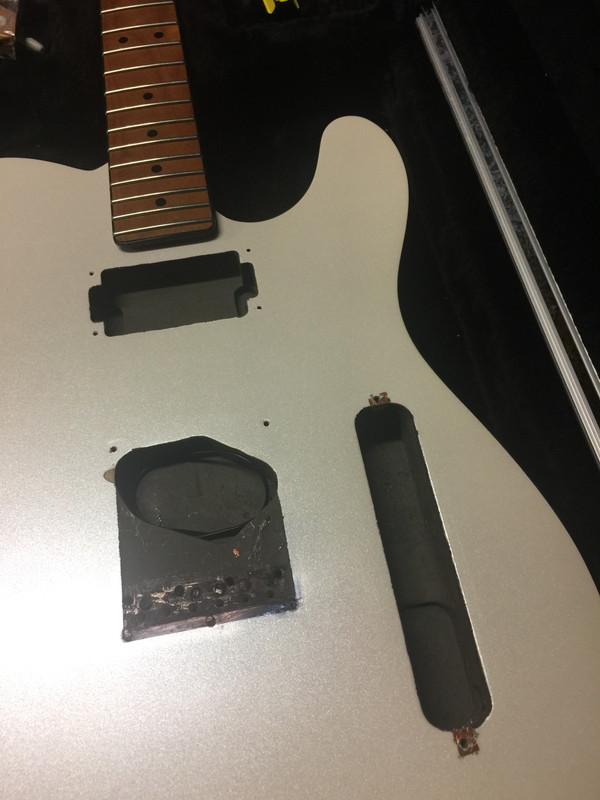
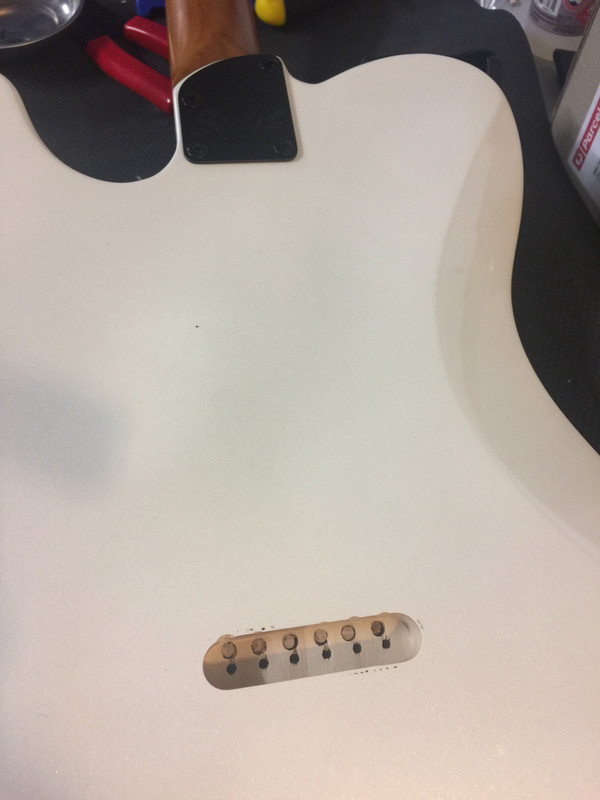
I was a bit annoyed when I went to get the body from Brian at Fretco today (before my tattoo appointment) and saw that when he drilled the wiring channel larger he accidentally managed to take a chunk out of the top with the long drill bit, but thankfully the bridge covers that little problem and he didn't charge for that part of it (I ended up paying $80 total for the work, which was the quote for just the ferrule drill and rout) and repainted the channel with fresh shielding paint so that I could assemble it tonight when I got it home. Note the dowels that Steve put in the old string holes when he converted it a vintage-style four-screw mounting, the screw holes that Steve made, and the new string holes that Brian did with his drill press based on my pilot holes through the Babicz bridge holes. Note also the pen mark (not visible with the bridge mounted) that Steve made when lining the bridge up properly with the neck, and also the black paint that Steve added. I added copper tape and soldered the bridge ground wire to it, and then painted over that with the shielding paint, so the ground is really good.
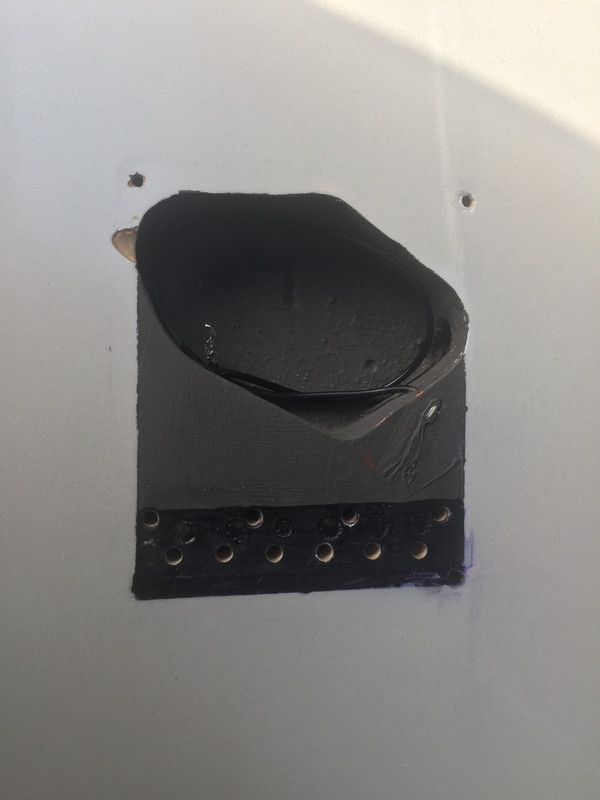
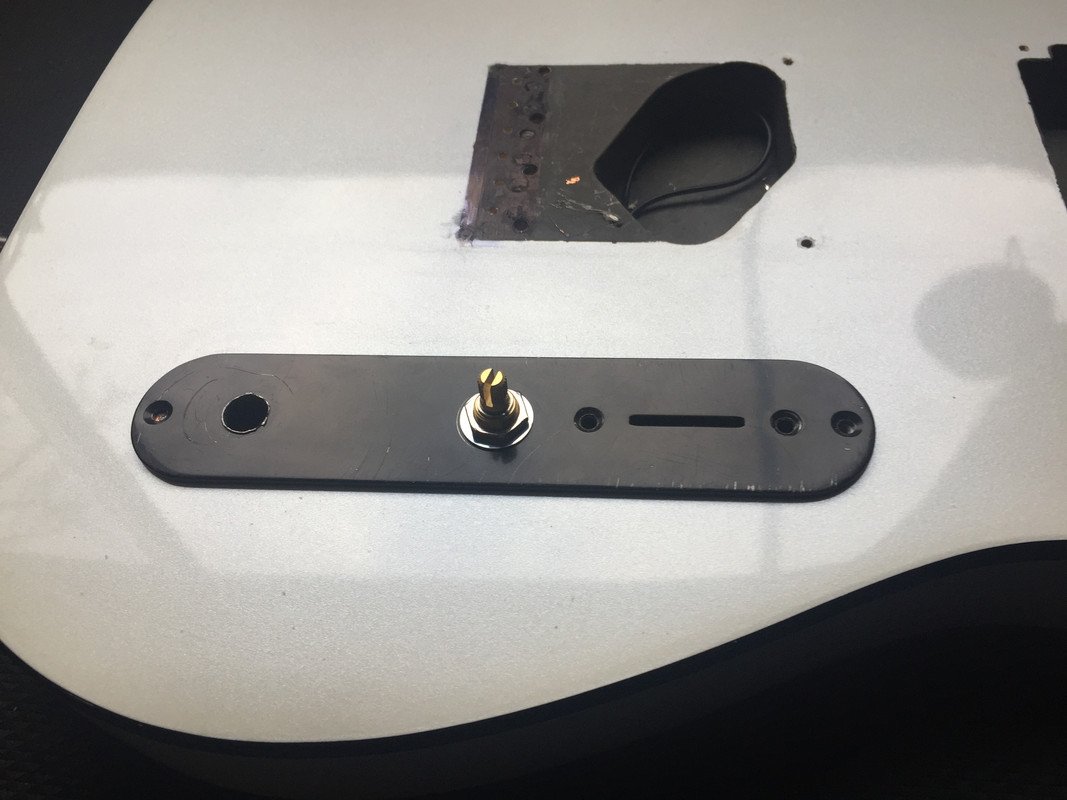
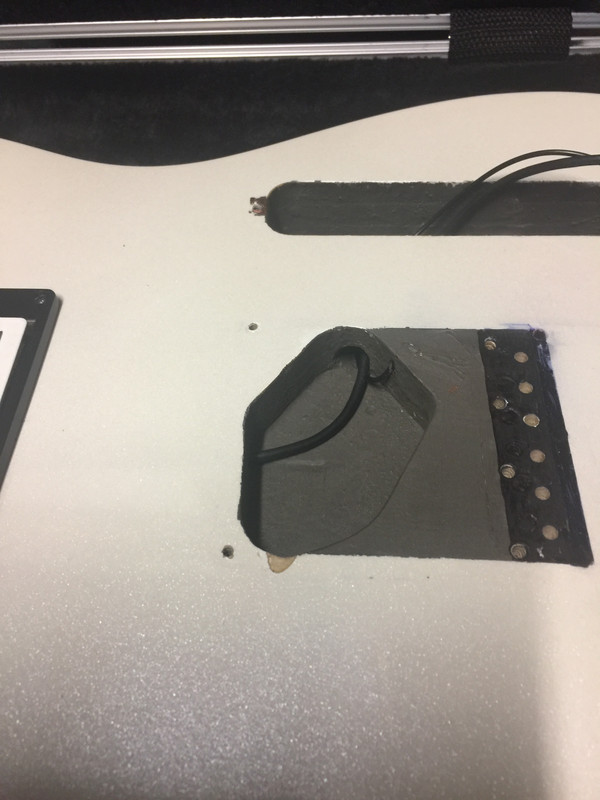
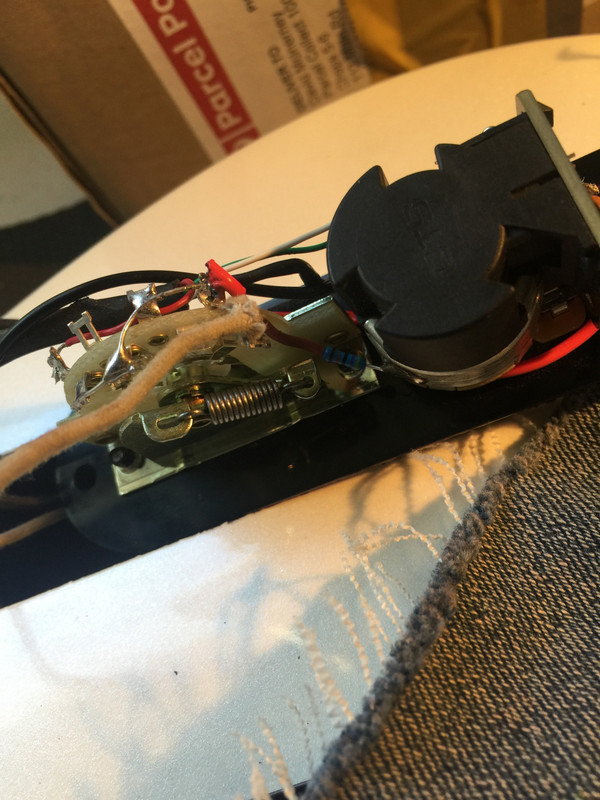
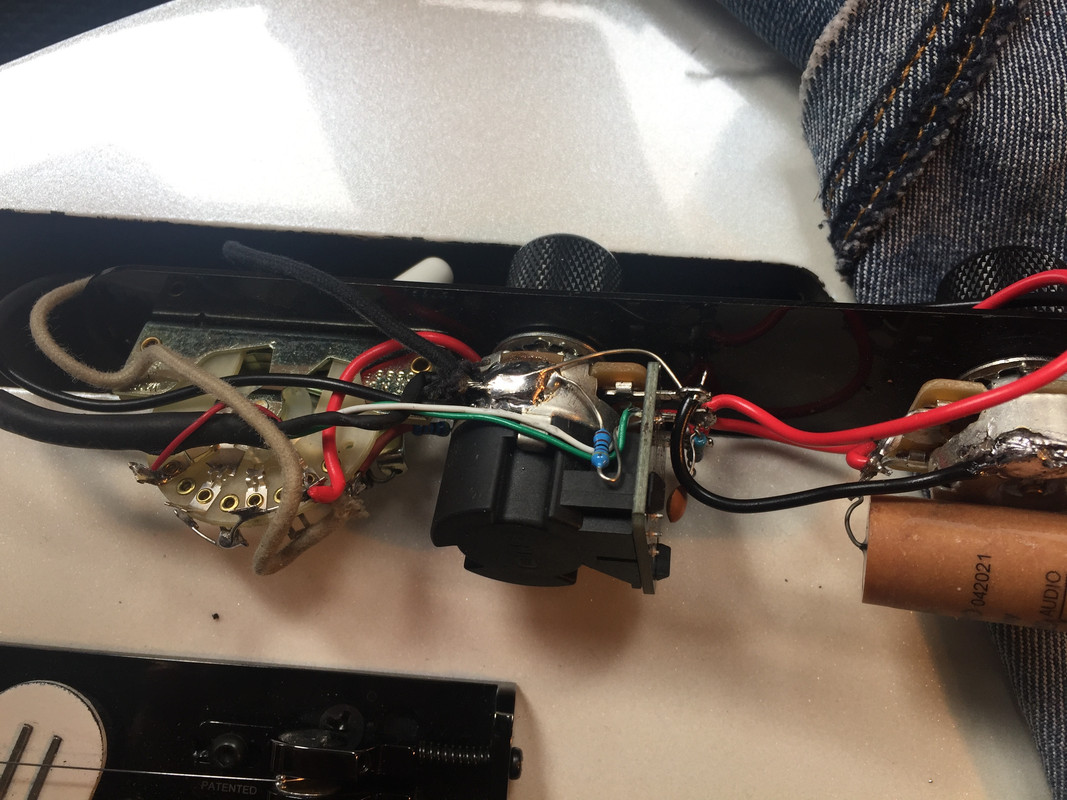
Here you can see how I cut away most of the wood in the middle of the bottom of the control cavity, to allow the push-pull pot to fit. The cables were all still a tight fit and it took a bit of fiddling.
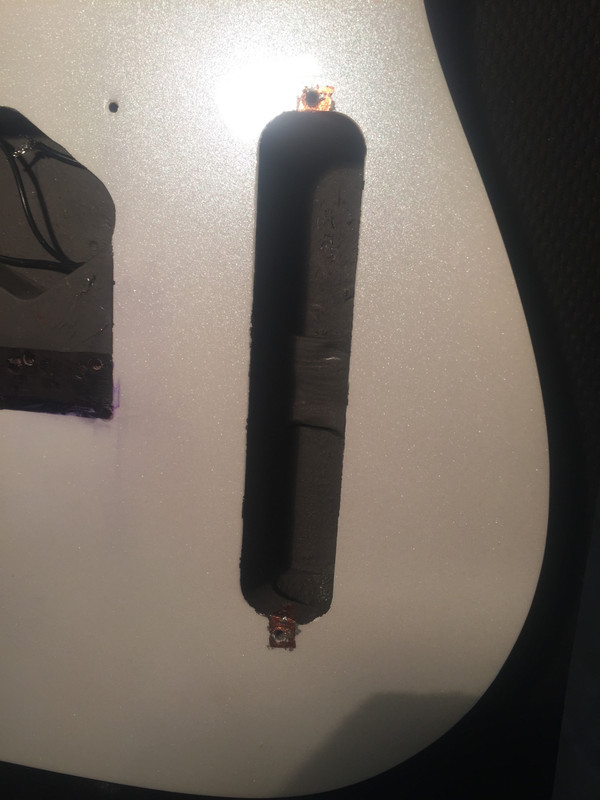
If you can compare this to previous photos you will note that the channel is now much larger, which made getting the cloth-covered pickup wires on the Cobra-T through there much easier.
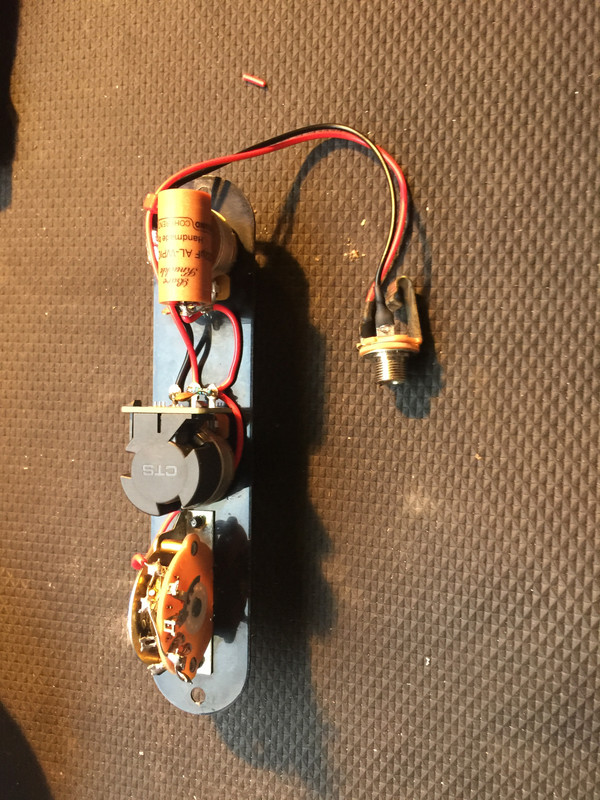
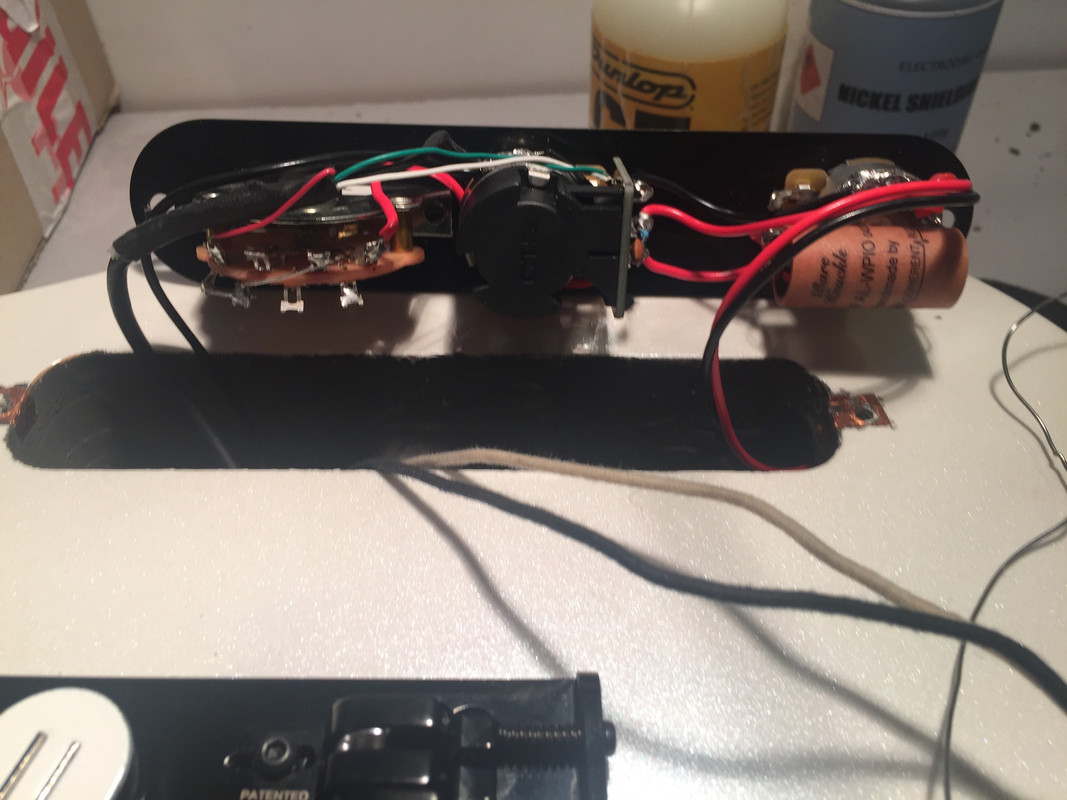
Here you can see the completed wiring on the control plate once the pickup and ground wires have been added.
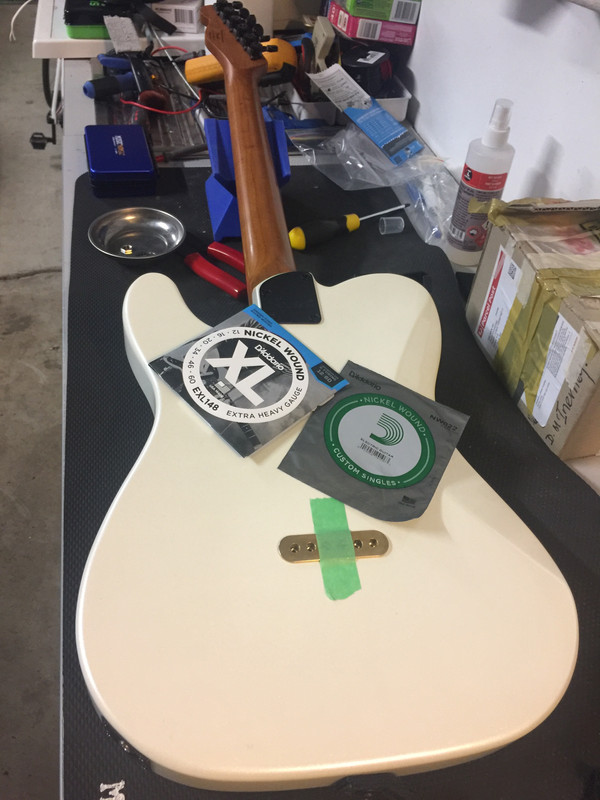
Here you can see Brian's routing for the new brass ferrule block (made by Aumsen in China, and polished by me with my Foredom SR Flex Shaft with jeweller's kit), and the bottoms of the dowels that Steve fitted when he changed the bridge mounting.
I use 12-60 D'Addario EXL148 strings, but the 20P third is replaced with a 22W.
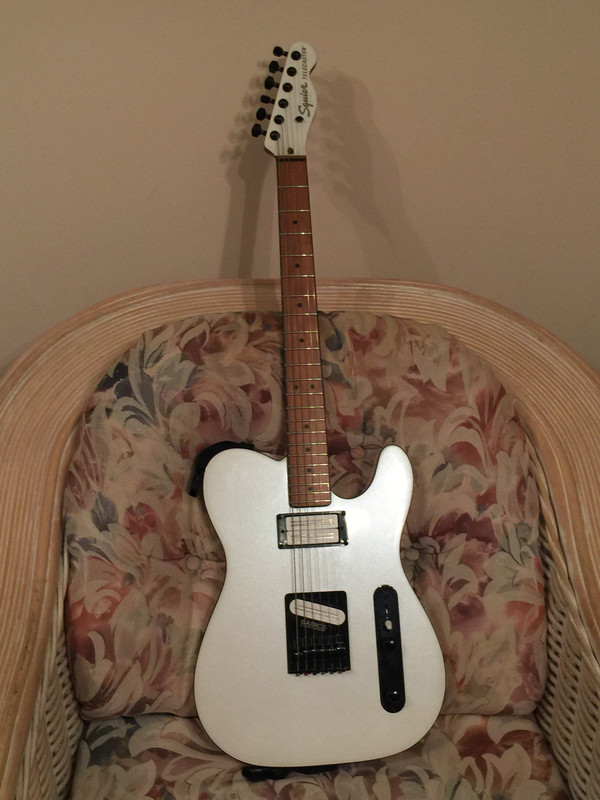
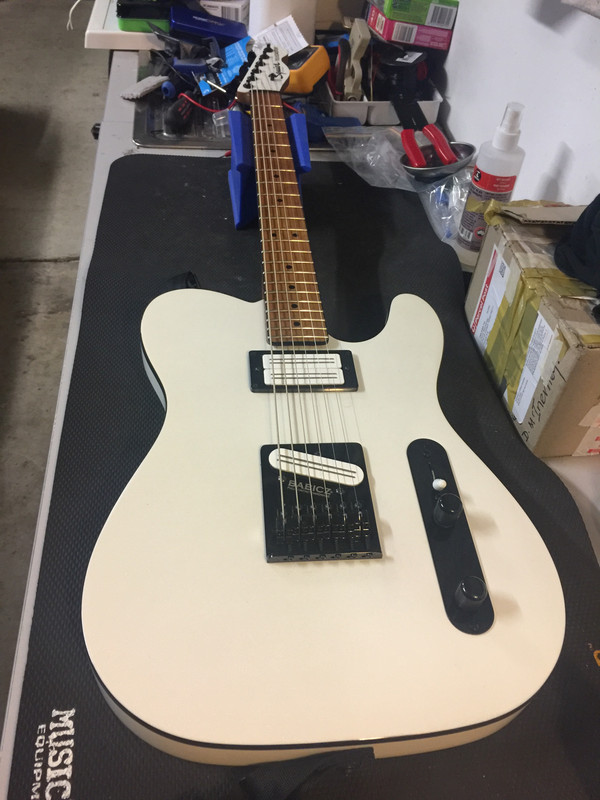
The finished guitar, now strung through the body.
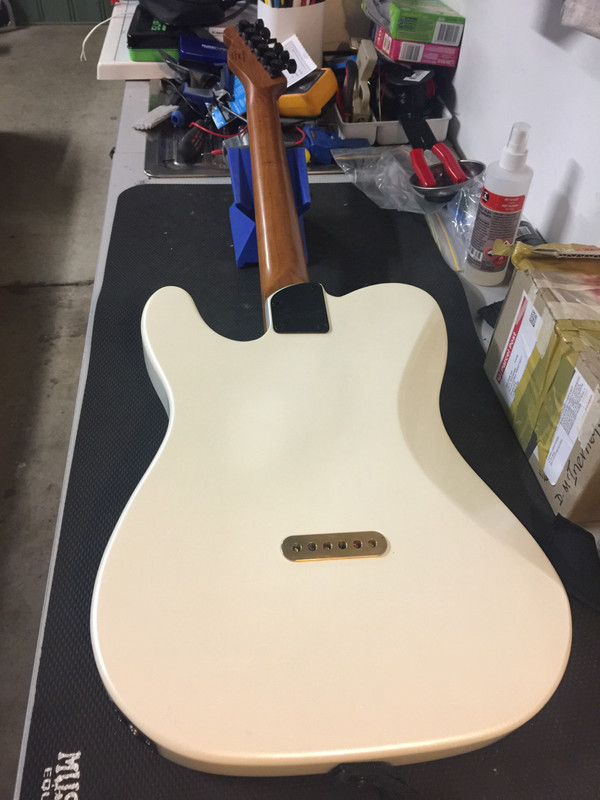
From the back, showing the brass ferrule block (held in by the string tension).