How to Spot a Made in USA Fender:

When i was working at Fender in 2022, we received shipments of semi-finished bodies from Cort Indonesia and those were shipped to Corona.

We also received all the body blank shipments. These were already cut into 3 pieces and glued together when we received them. These were also shipped to Corona.

Its a shell game and you cannot make sense of it.
That is very interesting. Did all those bodies stay in Corona, or did some get shipped off to Mexico? Are the Mexican Fender bodies also made by Cort?
 
I’m by no means an expert on US law, but isn’t it up to each state to enforce the FTC guidelines? Reading the guidelines I see no mentioning of a percentage. Instead they use broader terms that leave some wiggle room for interpretation.

No. FTC is a federal agency and the individual states are not responsible for, nor will they get involved in, enforcement. It's basically done on the honor system until someone complains, and then the FTC would intervene and, interpreting its own rather vague rules, render a decision.
 
We would get pallets of pre-painted bodies, in Fender boxes, but with a bill of lading from Cort Indonesia.

Those were shipped to us, then sent to Corona for the "California Builds."
 
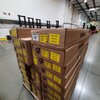
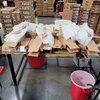
Here's a pallet of 3 piece, glued together blanks from Cort Indonesia, heading to Corona.

These will become USA made units.

View attachment 92342

What factors does the Commission consider to determine whether a product is "all or virtually all" made in the U.S.?

The product’s final assembly or processing must take place in the U.S. The Commission then considers other factors, including how much of the product’s total manufacturing costs can be assigned to U.S. parts and processing, and how far removed any foreign content is from the finished product. In some instances, only a small portion of the total manufacturing costs are attributable to foreign processing, but that processing represents a significant amount of the product’s overall processing. The same could be true for some foreign parts. In these cases, the foreign content (processing or parts) is more than negligible, and, as a result, unqualified claims are inappropriate.

Example: A company produces propane barbecue grills at a plant in Nevada. The product’s major components include the gas valve, burner and aluminum housing, each of which is made in the U.S. The grill’s knobs and tubing are imported from Mexico. An unqualified Made in USA claim is not likely to be deceptive because the knobs and tubing make up a negligible portion of the product’s total manufacturing costs and are insignificant parts of the final product.
Example: A table lamp is assembled in the U.S. from American-made brass, an American-made Tiffany-style lampshade, and an imported base. The base accounts for a small percent of the total cost of making the lamp. An unqualified Made in USA claim is deceptive for two reasons: The base is not far enough removed in the manufacturing process from the finished product to be of little consequence and it is a significant part of the final product.


That would mean that blueing three planks together to form a board, isn’t far enough removed in the manufacturing process?
 
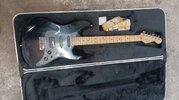
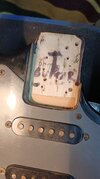
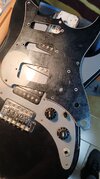
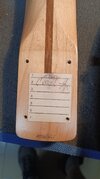
This is a Fender Prodigy from my oldest brother. He bought It new on '89's or 90's. Is It a real made in USA Fender? Pickguard it's not original. It's a home made ones.
 

Attachments

Last edited:
That is very interesting. Did all those bodies stay in Corona, or did some get shipped off to Mexico? Are the Mexican Fender bodies also made by Cort?

Mexico was making their own bodies, but sfter the July 2022 layoff, everything changed.

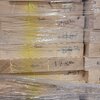
Here's some USA body blanks.

Look at these "planks" that have been glued together for the Made In USA only guitars.

20220414_055232.jpg

The Bill of lading is from G.H.I. Eugene Oregon, but they arrive at our hub already cut, glued and stamped Fender Custom Lumber Made in USA.

These are then scanned in, then shipped down to Corona.

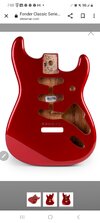
The bodies coming in from Cort looked like this:

Screenshot_20230427_190855_Chrome.jpg

Those were also shipped to Corona.
 
Last edited:
And once, a group of us were assigned to replace Squire necks with Corona California necks, to fulfil an order.

When i asked management about this, they said there was no difference because the Corona California bodies and electronics are all imported anyways, so essentially the neck is the only part that actually made it a California" build.
 
Last edited:
The first thing you have to do is understand that anything Fender tells you publicly is probably not 100% factual.

The constant shell games make it almost impossible to tell what's really going on and that works to their advantage.

But for some folks, that's not a big deal because we have become societally conditioned that this methodology of deception is the new kind of normal.

I made a lot of friends there, but i just couldn't feel good about what i was doing. A lot of us felt like the company was really cutting corners and it was really sad to see it.

But, making money is the business - not making guitars.
 
And once, a group of us were assigned to replace Squire necks with Corona California necks, to fulfil an order.

When i asked management about this, they said there was no difference because the Corona California bodies and electronics are all imported anyways, so essentially the neck is the only part that actually made it a California" build.
For what models of Fenders? There are some pretty obvious and easy to spot differences between a Squier body and a Fender body.
 
And, unfortunately, those are still not a Made In USA guitar, but rather a foreign guitar, assembled in California, and charging a USA price.
Just a minor observation....

To say these guitars are "foreign" is true in the sense that the vast majority of the parts and processing is of foreign origin. I get that and I see your point. I do not outright disagree.

But, until these parts are assembled into a guitar, they are still just parts. You don't actually have a "guitar" until the pieces are put together.

So, in one sense the "guitar" is foreign in that its parts are of foreign origin. In another sense, the guitar is (somewhat) American in that those individual parts become a guitar in the US. However, not enough of the processing and parts are of US origin to qualify as "Made in USA". So, it occupies somewhat of a murky middle ground.

Of course, Fender makes things very ambiguous by doing things like putting a US flag sticker on these guitars. The impression from most uninformed purchasers would be that the guitar is actually a "Made in USA" guitar. I would prefer to see Fender charge an intermediate price somewhere between the completely foreign made guitars and the truly US made guitars and advertise them as such.
 
Here's a pallet of 3 piece, glued together blanks from Cort Indonesia, heading to Corona.

These will become USA made units.

This, I think, is fair. As you've noted, even Gibson has to source its raw material (wood) overseas. Those species (mahogany, rosewood, ebony) are non-native. But, Gibson receives only blanks. The processing of those blanks into a guitar occurs in the US. So, it doesn't bother me that Fender sources its blanks elsewhere.

The furniture industry faces this same dilemma.
 
This, I think, is fair. As you've noted, even Gibson has to source its raw material (wood) overseas. Those species (mahogany, rosewood, ebony) are non-native. But, Gibson receives only blanks. The processing of those blanks into a guitar occurs in the US. So, it doesn't bother me that Fender sources its blanks elsewhere.

The furniture industry faces this same dilemma.

I agree. No issues here.
 
Back
Top