Hand Wiring vs vs. Eyelet/Turret Boards vs Circuit Boards Amps

Hand wiring or circuit boards. Does it matter to your purchase?

  • I prefer point to pont amps, and would not buy anything else

  • I prefer circuit board amps, and would not buy anything else

  • I prefer turrent/eyelet board amps, and would not buy anything else

  • If it sounds good and is reliable, I will buy it

  • I will buy point to point or turret/eyelet board amps, but not circuit board amps

  • I will buy circuit board amps, but not point to point or turret/eyelet board amps


Results are only viewable after voting.
I should note I voted for I will buy anything if it sounds good. That being said; Marshall has had some really :poo:ty circuit boards at times. The JCM 900s are hard to work on (very delicate) and the JCM 2000s like to leak between traces. Otherwise, I find soldering on circuit boards as easy as turret boards. I've totally hacked up the circuits on the two 900s I have and really like the results. I haven't used anything else much since I finished my 800 clone. I just love the tone.

That's the point, isn't it - quality, is it done well? Every type listed can sound good, and every type can be a pain in the arse that needs smashing up and throwing in the bin if they have not been manufactured well, corners cut, errors in design, etc.

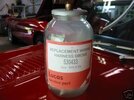
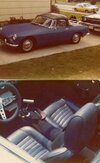
My current amp is a good example... Is it point to point on an eyelet board? "hand-built in the UK" - that should have warned me off for starters; it has production issues due to poor workmanship and QC... Sitting next to it is my Yamaha THR10 which is a modeller with a circuit board, boring, factory-made in Asia - rock solid. It doesn't sound as good, but it has never given me a single problem, like a Japanese car, you turn it on and it works as advertised. My old Lotus, just like the one below (same colour, year, condition), was "hand-built in the UK" and gave me a nice fuzzy feeling inside when looking at it, less so when I turned it on, didn't work, so had to stretch my hand out the window winder while turning the ignition, trying to reach the part of the engine I had to touch two points simultaneously with a long screw-driver (whilst getting a nice shock...), or when I had to have the lovely sounding and performing Webber carburettors set up on a monthly basis, or..., the list goes on. Looked nice though.

11256996.jpg
 
Only problem I've had with circuit boards is when a resistor vaporizes and takes part of the board along with it.
Some of the thin two sided boards don't take kindly to this.
But I'm firmly in the "If it sounds good" camp.

On my last build I actually have a space between the board and componet, for thaat very reason. Worked on several Fender pcb where the board was damaged from burned components. One board was so bad I had to use a dermel tool to remove the bad section of board because of carbon, refill the hole with FG patch and rework the circuit board lands go to the resistor.
 
That's the point, isn't it - quality, is it done well? Every type listed can sound good, and every type can be a pain in the arse that needs smashing up and throwing in the bin if they have not been manufactured well, corners cut, errors in design, etc.

My current amp is a good example... Is it point to point on an eyelet board? "hand-built in the UK" - that should have warned me off for starters; it has production issues due to poor workmanship and QC... Sitting next to it is my Yamaha THR10 which is a modeller with a circuit board, boring, factory-made in Asia - rock solid. It doesn't sound as good, but it has never given me a single problem, like a Japanese car, you turn it on and it works as advertised. My old Lotus, just like the one below (same colour, year, condition), was "hand-built in the UK" and gave me a nice fuzzy feeling inside when looking at it, less so when I turned it on, didn't work, so had to stretch my hand out the window winder while turning the ignition, trying to reach the part of the engine I had to touch two points simultaneously with a long screw-driver (whilst getting a nice shock...), or when I had to have the lovely sounding and performing Webber carburettors set up on a monthly basis, or..., the list goes on. Looked nice though.

View attachment 41770

Lucas electric, heh?
 
P.S. I’ve owned 3 60s era MGBs.

They are lovely little cars with loads of personality. An old gf had an MGB GT in BRG that she let me drive around - very nice it was too.

I wonder if they went through at many alternator solenoids as the Lotus?
 
what the crap is a MEsa Subway Blues 20 watter???
Hand wired--- p to p ?
turret?
pixie dust and unicorn farts?
circuit bored ------ ?
 
I've had six different Jaguar XKE's and I'm very, very familiar with Lucas wiring ..... unfortunately! And as usual Ivan hit the nail on the head, it's the design and integrity of production that makes desirability. So there wasn't a box for me to check either!
 
:)
your post made me literally laugh out loud -- biggest derail ever--- ah -- so .....wait here comes Hank! ;)
 
A well designed piece of equipment is a well designed piece of equipment & a poorly designed piece of equipment is a poorly designed piece of equipment. This applies to printed circuit boards & eyelet or turret boards just like anything else. There is absolutely nothing wrong with a good printed circuit board equipped amp. The only difference is that a printed circuit board makes manufacter easier & more efficient while on the other hand, eyelet or turret board type construction makes service/repairs easier. Cheers
Oh, I didn't vote as there isn't a choice that suits the above opinion. Cheers
Edit:
Damn this "predictive text" feature, I always notice typos & have to go back & edit posts. I suppose I should preview before posting. Cheers
So the choice would be

"If it sounds good and is reliable, I will buy it, but only of it can be serviced with ease that may not be as great as a turrent board, but not so much harder as to make it impractical"

Did I get it?!
 
off the rails - amps to cars. But that is OK, it is the TTR way. Just an observation that my thread leads the derail pack!
CN 327 has CSXT 3337 and CSXT 728 for power as it heads through Dorval with 6 intermodal cars up front, followed by mixed freight.
 
Back
Top