Gibson suing again: Jericho Guitars is in the crosshairs

Clockworkmike

Ambassador of STACKS in WV SHACKS
Country flag
So Gibson is in another lawsuit just after the Dean court saga dragged out. This time however, I gotta say, it seems a little more valid.

The company in question is Jericho Guitars, founded in 2012 by Dave Muselman. They are pretty well made guitars and people love them. But, like a lot of newer companies, they build variations of classic designs. However, UNLIKE most companies minus the Chibson folk; Jericho makes blatant copies akin to the old lawsuit days of Ibanez, Greco and Burny.

The owner has even went into this angry damage control that's making himself look bad in my opinion by posting " BE AUTHENTIC", a play on Gibson's "Play Authentic" campaign. He has also been attacking people on his social media platforms who have called him out for the copies. As of this moment, all of his Gibson copies are removed for the site but still they are being sold thru direct orders.

I think this one might not fair well for Jericho honestly. But in fairness, he's stealing from Fender, PRS and Schecter in a lot of designs too.

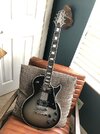
You be the judge. The headstock of the LP is different but that Explorer is dead on the nose
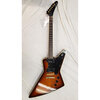
000000116770452-00-500x500.jpg
bfijpd5cogpsonre648u.jpg
 
Gibson owns.... the designs.
This guy can make all the guitars he wants, just not copies of somebody else's....
I can't blame Gibson.
Pretty much my sentiment. If he wants to build a ton for himself he absolutely can do that. He can even build one and gift it to someone. But you can't build and sell off a copyrighted design no matter how much you want to
 
Pretty much my sentiment. If he wants to build a ton for himself he absolutely can do that. He can even build one and gift it to someone. But you can't build and sell off a copyrighted design no matter how much you want to

It gets tricky, though. One very common misnomer is that the guitar designs are "copywritten". This is not correct. At issue is a trademark, not a copywrite. Certain things cannot be copywritten. A guitar design cannot be copywritten. However, it can be trademarked. But, the manufacturer has to apply to trademark the shape. It's not something that occurs automatically just because a design has been developed. Also, the US Patent and Trademark Office can decide to decline an application.

However, you generally cannot trademark something that is reasonably generic and ubiquitous. For example, some acoustic builder could not suddenly decide to trademark the traditional acoustic guitar shape. It is too pervasive and commonplace for a trademark to be awarded. In fact, this happened to Fender in 2009, I believe (I may be wrong on the date). Fender had applied to trademark the shape of the Telecaster, Stratocaster, and Precision bass several years earlier. Their application was declined. The specific statement by the Trademark Trial and Appeals Board was, "Fender refers to the 'iconic' status of these [instrument] outlines in American popular culture. However, we must resolve a narrow issue: Do consumers associate these two-dimensional outlines, depicted in the drawings, as indicators of source?" In the end, the TTAB decided that they did not. Essentially, the shape had become too commonplace and universal for them to be trademarked this late in the game.

Also, trademarks have to be defended. If too much time passes with other builders infringing on a trademark, and the trademark holder doesn't challenge it, and the shape has become ubiquitous and generic, a court may decline to find in favor of the original trademark holder. In other cases, such cases may be awarded. There is no single, predictable outcome and these cases seem to sway back and forth. Also, it matters whether or not a trademark case goes before a jury or just a panel of judges. A jury can often be swayed more than judges. This is what happened in Gibson's recent court victory. They pressed for a jury trial. They probably feared a judicial panel would be more inclined to decide that Gibson had not adequately defended it's shape.

So, it gets messy.
 
It gets tricky, though. One very common misnomer is that the guitar designs are "copywritten". This is not correct. At issue is a trademark, not a copywrite. Certain things cannot be copywritten. A guitar design cannot be copywritten. However, it can be trademarked. But, the manufacturer has to apply to trademark the shape. It's not something that occurs automatically just because a design has been developed. Also, the US Patent and Trademark office can decide to decline an application.

However, you generally cannot trademark something this is reasonably generic and ubiquitous. For example, some acoustic builder could not suddenly decide to trademark the traditional acoustic guitar shape. It is too pervasive and commonplace for a trademark to be awarded. In fact, this happened to Fender in 2009, I believe (I may be wrong on the date). Fender had applied to trademark the shape of the Telecaster, Stratocaster, and Precision bass several years earlier. Their application was declined. The specific statement by the Trademark Trial and Appeals Board was, "Fender refers to the 'iconic' status of these [instrument] outlines in American popular culture. However, we must resolve a narrow issue: Do consumers associate these two-dimensional outlines, depicted in the drawings, as indicators of source?" In the end, the TTAB decided that they did not. Essentially, the shape had become too commonplace and universal for them to be trademarked this late in the game.

Also, trademarks have to be defended. If too much time passes with other builders infringing on a trademark, and the trademark holder doesn't challenge it, and the shape has become ubiquitous and generic, a court may decline to find in favor of the original trademark holder. In other cases, such cases may be awarded. There is no single, predictable outcome and these cases seem to sway back and forth. Also, it matters whether or not a trademark case goes before a jury or just a panel of judges. A jury can often be swayed more than judges. This is what happened in Gibson's recent court victory. They pressed for a jury trial. They probably feared a judicial panel would be more inclined to decide that Gibson had not adequately defended it's shape.amps

So, it gets messy.
Why not?
Mesa boogie copied fender amps and claimed "discovery..." and patented those imitations...
but whether it would hold up in court is doubtful...also owned by Gibson....which may turn out to be ironic.
 
Why not?
Mesa boogie copied fender amps and claimed "discovery..." and patented those imitations...
but whether it would hold up in court is doubtful...also owned by Gibson....which may turn out to be ironic.

Why not...what?

The Mesa thing is another question altogether. That is a question of patent, not trademark. Even then, there are limitations to what the USPTO will allow to be patented.

For example, did you know you cannot patent a scent, or a flavor? You can patent a process, but not the scent or flavor, itself. If someone else is able to independently develop a recipe that mimics the same scent or flavor, that is fair game.
 
Why not...what?

The Mesa thing is another question altogether. That is a question of patent, not trademark. Even then, there are limitations to what the USPTO will allow to be patented.

For example, did you know you cannot patent a scent, or a flavor? You can patent a process, but not the scent or flavor, itself. If someone else is able to independently develop a recipe that mimics the same scent or flavor, that is fair game.
The point is
Mesa basically claims to have invented what was already widely used---and claims ownership of technology----and built this using (based on) a fender amplifier.
But there is a patent granted regardless.

Gibson was original one that was not widely used.
I can't see any way to dispute ownership of the original design.
 
Gibson was original one that was not widely used.
I can't see any way to dispute ownership of the original design.

Oh, I get it. If Gibson, or any other manufacturer, develops a design, we intuitively and colloquially will consider that entity to be the “owner” of the design.

I agree.

But, the question really comes down to how legally defensible their ownership is. The less legal protection has been established (such as trademarks), the less defensible legal ownership becomes. It’s not impossible, but less probable.

In a way, Gibson has no choice but to go after cases of possible infringement. If they don’t, they risk losing credibility to do so in the future.
 
I can't respect Gibson and their stupid lawsuits.
Why?
Because they're the same company that made this Jimi sig.

F7Wgx2hVGv5QPpWwCFV2CM.jpg


Maybe if they didn't consistently sell garbage instruments at the prices they do, they wouldn't have to worry about the shape so much. The shape isn't what makes it a playable or great sounding guitar. They do make some really great stuff, but you can't be guaranteed that every Gibson you pick up is going to be a winner. Far from it.

Gibson is scared because these other companies are consistently producing better instruments. And instead of stepping up their own game, they're trying to cut the others down instead.

But I get why it's gotta be this way. Business is business. And humanity sucks.
 
Gibson is concerned as a company, they are reaching to pull a rabbit out of the hat. Will they succeed, time will tell on this lawsuit, But the fact remains they are running worried Gibson top brass.

This will not stop other builders from making a similar body design. The market consumers are realizing they can buy a similar looking guitar like the Les Paul, that sounds very good ,has just as good quality and possibly better build for less dollars, and check out that beautiful headstock on the Jericho and the finish looks fabulous.

Its time for Gibson to move on, they are losing share in the guitar world, trying to sue everybody that comes along that builds a guitar that looks similar to theirs, will not cut it ,There are guitar manufacturers out there selling their guitars for better prices and have high quality.

More and more consumers are saying no to the big names being on the headstock, the fad is declining and Gibson knows this.
 
Last edited:
I can see their trademarks on the Flying V and Explorer models. Those are fairly specific. The Firebirds can be argued that the inverted a Jazzmaster. The non-reverse style is a bit closer to the Fender "offset" body styles, with the exception of a set neck and overall longer length.

As for the Les Paul, it's easy to pull up several hundred years of acoustic guitars with Florentine cutaways. It would be tough for them to claim and exclusive trademark. The Telecaster preceded the Les Paul shape of single cutaway and solid body. Again, the subtle differences are in the arched top and set neck. Their Junior and Special models can be more of a direct rip-off with their slab bodies. Especially the Epiphone Coronets. The early bodies are as if someone traced the lower part of a Telecaster, flipped it over and traced the lower part for the upper cutaway. The bodies are identical. Then what about the Gretsch Jets? They came out at about the same time, but with a more hollow body and center block. After seventy years, would the take on Gretsch?

As stated earlier. They should get rid of half their lawyers, and use the money to hire more people on the shop floor and stop putting unreasonable quota demands on the factory. Then maybe, they can put out a better and more consistent product.
 
As for the Les Paul, it's easy to pull up several hundred years of acoustic guitars with Florentine cutaways.

I agree. In the single-cut case, my guess would be that Jericho guitars may be successful; though, perhaps not with the Explorer copy, given Gibson’s recent success against Dean.

In 2004, PRS lost a lawsuit brought by Gibson against PRS’s single cut models. That lawsuit stemmed from a cease-and-desist letter issued by Gibson in 2000. But, the 2004 decision was overturned in PRS’s favor the next year.

So, it would appear a single-cut model is now considered generic and nonspecific.
 
I agree. In the single-cut case, my guess would be that Jericho guitars may be successful; though, perhaps not with the Explorer copy, given Gibson’s recent success against Dean.

In 2004, PRS lost a lawsuit brought by Gibson against PRS’s single cut models. That lawsuit stemmed from a cease-and-desist letter issued by Gibson in 2000. But, the 2004 decision was overturned in PRS’s favor the next year.

So, it would appear a single-cut model is now considered generic and nonspecific.
If you really want to get into the single cut body style, I think that Paul Bigsby's family or estate should go after Gibson for copying his guitars to make the Les Paul.
 
Back
Top