Germino Lead 55 Trouble - We Summon The Amp Gods:

What are these ECC83's left to right as in what's their assignment???

Also, whay does jumping high to low accomplish on the front panel???
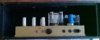
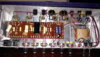
Looking at the amp from the back, like thisWP_20190319_18_31_01_Smart.jpg
From left to right we have V1, the first gain stage for both normal & bright channels (one triode for each channel). Then we have V2. The first triode is a gain stage that both channel's volume controls feed into, the 2nd triode is the cathode follower that drives the tone stack. The ECC83 closest to the power tubes is the phase inverter.

Of the two channels, channel 2 (1st upper & lower inputs) is the "normal" channel that usually has excessive & "loose" low end response.
Channel 1 (2nd upper & lower inputs) is the "high treble" or "bright" channel, which has a lot less & tighter low end response while having extended upper mid & treble response.
It is usual to plug into the "bright" channels "High" (upper) input, then take a patch lead from that bright channel's "Low" input & into the normal channel's "high" input. You can then "blend in" your desired amount of low end using the volume controls. Cheers

Edit: With these amps, jumpering the channels will result in the signals from both channels being "in phase" when they are combined & fed into V2a. This is so for all JTM45, 1987, 1959 superlead etc type 4 hole (4 input) amps, but not so for just any type 4 hole amp. Depending on the circuit design, jumpering the channels of some amps may have the two signals "out of phase" when combined. This won't hurt anything though, whether or not one likes the sound produced is just one of those "suck it & see" type situations. Cheers
 
Last edited:
Looking at the amp from the back, like thisView attachment 38734
From left to right we have V1, the first gain stage for both normally & bright channel's. Then we have V2. The first triode is a gain stage that both channel's volume controls feed into, the 2nd triode is the cathode follower that drives the tone stack. The ECC83 closest to the power tubes is the phase inverter.

Of the two channels, channel 2 (1st upper & lower inputs) is the "normal" channel that usually has excessive & "loose" low end response.
Channel 1 (2nd upper & lower inputs) is the "high treble" or "bright" channel, which has a lot less & tighter low end response while having extended upper mid & treble response.
It usually to plug into the "bright" channels "High" (upper) input, then take a patch lead from that bright channel's "Low" input & into the normal channel's "high" input. You can then "blend in" your desired amount of low end using the volume controls. Cheers
Edit: With these amps, jumpering the channels will result in the signals from both channel's being "in phase" when the are combined & fed into V2a. This is so for all JTM45, 1987, 1959 superlead etc type 4 hole (4 input) amps, but not so for just any type 4 hole amp. Depending on the circuit design, jumpering the channels of some ampss may have the two signals "out of phase" when combined. This won't hurt anything though, whether or not one likes the sound produced is just one of those "suck it & see" type situations. Cheers

Thanks!!!!!!!
 
Looking at the amp from the back, like thisView attachment 38734
From left to right we have V1, the first gain stage for both normal & bright channels (one triode for each channel). Then we have V2. The first triode is a gain stage that both channel's volume controls feed into, the 2nd triode is the cathode follower that drives the tone stack. The ECC83 closest to the power tubes is the phase inverter.

Of the two channels, channel 2 (1st upper & lower inputs) is the "normal" channel that usually has excessive & "loose" low end response.
Channel 1 (2nd upper & lower inputs) is the "high treble" or "bright" channel, which has a lot less & tighter low end response while having extended upper mid & treble response.
It is usual to plug into the "bright" channels "High" (upper) input, then take a patch lead from that bright channel's "Low" input & into the normal channel's "high" input. You can then "blend in" your desired amount of low end using the volume controls. Cheers

Edit: With these amps, jumpering the channels will result in the signals from both channels being "in phase" when they are combined & fed into V2a. This is so for all JTM45, 1987, 1959 superlead etc type 4 hole (4 input) amps, but not so for just any type 4 hole amp. Depending on the circuit design, jumpering the channels of some amps may have the two signals "out of phase" when combined. This won't hurt anything though, whether or not one likes the sound produced is just one of those "suck it & see" type situations. Cheers

What tube rollout would you recommend?????
 
What tube rollout would you recommend?????
For the EL34's, SED Winged C's, but don't purchase through eBay etc, you'll maybe get factory seconds. Being they're a NOS tube you'll pay more for them, but no current production EL34 will sound as good or last like these will. Try "the tube store" for them. For the 12AX7/ECC83, if you still have those pewter plates, at least try them in it, otherwise, ask the builder what new production types he recommends (or look for some Sylvania's, they can still be had at decent prices & will sound great). Cheers
 
For the EL34's, SED Winged C's, but don't purchase through eBay etc, you'll maybe get factory seconds. Being they're a NOS tube you'll pay more for them, but no current production EL34 will sound as good or last like these will. Try "the tube store" for them. For the 12AX7/ECC83, if you still have those pewter plates, at least try them in it, otherwise, ask the builder what new production types he recommends (or look for some Sylvania's, they can still be had at decent prices & will sound great). Cheers

I sold those Ken-Rad's for an unreal price, but i have Sovtek EL-34's, Marshall EL-34's and Electro-harmonix.

In the 12AX7 vein i have 12AT7, 12AU7, 5751, ECC83S and a few others to try...

I think, at least as far as tubes are concerned, im gonna try to use what i have on hand and worry about replacements later....
 
Question did the amp have the issue before changing the tubes ???
What did you adjust the bias on the EL34 tubes ???
What is your B+1 voltage that would be pin 3 on the power tube socket ???

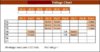
Next voltage chart the amp starting at the power supply power transformer.

Haven't got that far yet, but i am grateful for the chart and tube pinout!!!!!
 
Back
Top