First finger hammer-ons / pull-off technique

RVA

Ambassador
I had previously used the upper palm to gain leverage when playing. However, I found that it was slowing me down and compromising my reach and accuracy, so I have been using a more classic approach with fingertips on the strings and thumb on back behind it whenever possible without touching my palm to the neck, except when muting with the left hand. This has proved beneficial.
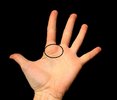
hand.jpg


However, I feel that using this part of my palm is still beneficial when performing a hammer-on / pull-off with my first finger, especially on the E/A/D strings (think beginning of Layla riff, which is how I came to consider this). Does this make sense or am I falling back into my bad habit?
 
I had previously used the upper palm to gain leverage when playing. However, I found that it was slowing me down and compromising my reach and accuracy, so I have been using a more classic approach with fingertips on the strings and thumb on back behind it whenever possible without touching my palm to the neck, except when muting with the left hand. This has proved beneficial.

View attachment 10298


However, I feel that using this part of my palm is still beneficial when performing a hammer-on / pull-off with my first finger, especially on the E/A/D strings (think beginning of Layla riff, which is how I came to consider this). Does this make sense or am I falling back into my bad habit?

I'm not educated, so I do not want to pollute your progress with my unorthodox techniques. From the edge of my palm (at the wrist) to the tip of my left middle finger is about 8-1/2", so my technique may not help and/or be possible, but I anchor my left thumb to the back of the neck and allow no other part of my hand to touch the neck while playing most chords. I find this gives me more fluidity....
 
  • Like
Reactions: RVA
I'm not educated, so I do not want to pollute your progress with my unorthodox techniques. From the edge of my palm (at the wrist) to the tip of my left middle finger is about 8-1/2", so my technique may not help and/or be possible, but I anchor my left thumb to the back of the neck and allow no other part of my hand to touch the neck while playing most chords. I find this gives me more fluidity....
That is what I have been trying to do too. I was wondering if this was an exception. My thought is that it is not
 
Last edited:
I think context comes into play a bit. I do try to avoid gripping the neck with my whole hand and make a point of just using my thumb behind the neck. However, there are a few differences between how the typical blues or rock guitarist plays and the classical guitarist. For starters, the classical guitar is usually played sitting down with the guitar on the left knee and the left foot on a short stool. Also, you play sitting up straight and not hunched over the guitar. This places the guitar neck at a height and angle that makes it almost effortless to ensure you use your thumb behind the neck, instead of gripping the neck with your whole hand. Even a hammer-on or trill seems rather natural and easy with just the thumb behind the neck, with the guitar in that position.

Also, I do enjoy listening to classical guitar, and I hear very little string bending going on. There may be a little sliding up to pitch from time to time, but very little actual bending. This is also largely true of a lot of jazz. I'm not saying there is absolutely no bending at all in jazz, but it is much less than in some other forms of music.

In contrast, in blues and rock, the guitarist is often standing. (Though, it's not altogether unusual to see a blues player seated, a la B.B. King and John Lee Hooker.) Anyway, in those styles the guitar often hangs lower and at a different angle, and those guitarists make rather prolific use of bending. Unison bending and double-stop bending, particularly, can also require a little different angle of the hand and extra anchoring.

So, whereas I do recognize the value of not gripping the neck with my hand, but to use just my thumb behind the neck, I also know there are those times where I don't sweat a brief departure from the classic technique.
 
Last edited:
  • Like
Reactions: RVA
I think context comes into play a bit. I do try to avoid gripping the neck with my whole hand and make a point of just using my thumb behind the neck. However, there are a few differences between how the typical blues or rock guitarist plays and the classical guitarist. For starters, the classical guitar is usually played sitting down with the guitar on the left knee and the left foot on a short stool. Also, you play sitting up straight and not hunched over the guitar. This places the guitar neck at a height and angle that makes it almost effortless to ensure you use your thumb behind the neck, instead of gripping the neck with your whole hand. Even a hammer-on or trill seems rather natural and easy with just the thumb behind the neck, with the guitar in that position.

Also, I do enjoy listening to classical guitar, and I hear very little string bending going on. There may be a little sliding up to pitch from time to time, but very little actual bending. This is also largely true of a lot of jazz. I'm not saying there is absolutely no bending at all in jazz, but it is much less than in some other forms of music.

In contrast, in blues and rock, the guitarist is often standing. (Though, it's not altogether unusual to see a blues player seated, a la B.B. King and John Lee Hooker.) Anyway, in those styles the guitar often hangs lower and at a different angle, and those guitarists make rather prolific use of bending. Unison bending and double-stop bending, particularly, can also require a little different angle of the hand and extra anchoring.

So, whereas I do recognize the value of not gripping the neck with my hand, but to use just my thumb behind the neck, I also know there are those times where I don't sweat a brief departure from the classic technique.
A very good analysis. There are times I take the "baseball bat" approach, like when doing left hand muting, as previously mentioned. My question was rather specific to this particular technique, first finger hammer ons / pull-offs. I find that it feels appropriate to support with the first digit carpal area, but since I am undoing a bad habit, I second guess myself.
 
A very good analysis. There are times I take the "baseball bat" approach, like when doing left hand muting, as previously mentioned. My question was rather specific to this particular technique, first finger hammer ons / pull-offs. I find that it feels appropriate to support with the first digit carpal area, but since I am undoing a bad habit, I second guess myself.

Personally (and I am not a guitar instructor, so take that into context), I don't think you really have much choice to do other than what you're doing for a first finger hammer-on and pull-off.
 
I think context comes into play a bit. I do try to avoid gripping the neck with my whole hand and make a point of just using my thumb behind the neck. However, there are a few differences between how the typical blues or rock guitarist plays and the classical guitarist. For starters, the classical guitar is usually played sitting down with the guitar on the left knee and the left foot on a short stool. Also, you play sitting up straight and not hunched over the guitar. This places the guitar neck at a height and angle that makes it almost effortless to ensure you use your thumb behind the neck, instead of gripping the neck with your whole hand. Even a hammer-on or trill seems rather natural and easy with just the thumb behind the neck, with the guitar in that position.

Also, I do enjoy listening to classical guitar, and I hear very little string bending going on. There may be a little sliding up to pitch from time to time, but very little actual bending. This is also largely true of a lot of jazz. I'm not saying there is absolutely no bending at all in jazz, but it is much less than in some other forms of music.

In contrast, in blues and rock, the guitarist is often standing. (Though, it's not altogether unusual to see a blues player seated, a la B.B. King and John Lee Hooker.) Anyway, in those styles the guitar often hangs lower and at a different angle, and those guitarists make rather prolific use of bending. Unison bending and double-stop bending, particularly, can also require a little different angle of the hand and extra anchoring.

So, whereas I do recognize the value of not gripping the neck with my hand, but to use just my thumb behind the neck, I also know there are those times where I don't sweat a brief departure from the classic technique.

Excellent observations!

And then, there is me...a high functioning musical "Rain Man" who creates chords like the "one finger G" and "C-Clamp 5 String G" with hunched-over Quasimodo techniques...while stretching between the 1st and 5th frets...

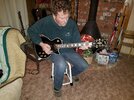
Ranch Les Paul.jpg
 
Last edited:
  • Like
Reactions: RVA
And...all the while complaining about how small a Les Paul looks and how skinny the toothpick neck feels.....
 
Back
Top