Fender BJr repair

STRefugee

Well-Known Member
Country flag
Hello!
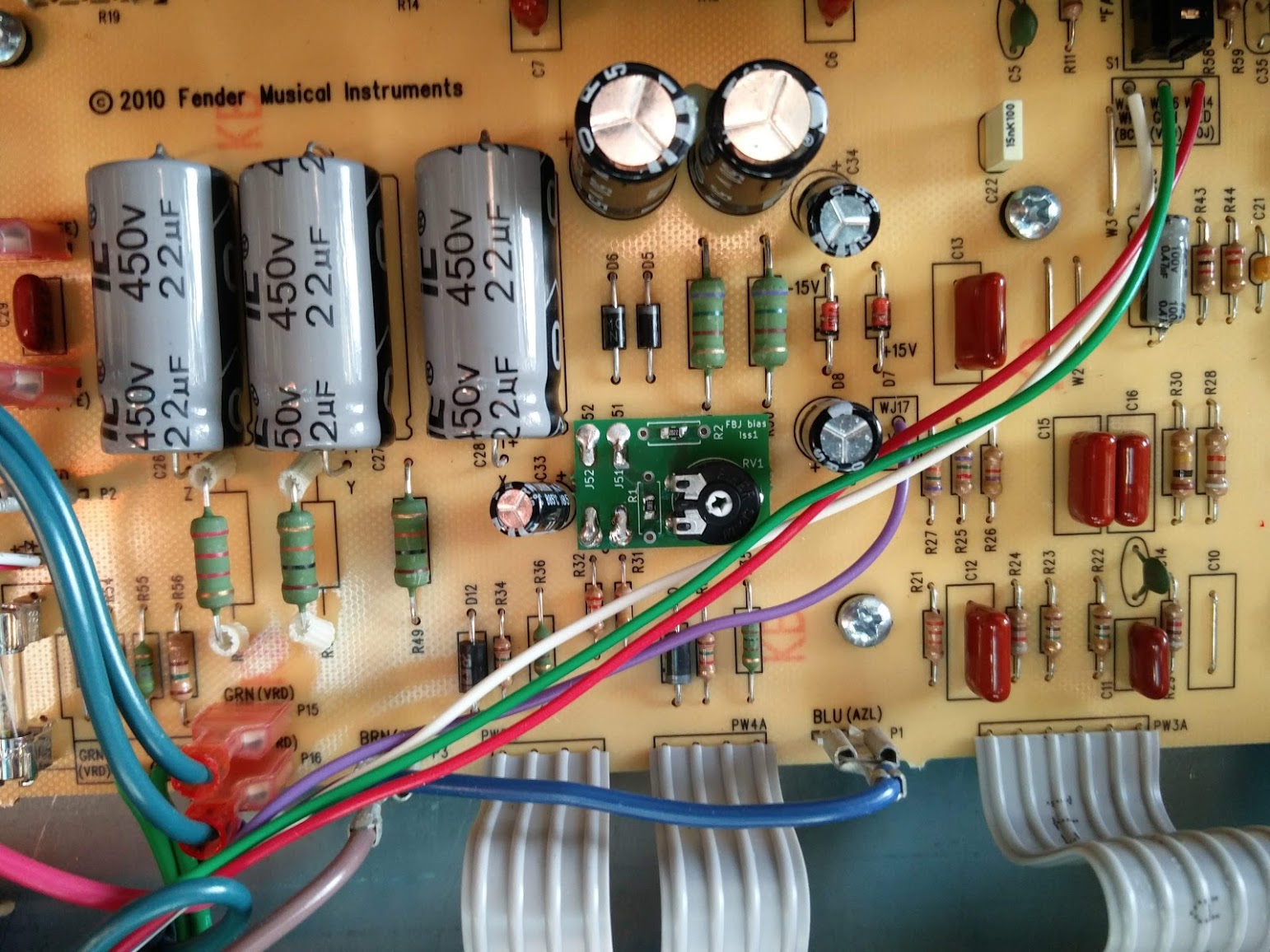
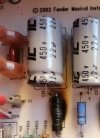
My old Blues Junior (2002) is in need of attention. Pls see the attached pic. I understand that fried-up resistor to be a 2.2k/2W.
Would this be a suitable replacement?

After running some search online I came across a few historical chats relating to this issue.
It is said to act as a supply dropper on the power supply circuit feeding output tubes.
Could be because Bias Voltage setting on the power valves is too low.

I just want to fix it. I don't really want to go into 'mod kit' mode and all that. Just getting it back in service with the simples easier fix will do.

Please do share your thoughts, suggestions as to how I may fix this.
 

Attachments

Hello!
My old Blues Junior (2002) is in need of attention. Pls see the attached pic. I understand that fried-up resistor to be a 2.2k/2W.
Would this be a suitable replacement?

After running some search online I came across a few historical chats relating to this issue.
It is said to act as a supply dropper on the power supply circuit feeding output tubes.
Could be because Bias Voltage setting on the power valves is too low.

I just want to fix it. I don't really want to go into 'mod kit' mode and all that. Just getting it back in service with the simples easier fix will do.

Please do share your thoughts, suggestions as to how I may fix this.
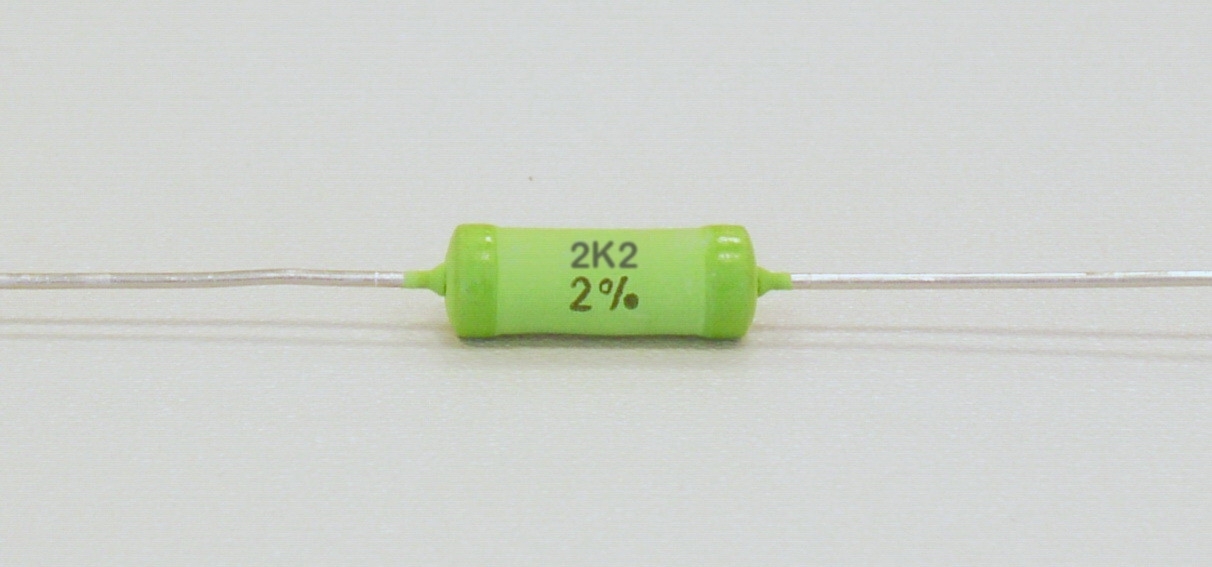
Replace R47 with 2.2K 2W wire wound. Do not use a resistor larger than 2 watt.
This resistor is a fuse.
Replace C 25 47uF with 500 volt cap
Replace C26, C27, C28 with 22uF 500 V caps
These 4 capacitors have to be replaced because they short out and go bad.
Strongly recommend you use F&T capacitors and do not use Illinois Brand.

The bias has to be adjusted because the tubes will run too hot.
At test point 24, (c-) Fender indicates - 10.6 volts DC
But you should probably make that at least - 12.6 volts DC by changing R52.

Do not put the tubes in.
Check all the operating voltages first and make sure everything works correctly.
Check the voltage at C- Test point 24, and make sure that is at least - 12.6 VDC
Check everything first and put the tubes in last or you may wind up with fried power tubes.

When you put the tubes in, make sure the amp is hooked to a speaker or it can fry the output transformer.

 
Last edited:
@Amp Mad Scientist
Thank you so very much! for the detailed explanations. I was hoping this would not be so involved but well, if all that is required then be it.
That is becoming quite a project fo me to undertake. I'm good with soldering and do have a temperature controlled soldering station. I totally agree with you on that point.
I'm based in London (uk) so will need to find-out who can supply all this stuff over here at a reasonable price.

Oh! and thank you for the links!
Any guidance you could offer in terms of how to make sense of the schematics will be hugely appreciated.
Many thanks
Cheers!
 
@Amp Mad Scientist
Thank you so very much! for the detailed explanations. I was hoping this would not be so involved but well, if all that is required then be it.
That is becoming quite a project fo me to undertake. I'm good with soldering and do have a temperature controlled soldering station. I totally agree with you on that point.
I'm based in London (uk) so will need to find-out who can supply all this stuff over here at a reasonable price.

Oh! and thank you for the links!
Any guidance you could offer in terms of how to make sense of the schematics will be hugely appreciated.
Many thanks
Cheers!
Cut the leads of the resistor or the caps about 13 mm from the top of the board.
Straighten the lead out.
Now heat the solder connection and gently push the straight lead through the hole and out of the board.
Don't try the heat the lead and un-bend the lead on the solder side of the board, as this can break the circuit tracks.
 
Would this be a suitable replacement?
The resistor that you linked to is a carbon film. I would suggest a metal oxide resistor instead. In your pic, the resistor to right of “old toasty” is a metal oxide resistor.
Perhaps like this:

Since your amp is about 23 years old, Amp Mad’s suggestion to replace all the electrolytic filter caps is probably a good idea. Especially if you plan to keep your amp for a long time.
 
The resistor that you linked to is a carbon film. I would suggest a metal oxide resistor instead. In your pic, the resistor to right of “old toasty” is a metal oxide resistor.
Perhaps like this:

Since your amp is about 23 years old, Amp Mad’s suggestion to replace all the electrolytic filter caps is probably a good idea. Especially if you plan to keep your amp for a long time.
The reason the resistor burned up is probably that the filter capacitors are shorting out.
The Illinois caps are infamous for shorting.

It's pretty much the first thing we do is get rid of the Illinois capacitors.
You will see a fine white powder all over the circuit board: it's spraying out of the capacitor vents.
 
Last edited:
The resistor that you linked to is a carbon film. I would suggest a metal oxide resistor instead. In your pic, the resistor to right of “old toasty” is a metal oxide resistor.
Perhaps like this:

Since your amp is about 23 years old, Amp Mad’s suggestion to replace all the electrolytic filter caps is probably a good idea. Especially if you plan to keep your amp for a long time.
Hi @syscokid
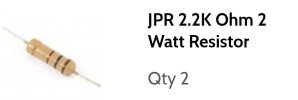
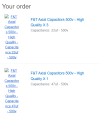
Thanks for chipping in. Aie! I ordered those. Screenshot_20250210_192807.jpg

They are carbon film. Is thos no good then?
Thanks
 
Every blues jr I have worked on the bias was to hot

This is a damn good mod for these amps if you want to keep your amp as trouble free as possible.

And I would also like to add to my previous post that all these power resistors need to be installed with at least a 1/4” or 6 mm gap between the resistors body and the circuit board for better ventilation. Another Fender WTF!
 
It’s not the best choice for that particular position in the circuit. The metal oxides and the wire wounds dissipate the heat much more efficiently than the carbon films in that position due to the amount of voltage and current that is being reduced right at the filter caps.
Aie! Silly me. That makes sense.
I'll see if I can cancel that order now.
Thank you for sharing this tip.
 
Last edited:
Aie! Silly me. That makes sense.
I'll see if I can cancel that order now.
The reason I said "wire wound," is that it has less noise.
Considerably less than other types.
Another low noise resistor is bulk metal foil, but it costs a lot more.

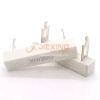
1739221132077.png I've been using these type resistors to get the heat away from the board.
But you need to measure the lead spacing, sometimes you need to make the hole a little larger.
 
Last edited:
The reason I said "wire wound," is that it has less noise.
Considerably less than other types.
Another low noise resistor is bulk metal foil, but it costs a lot more.
Yes, of course, You did! Silly! Silly me!
I'm so annoyed with myself already.

Thank you so much for the sound advise. Very much appreciated. Have to go correct my order now.
 
Yes, of course, You did! Silly! Silly me!
I'm so annoyed with myself already.

Thank you so much for the sound advise. Very much appreciated. Have to go correct my order now.
Don't panic start over.
You have to order capacitors too.
If you don't change those caps, the resistor will probably burn up again.
 
The reason I said "wire wound," is that it has less noise.
Considerably less than other types.
Another low noise resistor is bulk metal foil, but it costs a lot more.

View attachment 105063 I've been using these type resistors to get the heat away from the board.
But you need to measure the lead spacing, sometimes you need to make the hole a little larger.
That sounds great but also a little too advance for me. Awesome stuff! thank you.
 
Back
Top