Experienced a new flavor of tube failure.

jtcnj

Ambassador of the Crossroad
Country flag
I have had tubes fail; they have a service life and are expendable.
Yesterday, I experienced a new to me preamp failure.
Used RCA long grey plate 12AX7.

18w tmb, well into OD, master volume maxed.
After 15 min or so I am just past warm ups and starting to riff around a few things.
Only using guitar vol and TS set a boost, a little pedal reverb.
So I'm playing a bit and I cant find a good tone - worse than usual.

Im hearing my tone get thinner and tinny; lacking mids, or upper mids, just very sterile - like some sounds I've heard from bad SS amps.
After switching guitars, turning off pedals and sampling clean to OD guitar into amp only I am thinking something is amiss with the amp.
Same on both channels, tweaking TMB tone pots has responsiveness, but still the basic tone is yucky.

I was going to swap power tubes but checked V1, V2, V3 for either socket issues or microphonics first as I just fixed an issue with my 5e3.
V1 had a little "ping" to it, so I swapped it anyway, still thinking - power tubes?
They are hot running Russian surplus 6P14P-EV that have been in there well over a year (not that I play this amp everyday, but they have some hours on them)
Nope.
Sounded fine after that!
Only had a little time, but tonight I will shakedown run it hard.
I will watch the power tubes for red plating and go further, checking voltages, etc. if need be but I think its good.

Just wanted to share.
 
It was a "used but tests good" RCA ebay purchase.
I dont recall if this one was in there a long time or a purchase from last year.

I realize the tube testers are not a complete test.

This is only the second vintage / used preamp tube I had flame out.
With the other one the glass envelope vacuum failed and the inside got all white and crusty at the getter flash.
 
It was a "used but tests good" RCA ebay purchase.
I dont recall if this one was in there a long time or a purchase from last year.

I realize the tube testers are not a complete test.

This is only the second vintage / used preamp tube I had flame out.
With the other one the glass envelope vacuum failed and the inside got all white and crusty at the getter flash.
I had 2 do that. One was a nice GE short grey.
Had a couple go microphonic. Otherwise I have had very good luck with OS tubes.
 
It was a "used but tests good" RCA ebay purchase.
I dont recall if this one was in there a long time or a purchase from last year.

I realize the tube testers are not a complete test.

This is only the second vintage / used preamp tube I had flame out.
With the other one the glass envelope vacuum failed and the inside got all white and crusty at the getter flash.

I avoid old used tubes that "test good."
From experience, I would characterize this as a great way to flush money down the toilet.
Of course tube testers only tell you 20% of what you really need to know.

We bought about 12 of those tubes that "test good," and only 2 of them were worth a poop.
The rest were garbage. They should have stayed in the trash (were they originally came from).
 
I avoid old used tubes that "test good."
From experience, I would characterize this as a great way to flush money down the toilet.
Of course tube testers only tell you 20% of what you really need to know.

We bought about 12 of those tubes that "test good," and only 2 of them were worth a poop.
The rest were garbage. They should have stayed in the trash (were they originally came from).
I have likely 20 or 25 in various amps and other than those mentioned I have had no issues and do like the way they sound better in most cases.
 
I avoid eBay tube sellers like the plague. As Amp Mad Scientist said, a tube tester only tells part of the story (& different type testers give different readings), but at the very least the seller should list the tube tester used, the tubes transconductance reading (gm), plate current reading (mA) & an emission reading (usually given as %).
There are reputeable & trustworthy suppliers of old glass out there, & none of the ones I use sell on eBay etc. If you're going to buy NOS or ANOS tubes, forget eBay bargains & use a reputable stockist/seller. It's worth paying a little extra in the long run. Cheers
 
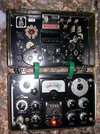
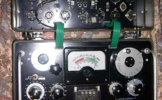
Not The AVO 160 tube tester, checks everything at playing voltage and you have total control of every pins parameter, what happens every now and then I leave the tube in the tester for about 15 minutes and then the oldie starts to fade and goes south, so a tosser! If they test em for a few minutes or two that's not enough time so they might assume their fine ... either that or they are just trolin for a mark to unload them on. There is a small learning curve but if ya study a bit one gets good at it. I'd have to check but I think it 300+ volts on screens and 400+ on the plates. You control the bias and heater voltage. Metal military case included
avo2.jpg
 
Nice unit. The old guy that first got me into valves (30 or so yrs ago) had a leather cased AVO (model 8?) VOM & I'm not sure what model AVO tube tester, grey metal box thing with knobs & meters on the front panel, valve sockets & more knobs etc on the top panel. I tried a couple of times to talk him out of the VOM but he wasn't having any of it. He did tell me that AVO test equipment was the absolute best & that if I ever came across any I should grab it. Cheers
 
Nice unit. The old guy that first got me into valves (30 or so yrs ago) had a leather cased AVO (model 8?) VOM & I'm not sure what model AVO tube tester, grey metal box thing with knobs & meters on the front panel, valve sockets & more knobs etc on the top panel. I tried a couple of times to talk him out of the VOM but he wasn't having any of it. He did tell me that AVO test equipment was the absolute best & that if I ever came across any I should grab it. Cheers
With these old school tube testers, I always wondered how much maintenance is involved with keeping them operating properly?
 
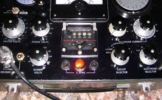
All AVO stuff is so old school cool. Even the old British schematics say tested on a AVO meter! The only harder maintenance was calibration but they come with a military tube manual for the unit that explains it very detailed and precise. I though you'd want to see a closeup of the control panel so .....


avo1untitled.pngavountitled.png
It looks a little art deco to me with love at first bite after I figured out it's full potential. That said the best tube tester is a guitar amp! I got it from Australia ebay.
 
The issue with tube testers is that:
It does nothing to detect noise (such as snap crackle pop) which is very common in old used tubes.
It does nothing to detect microphonics and loose internal construction.
It does nothing to detect excessive AC filament hum.
It does not test frequency response, it does nothing to detect artifacts.

If I use an old used tube, it must pass all of the above tests when installed in the V1 position (which amplifies problems more than any other position).
And frankly, most old tubes simply do not pass those tests.

What is acceptable to most people, is below my standards.
If I install tubes in a professional amplifier, there is no acceptable defect. The tube is required to perform just like a new tube.
No amount of snap crackle pop is tolerated.

Which is why
It's much more practical for me to buy new tubes. Then I don't need to deal with all the time and effort that it sucks up.

Granted, there are great sounding old used tubes (like RCA, Mullards etc) but I don't have the patience to baby each individual tube, screening each tube to find if it passes scrutiny.
In addition to this, it's just irritating that vendors sell old used tubes and claim that they are "excellent," when if fact (10 out of 12) they actually suck.
You will also notice that: most vendors of these old used tubes don't except or refund returns.
 
Last edited:
The test is only as good as the tester the AVO testers are top notch. My Hickok 539C tester will have to do for now.
This video shows how to test for noise on a AVO MK3.

I don't believe in consumer tube testers.
I believe that some tube labs do a very good job (like Bugle Boy did).
This involved a spectrum analyzer, and several listening tests. The "Big Bertha" tube test.

But overall, I would prefer to test tubes "in" the amplifier.
Nothing tells me more than installing the tube into the amplifier, and checking all the performance perimeters, with test equipment..
Including but not limited to playing guitar and listening very closely for a very long period of time.
 
Back
Top