Electric

In addition to the stressors that will need to be accounted for when re-imagining the national automotive marketplace, Stanford University has conducted significant research into grid usage and suggests that daytime charging must become the standard. Currently, electric vehicle drivers typically install charging equipment at home and plug in their vehicle at night to prepare for daily commutes to work and other chores. Stanford notes that once EV ownership arrives at mass adoption, however, nighttime charging alone could increase peak electricity usage by as much as 25%.

That's problematic for two reasons. First, charging that number of EVs at night could put more demand on the grid than clean energy installations like solar panels can provide. Though solar is growing in prevalence across homes in California and elsewhere, surging night charging demands might force gas power stations back online. Secondly, this spike in demand on a nightly basis will place additional stress on the grid itself, potentially leading to substantial power outages and infrastructure failures akin to the one that froze Texas in 2021 (via Science Direct).

This means that individual drivers, local businesses -- as both service providers and employers -- and relevant authorities will need to work as a cohesive unit to establish a new normal moving forward. While electric vehicles will play a key role in decarbonizing transportation, reaping the benefits from that will be more complicated than coaxing drivers out of their gas cars and trucks, regardless of how much is offered in EV tax credits and incentives.
 
That’s the one nice part of being surrounded by timber. I have no shortage of wood to burn.

Edit: Downside. We have no shortage of mosquitos in the summer. :pound-hand:

Can you say “plenty of wood?” Just a small portion of what our back yard looks like. The two dead trees still standing…. Waiting to be cut down…. Would most likely put fuel in the fireplace for two seasons. I already have a winters worth cut and spit, piled in the garage that’ll supply this seasons fireplace wood. Our fireplace is for ambiance not heating house. And in an emergency, I’d just need to step into the timber and start cutting on one of the dozens of trees that have come down this summer alone.

Speaking of putting carbon gasses into the atmosphere.

1665422430616.jpeg
 
You’ve done some fine research Norm. Pretty spot on. While you and I most likely won’t see it come to fruition….. fossil fuel fueled transportation is in the autumn/winter of its lifespan. The future will be some form of alternate fuel. Be it electric, hydrogen or most likely…. Something that hasn’t even been thought of or invented yet. It’ll be our kids and grandkids that will enjoy that technology.

In the meantime. I’ll just keep driving my Civic till it rolls over and dies.
 
In addition to the stressors that will need to be accounted for when re-imagining the national automotive marketplace, Stanford University has conducted significant research into grid usage and suggests that daytime charging must become the standard. Currently, electric vehicle drivers typically install charging equipment at home and plug in their vehicle at night to prepare for daily commutes to work and other chores. Stanford notes that once EV ownership arrives at mass adoption, however, nighttime charging alone could increase peak electricity usage by as much as 25%.

That's problematic for two reasons. First, charging that number of EVs at night could put more demand on the grid than clean energy installations like solar panels can provide. Though solar is growing in prevalence across homes in California and elsewhere, surging night charging demands might force gas power stations back online. Secondly, this spike in demand on a nightly basis will place additional stress on the grid itself, potentially leading to substantial power outages and infrastructure failures akin to the one that froze Texas in 2021 (via Science Direct).

This means that individual drivers, local businesses -- as both service providers and employers -- and relevant authorities will need to work as a cohesive unit to establish a new normal moving forward. While electric vehicles will play a key role in decarbonizing transportation, reaping the benefits from that will be more complicated than coaxing drivers out of their gas cars and trucks, regardless of how much is offered in EV tax credits and incentives.

I think all of that requires serious, thoughtful consideration and planning. I don’t dismiss such issues as irrelevant or unimportant.

But, it also bears realizing that there was a day when there was insufficient infrastructure to support a single light bulb in a single house. There was a day when there was no mechanism or connectivity to support a single telephone. There was a day when not a single gas station existed. I remember the day when we all used modems and the very thought of there being any type of residential fiber optic connectivity was simply fanciful.

Again, I do think infrastructure considerations matter; they aren’t insignificant. But, I do think you made a very good post which reveals that these things will require cohesive planning and further development.
 
Now. If I were in the market for an EV, it would not be a Tesla. Nothing against the car. In spite of the bad press, it may be an okay car. My sampling is small compared, but the friends I know that have a Tesla, love it. Have had no issues. The only “complaint” would be range. One family took theirs on a cross country vacation. And charging was occasionally an issues. But they for the most part found ways to deal. Charge while having breakfast or lunch which generally got them to their motel for the night. It sometimes added up to be a slightly longer pitstop than a gas stop/breakfast/lunch, just never got the feeling of them being annoyed.

My reasons for not getting a Tesla would be:
1: serviceability when the inevitable happens. How available is Tesla service centers. My choice of an EV would be more like a GM/Honda/Toyota EV….. simply because of dealer availability. In a 20 mile radius of home I can’t count how many GM dealers there are and both Honda and Toyota have 2 or 3 each
2: I won’t give Elon Musk any of my money. He’s both a diva and a jerk and generally just undesirable.
 
Now. If I were in the market for an EV, it would not be a Tesla. Nothing against the car. In spite of the bad press, it may be an okay car. My sampling is small compared, but the friends I know that have a Tesla, love it. Have had no issues. The only “complaint” would be range. One family took theirs on a cross country vacation. And charging was occasionally an issues. But they for the most part found ways to deal. Charge while having breakfast or lunch which generally got them to their motel for the night. It sometimes added up to be a slightly longer pitstop than a gas stop/breakfast/lunch, just never got the feeling of them being annoyed.

My reasons for not getting a Tesla would be:
1: serviceability when the inevitable happens. How available is Tesla service centers. My choice of an EV would be more like a GM/Honda/Toyota EV….. simply because of dealer availability. In a 20 mile radius of home I can’t count how many GM dealers there are and both Honda and Toyota have 2 or 3 each
2: I won’t give Elon Musk any of my money. He’s both a diva and a jerk and generally just undesirable.

I agree with both points, completely.
Range is or was an issue, the newer ones have gotten better.

And Musk is a weenie. But who wouldn't like to party with the money that clown must waste in one day.
 
In addition to the stressors that will need to be accounted for when re-imagining the national automotive marketplace, Stanford University has conducted significant research into grid usage and suggests that daytime charging must become the standard. Currently, electric vehicle drivers typically install charging equipment at home and plug in their vehicle at night to prepare for daily commutes to work and other chores. Stanford notes that once EV ownership arrives at mass adoption, however, nighttime charging alone could increase peak electricity usage by as much as 25%.

That's problematic for two reasons. First, charging that number of EVs at night could put more demand on the grid than clean energy installations like solar panels can provide. Though solar is growing in prevalence across homes in California and elsewhere, surging night charging demands might force gas power stations back online. Secondly, this spike in demand on a nightly basis will place additional stress on the grid itself, potentially leading to substantial power outages and infrastructure failures akin to the one that froze Texas in 2021 (via Science Direct).

This means that individual drivers, local businesses -- as both service providers and employers -- and relevant authorities will need to work as a cohesive unit to establish a new normal moving forward. While electric vehicles will play a key role in decarbonizing transportation, reaping the benefits from that will be more complicated than coaxing drivers out of their gas cars and trucks, regardless of how much is offered in EV tax credits and incentives.
Don't get me started on the power failure of '21 in Texas.

:mad:
 
Our Tesla gets about 250 miles from a charge. They do have long rang packages, but they were close to 20k more at the time of purchase.
Even at a Tesla supercharger, where we charge free, it still takes 45 minutes to get back to 80%

My average "Sunday Drive" is about 600 miles....

Our regular electric bill "range" is around a low of $60.00 to an all-time high of $140.00/month without solar.

Several solar companies have looked at our useage and told us we really wouldn't save enough with solar to offset the cost .
 
Last edited:
Another point…daytime charging is already becoming more feasible. As an example, here in the DC area, more and more parking garages and places of employment are being equipped with charging stations which allows for daytime charging while people are at work. For those who are working from home, daytime charging is pretty much a non-issue.

So, yes, planning is critical and the change won’t happen over night. But, by the same token, a switch to EVs won’t be sudden and happen over night, either. People often talk in worst-case scenarios which are unrealistic. From time to time, there will be some commentary to the point that, “If everybody switched to EVs the power grid would collapse!” This is simply a false dilemma. The truth is, everybody won’t “just switch” to EVs. Rather, they will gradually become more and more common. Even those timelines in places like California and decisions by manufacturers to stop gasoline-powered car production at some future date are not a sudden cutover date for the vehicles actually on the roads. At most, those timelines signal the beginning of the attrition of fossil fuel cars; those cars won’t suddenly go away and be replaced on those dates. It will take time.

Having said all this, I’m sure it seems like I am ardently pro-electric vehicle. The truth is, I’m not. I don’t have any love for any propulsion design. In my ideal world, I’d have a barn with a horse and buggy! What I care about is clean, renewable energy which produces a minimum of environmental stress. To that end, I’m not even really a big fan of current battery technology because, as @SG John noted, just the mining of those materials can have a serious environmental impact. I’d like to see either a new battery technology or hydrogen fuel-cells.
 
BMW has a diesel car that gets 90 miles to the gallon but you can only drive it in China

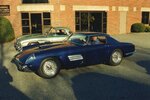
I'm looking forward to driving my leaded Avgas burner the restoration only took 4 years 1967 GTB 275/4 Spider

It was a birthday gift from my wife. I live in a rain forest the van and Honda Pilot works great for hauling my gear.

Been getting everything ready for winter then off to NZ and race my father in law he want's that he has a 1968 GTB 275/4 hardtop

Fredrick's motor.
View attachment 86501

My motor.

View attachment 86502
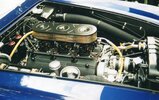
This was a '57 250 GT (Prinz Bernhard) that I was part of a total restoration of. I made many of the engine parts, and did a good enough job to fool the judges at Pebble Beach to give it a best in class award. Although machined, you could not see the difference between my parts and original borrowed cast parts. I learned my trade well over the years.


img080.jpg


img065.jpg
 
Don't get me started on the power failure of '21 in Texas.

:mad:

I thought about that . just a couple of weeks ago State of California was telling customers to limit their consumption of hydro, they dont have the infrastructure in place now or will have in the near future to handle more electric cars on the road. There is going to be blackouts coming due to the shortsightedness of our Leaders as you well know Coyote..

Many of us will feel the same pain you and your State of Texas went through.. very sad and all could have been avoided..:mad:
 
Last edited:
Sorry, but there really isn't more than one side to this (and I can't begin to imagine what the media has to do with it). This is the way it is, and the forces that control it are not going to be changed just becuase some people don't like it. The big boys have already spoken: Toyota will be all electic/hybrid within 3 years from now, and Volvo and Mercedes-Benz will be full electric by 2030 (that's not far away, folks). General Motors before 2040, Ford will be all-electric in Europe by 2030 and will roll that out in North America shortly after - and every other manufacturer has already announced their long term plans to go full electric. This is all happening outside of any kind of government mandate and nobody is talking about coming to take your gasoline away, but the market factors being what they are mean that when less people use gas it will cost dramatically more and fewer places will sell it.


Going electric is the mandate of the Government, thats why they are telling you they are stopping gasoline vehicles at a certain date. You will be at that time no longer to purchase a gasoline driven car. The car manufacturers are being forced by Governments to make electric vehicles.

In the last few months all you see in tv ads in Canada is electric EVs why? because the Governments agenda of course. Any citizen in America, Canada or around the World should have the right to own a gasoline driven car Suv or truck if thats what they prefer. We as a people should have a choice to choose and continue to have the availabilty to own a vehicle with a combustion engine.
 
While there’s no definitively “best” car type, Michalek’s study did make some points of general application. The life cycle environmental impact of a hybrid or pure plug-in car is largely influenced by the size of its batteries. Large batteries store more energy and extend a car’s range, but they come with an environmental cost. They’re heavy, require more extensive manufacturing resources and have to be replaced if they don’t outlive the rest of the car — which they often don’t. Disposal of the batteries is also resource-intensive, because they must be disassembled carefully rather than tossed into a landfill. Based on the average consumer’s energy mix and driving patterns, Michalek found that the pure plug-in cars, with large, long-range batteries, were no better for the environment than conventional gasoline cars.


How Much Does An EV Battery Replacement Cost?


Electric Car NameCost Of Electric CarCost Of Battery Replacement
Tesla$46,990 – $77,990$13,000 – $20,000
Smart ForTwo$23,900$18,475 to $18,581.
Nissan Leaf$27,800$4,500 – $7,500
Chevy Volt$34,400$4,000
 

I read the article linked above. The article compares EVs with large battery packs to hybrids and EVs with smaller battery packs.

Even this comparison is relative. The article states, “But plug-in vehicles with large battery packs are more costly and may have higher or lower emissions than HEVs depending on where and when they are plugged in.” “HEVs” are hybrid-electric vehicles.

Higher or lower emissions than HEVs? How can this be? What does location (where) have to do with it?

If the vehicle is charged by a power plant that relies on fossil fuels, then the net emissions may be higher than an HEV. If charged by a power plant that uses renewable sources of energy, then net emissions will be lower.

The comparison to conventional cars does get interesting. I couldn’t find where the article dealt with conventional cars as compared with EVs with large batteries, but this video helps explain it:

 
Back
Top