
chilipeppermaniac
Ambassador of Decibels

Robert, Practice on one of those Toothpick necks you replaced with your wide examples


Robert, Practice on one of those Toothpick necks you replaced with your wide examples

I still have to true the fretboard and refret the neck on my Jackson.
Still havent decided on fret wire size.
The 3 I have done were with a hammer. It worked out fine except I have a few ends that sprung up before the glue set, or didnt set all the way in the slot.
You cant see it but they catch the end of my wipe down cloth.
Same happens on a couple of my other guitars with factory installed frets.
I kinda like the hammer; its therapeutic.


So using a hammer to seat the fret (assuming the fret ends up sitting well along the slot) would still require a pass or two with the crowning file to remove those hammer marks?Hammer will make the frets wavy or dented, which I see all the time on local refret jobs.
So using a hammer to seat the fret (assuming the fret ends up sitting well along the slot) would still require a pass or two with the crowning file to remove those hammer marks?
Judicious blows, brass faced hammer, no dents.
I beveled / rounded the edge of the hammer face to reduce the chances.
Either way you need to level and crown them.

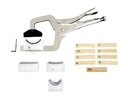

View attachment 75614
I have a guitar or two that are about due for a refret. I've never done it before. Is it hard? Should I try on one of my cheaper less-played guitars?
I have seen that video, or one that mentions the slot width vs tang thickness.
The caul is likely the better / more professional method - unless you have an installed set neck, or up to that point anyway.
Depends..
A hard plastic mallet is less likely to deform the fret.
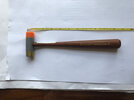
Here’s a pic of the fretting hammer I used. I only used the orange plastic face.
I had no denting issues. I also made sure my fret slots were clean before tapping in the frets, so using excessive force wouldn’t be necessary. That said, I do think I’d prefer using a caul.
This brings up another point, if you do a fretboard leveling after you remove the frets, make sure the slots are still deep enough for the fret tang. Otherwise, depending on how much material is removed, the fret tang may bottom-out before the fret is seated against the fretboard. I also bought a fretting saw to make my slots deeper, if necessary
At any rate, it worked fine for me.
View attachment 75662
Here’s a pic of the fretting hammer I used. I only used the orange plastic face.
I had no denting issues. I also made sure my fret slots were clean before tapping in the frets, so using excessive force wouldn’t be necessary. That said, I do think I’d prefer using a caul.
This brings up another point, if you do a fretboard leveling after you remove the frets, make sure the slots are still deep enough for the fret tang. Otherwise, depending on how much material is removed, the fret tang may bottom-out before the fret is seated against the fretboard. I also bought a fretting saw to make my slots deeper, if necessary
At any rate, it worked fine for me.
View attachment 75662
Part of me thinks I should just sell the Schecter rather than go through the re-fretting process.
I guess that’s a decision you have to make. To me, that seems to be a little extreme, but I can certainly understand the lack of time and desire to do it. Maybe, you could pay another luthier to do all but the actual fret leveling and dressing.