Demise of the Bass Tube Combo Amp

Amp Mad Scientist

Ambassador of Heresy
Country flag
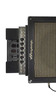
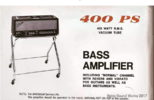
There are few if any new tube bass combo amps.
There are 5 new bass combo amps with a single pre amp tube, all made by Gallien-Krueger.

One of the few remaining tube bass combo amps is the Yampeg PF 20T, PF 50T.
(Yamaha bought Ampeg and started a new design variation of B-15.)
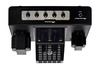
1630242413961.jpg

The original B-15.

1630242734599.jpg

You gotta wonder why the tube bass combo lost popularity...
 
To get the kind of wattage bass players want takes a lot of tubes. That equals a lot of heat which is hard to get rid of. Heat = problems. Also maybe bass players aren't as bound with tradition as guitar players?
Good point. My thought with price…. Without researching it….. was that a 400W SS bass amp could be bought for about the same price as a 100W tube amp.
 
@Kerry Brown hit on a pretty good point over size and heat of tube bass amps, which might explain the lean towards Solidstate. I would guess power and weight plays a role too, even outside of combos and in stacks. An Ampeg SVT classic produces 300w , weighs 80lbs, costs $2000, uses 6x6550 power tubes, 3x12ax7 and 2x12au7 preamp tubes which will cost a pretty penny to retube and heat is unbelievable.

On the flipside, something like a Gallien-Krueger Legacy 1200 gives 1200w, weighs 6.5lbs and costs $1200. I guess that is enticing especially on the road.

Now im on the side of valve amps always and the loudness of a SVT is legendary, but i can see the shift towards Solidstate from that perspective. Especially in combo amps where you need more valves which adds more weight and size, vs lightweight and as much power from the SS
 
Perhaps more than a few bass players have embraced a modular approach. Modular(separate preamp, power amp) setups offer more flexibility in cab selection, and copious quantities of available power.
I know that I really like my UA preamps for bass…they’re absolutely killer tube driven preamps. If I were to pair one of the UA preamps with one of my power amps from my PA, I could potentially push out 2000 watts of power…that’s ludicrous. However, in the boom for the buck view, the modular approach can be very attractive. Plus you have the flexibility to choose mismatched cab setups, and a preamp sound that can be run through a fairly uncolored power amp. One doesn’t get “locked into” one particular amp sound, or limited to certain cab/speaker impedance with a modular rig.
 
Now im on the side of valve amps always and the loudness of a SVT is legendary, but i can see the shift towards Solidstate from that perspective. Especially in combo amps where you need more valves which adds more weight and size, vs lightweight and as much power from the SS
Also…I can only imagine the levels of vibration present in a high powered, all tube, bass combo amp…it would have to be put together pretty well.
 
Also…I can only imagine the levels of vibration present in a high powered, all tube, bass combo amp…it would have to be put together pretty well.
Very true! Probably the reason why you never really seen a high powered bass combo like you have with guitars. Its common to see a 100w valve guitar combo but the equivalent of a bass combo would be, i guess around 200-300w? That would cause some massive damage to the frame and cabinet in such a compact design
 
Last edited by a moderator:
I'm not much of a bass player, but slowly getting there...

With bass people often want to keep things quite linear, so power amp distortion isn't as desirable and at least it isn't a huge part of most people's tone unlike with guitar. Also, playing dynamics don't play as much of a part (the "responsiveness" is a big deal with tube guitar amps...)

A decent 500W RMS into 4 ohm Class D head is the size of a good book and costs 500 - 1500 depending on the model.
 
Here's a good question: was the Marshall Super bass really a bass amp or a guitar amp? I know the intent was to be a bass amp, but its power was still typically 100w like the Super Lead and there was almost no differences as far as schematics minus a few capacitors and resistors ( 4 capacitors and 1 resistor value difference apparently?). Is that why it never took off as an iconic bass amp among players? I know guitarists use them more than anything, especially for added low end
 
Here's a good question: was the Marshall Super bass really a bass amp or a guitar amp? I know the intent was to be a bass amp, but its power was still typically 100w like the Super Lead and there was almost no differences as far as schematics minus a few capacitors and resistors ( 4 capacitors and 1 resistor value difference apparently?). Is that why it never took off as an iconic bass amp among players? I know guitarists use them more than anything, especially for added low end

More importantly, is the Fender 5F6A Bassman a bass amp or a guitar amp? That's what all the old school Marshall designs are based on anyway.
 
More importantly, is the Fender 5F6A Bassman a bass amp or a guitar amp? That's what all the old school Marshall designs are based on anyway.
Good question! Apparently its initial design was geared to be a bass amplifier: the Fender 5B6 26w 1x15. But guitarists quickly discovered its power and sound, eventually leading to many to equate it as a classic guitar amp and Fender began to beef it up thru a few variations; namely the 40w 4x10 5F6A model ( arguably the greatest amp ever made in some corners).

And yep, Jim Marshall himself took a LOT of inspiration from the 5F6A on the JTM45: while not quite a direct copy due to differences in tubes and their own take on some component values, it's no question an inspired copy
 
Back
Top